E-Commerce Data Labeling & Computer Vision Solutions

Elevate your e-commerce operations with the power of computer vision. Automate product recognition, enhance inventory management, improve visual search capabilities, and deliver a seamless customer experience. Stay ahead of the competition with smarter, AI-driven solutions tailored to modern online retail.
Collage showing people and products with object detection boxes highlighting items like human faces, shopping bags, laptops, and products on shelves.

Data Annotation for E-Commerce and Retail

Data annotation for e-commerce involves labeling product images, categorizing items, and tagging attributes to train AI models for enhanced search, recommendation systems, and inventory management. This process improves customer experience, streamlines operations, and boosts sales efficiency.
Close-up of a person wearing black and white sports shoes on a textured ground.

Visual Search for Similar Products

Visual search for similar products enables customers to find items by simply uploading an image. Powered by AI, this technology identifies visually matching products, enhancing the shopping experience with faster and more intuitive searches.
Bedroom with a green bed, patterned pillows, a bedside lamp, a woven wall hanging, and a tall potted plant.

Automatically Generate Labels from an Image

Automatically generating labels from an image uses AI to identify and tag objects, categories, or attributes within the image. This automation accelerates data processing, improves accuracy, and reduces manual effort in tasks like inventory management and product cataloging.
A man leaning against a railing inside a building, wearing a blue t-shirt and beige shorts on the left side, and digitally altered to neon green clothes on the right side.

Semantic Annotation for Clothing Brand

Semantic annotation for clothing brands involves labeling images with detailed information, such as fabric type, color, patterns, and design features. This process helps train AI models for better product search, categorization, and personalized recommendations, enhancing the overall shopping experience.
Invoice from Suncoast Shipping & Logistics showing customer and shipment details, including invoice number, billing address, trip info, and charges for 1 load shipped at $1,850 for 48 hours.

OCR

OCR (Optical Character Recognition) in retail and e-commerce automates the extraction of text from product labels, invoices, and receipts. This technology enhances inventory management, simplifies order processing, and improves customer experiences through faster data handling and accurate information capture.
Store shelves stocked with various dog food and cat food products in colorful packaging.

Counting left products on shelves

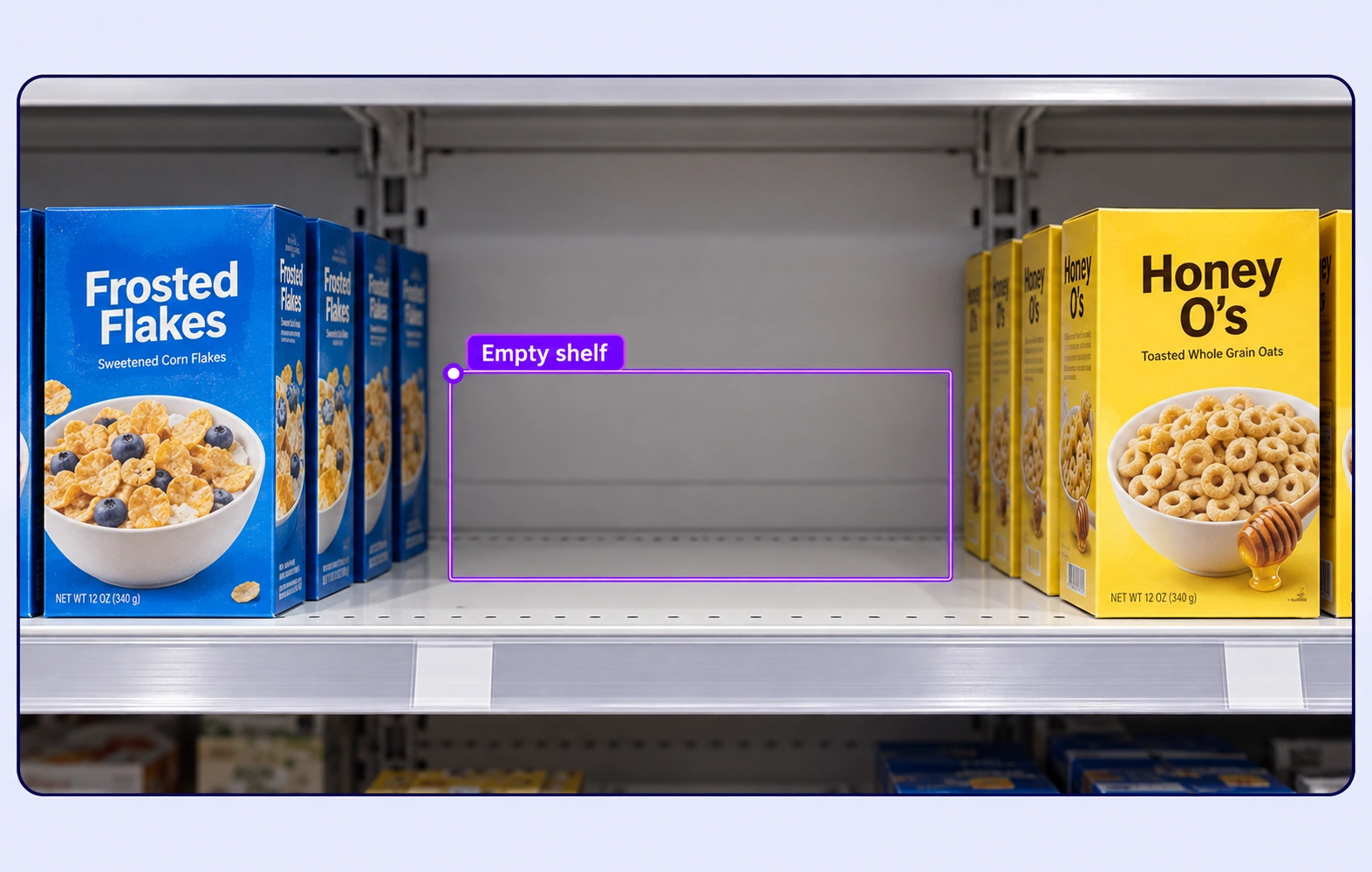
Counting left products on shelves uses AI-powered image recognition to track inventory in real time, ensuring accurate stock levels. This technology helps retailers optimize shelf management, prevent stockouts, and improve the overall shopping experience for customers.
Woman pushing a shopping cart while looking at a product in a store, with green lines overlay showing facial and body pose keypoints.

Detecting Customer Facial emotions

Detecting customer facial emotions uses AI-powered facial recognition technology to analyze expressions and identify emotions such as happiness, frustration, or surprise. This helps businesses understand customer sentiments, improve engagement, and tailor personalized experiences in real time.
Bottom of a gold-colored package showing printed production date 08/07/2021 and expiration date 08/01/2023 highlighted in green.

Detecting Expiration Date of the Product

Detecting expiration dates of products uses AI and image recognition technology to automatically read and extract expiration dates from product labels. This ensures accurate tracking, reduces waste, and helps businesses maintain product quality and compliance in inventory management.

Save Both Time and Money!

Why AI Teams Choose Unitlab

One platform to manage, annotate, and curate training data across every modality, helping teams move faster while staying efficient at scale.

15X

Faster Data Annotation
Orange square with a white check mark inside a white circle.
Auto Data Collect
Orange square with a white check mark inside a white circle.
Auto Data Labeling
Orange square with a white check mark inside a white circle.
Auto Model Validation
Orange square with a white check mark inside a white circle.
Auto QA
Orange square with a white check mark inside a white circle.
Auto Model-In-the-Loop

60%

Free Up AI Engineer’s Time
Orange square with a white check mark inside a white circle.
Dataset Curation
Orange square with a white check mark inside a white circle.
Dataset Version Control
Orange square with a white check mark inside a white circle.
Dataset QA
Orange square with a white check mark inside a white circle.
AI Model Integration
Orange square with a white check mark inside a white circle.
AI Model Validation

5X

Save AI Development Cost
Orange square with a white check mark inside a white circle.
5X saving in Data Collection
Orange square with a white check mark inside a white circle.
10X saving in Data Labeling
Orange square with a white check mark inside a white circle.
5X saving in Dataset Curation
Orange square with a white check mark inside a white circle.
5X saving in AI Development
Orange square with a white check mark inside a white circle.
5X saving in Model Validation
15X
Faster Data Annotation
60%
Free Up AI Engineer’s Time
5X
Save AI Development Cost

Annotation types

Annotation types for e-commerce and retail involve categorizing and labeling product images, descriptions, and attributes such as color, size, brand, and material. These annotations help train AI models for improved search accuracy, personalized recommendations, inventory management, and customer experience enhancement in online retail environments.
Bedroom with a bed featuring beige and brown striped blanket, two pillows, wooden nightstands with lamps, an alarm clock, a telephone, and a book.

Bounding Box for Object Detection

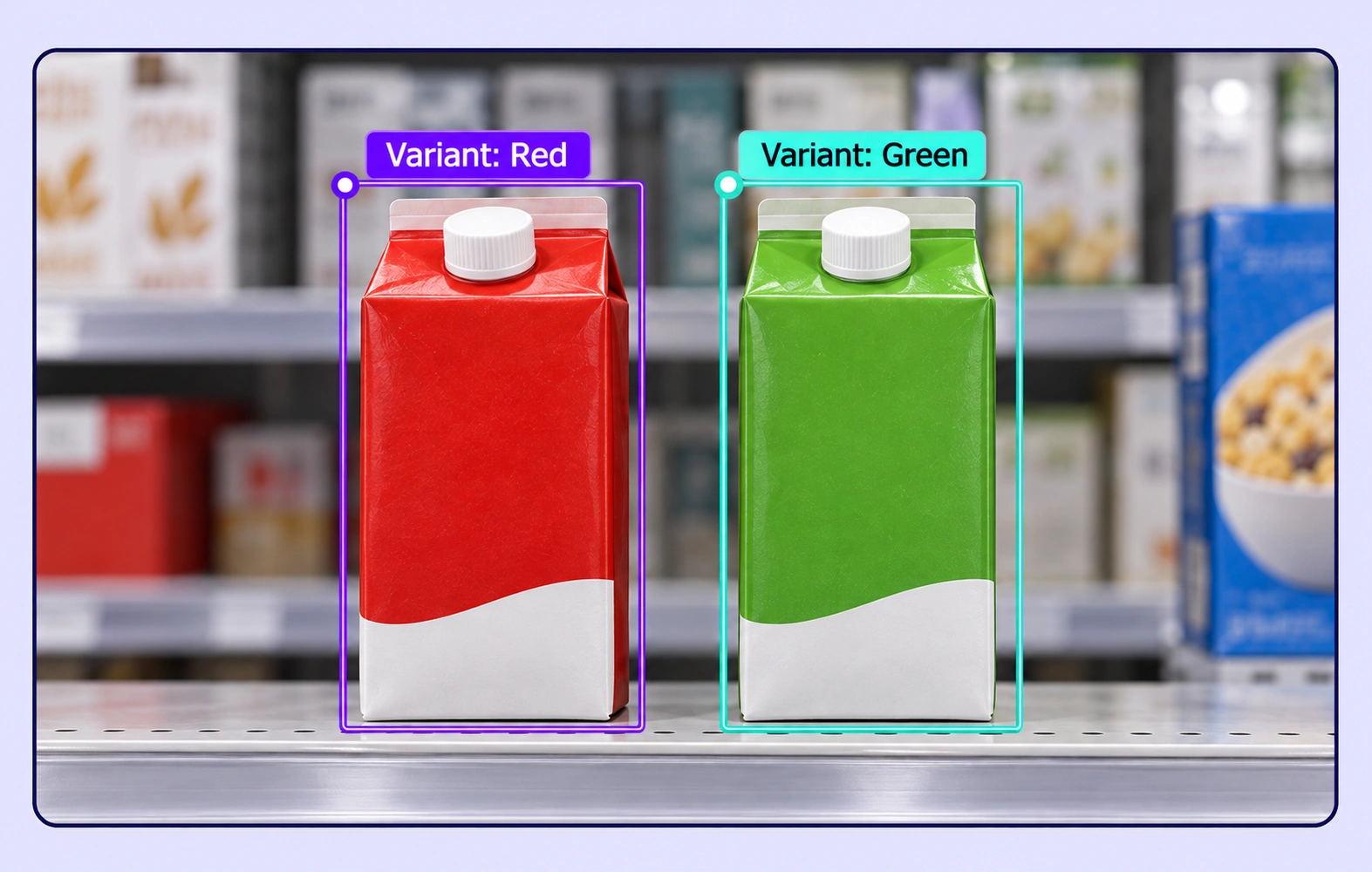
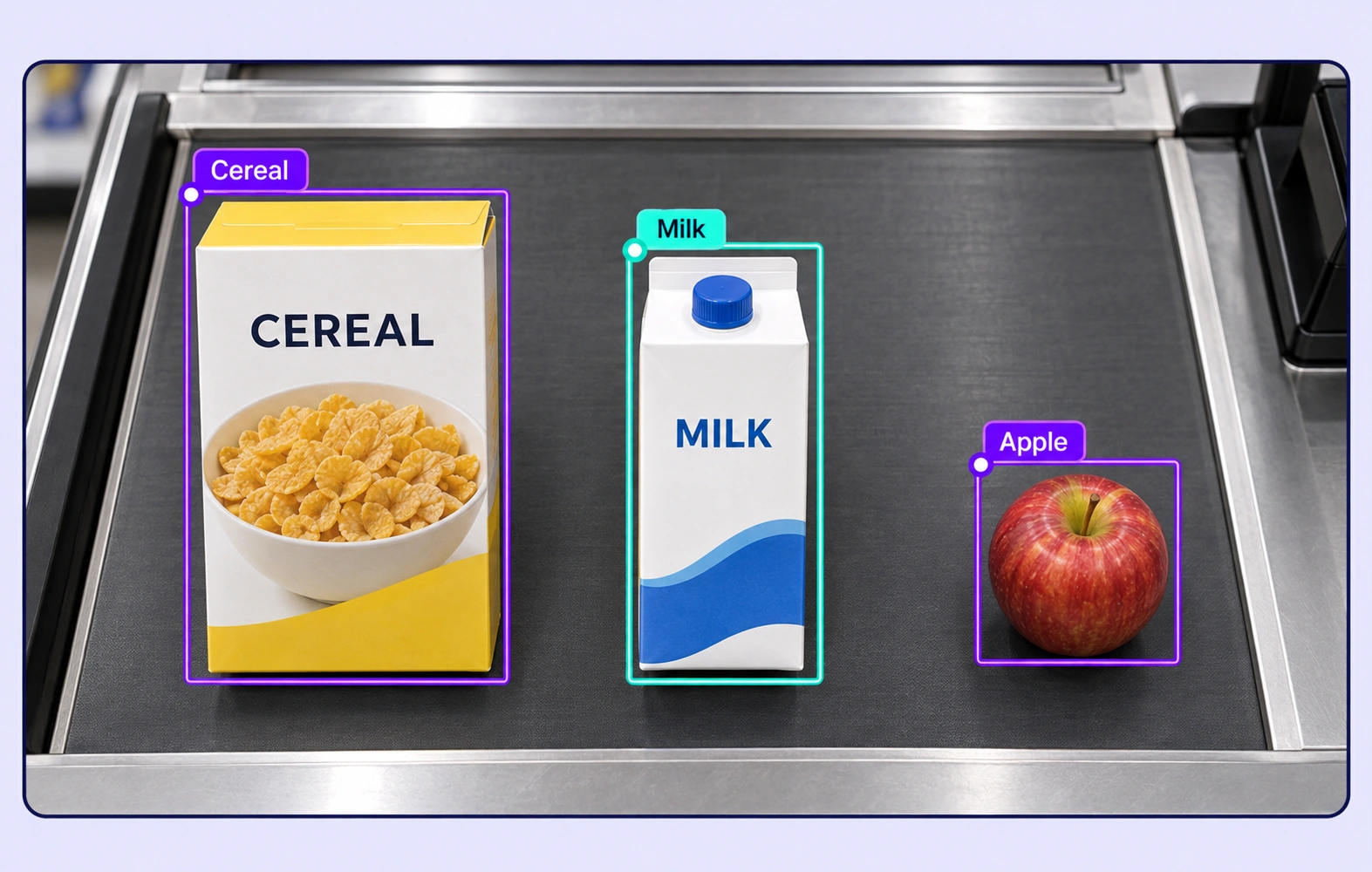
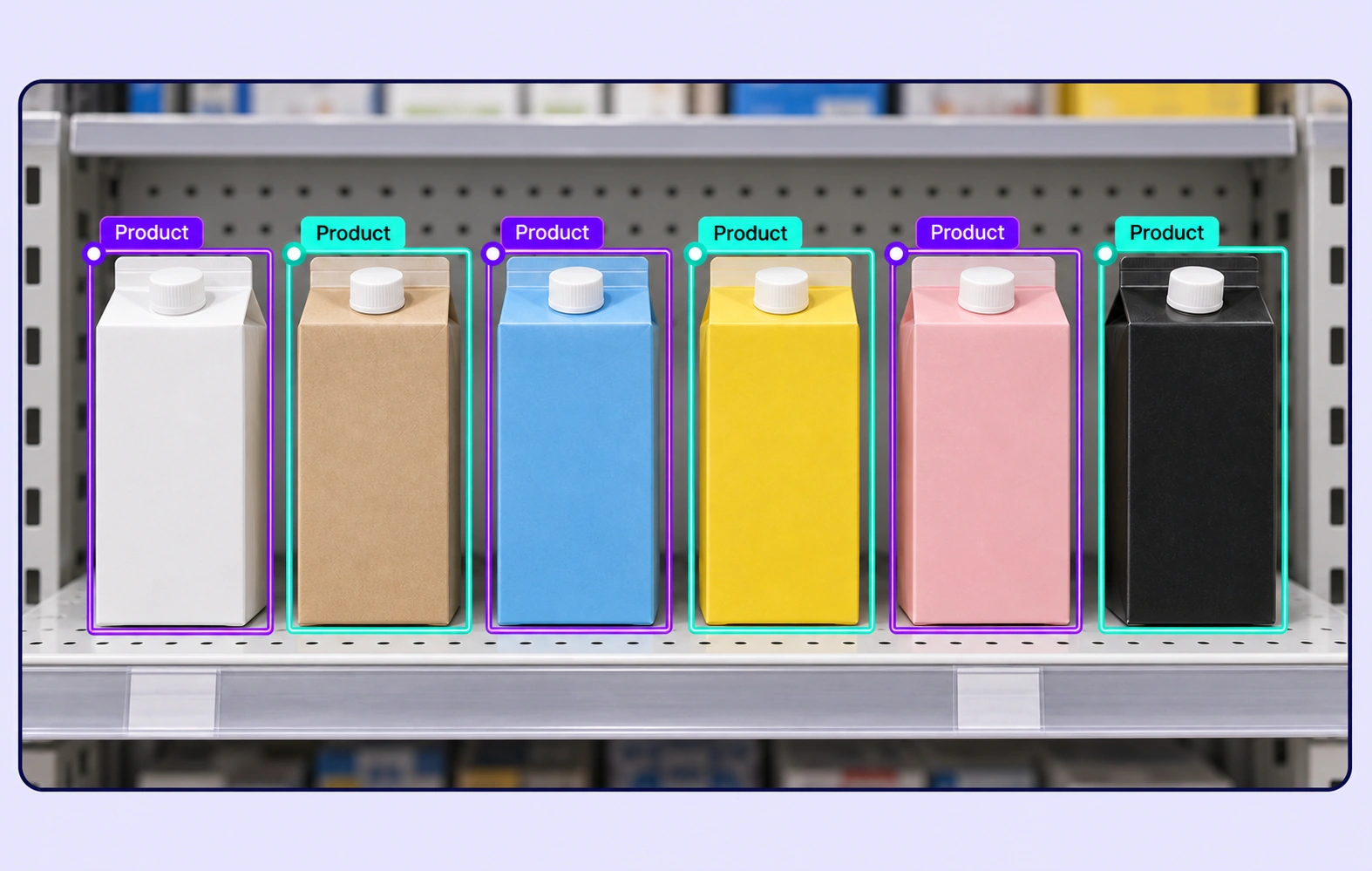
Bounding box annotation for object detection in retail and e-commerce involves drawing boxes around products or key elements in images to train AI models. This technique enhances product recognition, enables accurate inventory tracking, and improves visual search capabilities, providing a seamless shopping experience for customers.

Landmarking

Detecting customer facial emotions uses AI-powered facial recognition technology to analyze expressions and identify emotions such as happiness, frustration, or surprise. This helps businesses understand customer sentiments, improve engagement, and tailor personalized experiences in real time.

Woman in a white shirt selecting apples at a grocery store produce section with a shopping cart nearby.
Man with a beard standing beside a yellow bicycle on a paved path surrounded by dense flowering plants and greenery.

Segmentation for Detect clothing brand

Semantic annotation for clothing brands involves labeling images with detailed information, such as fabric type, color, patterns, and design features. This process helps train AI models for better product search, categorization, and personalized recommendations, enhancing the overall shopping experience.

Frequently Answered Questions

Is Unitlab AI a free data annotation tool?

Yes. You can use Unitlab AI for free, no credit card required. The free plan is great for getting started and testing workflows. If you need more scale, advanced features, or custom setups, paid plans are available.

Can I change my plan after creating an account?

Yep. Start free and upgrade anytime. Most teams begin on the free plan and move to a paid plan once their datasets or team size grow.

What types of data can I annotate with Unitlab AI?

Unitlab AI supports multimodal data annotation, including image, video, audio, text, and DICOM. You can manage and annotate different data types in one platform using the same workflows.

Does Unitlab support AI-assisted and auto-annotation?

Yes. Unitlab AI includes built-in AI models to speed up annotation with auto-labeling, tracking, and segmentation. You can review, edit, and validate everything to keep quality high.

Can I use my own AI models with Unitlab AI?

Absolutely. Unitlab supports Bring Your Own Model (BYO) workflows. You can plug in your own models, combine them with Unitlab’s built-in models, and run multiple models in a single annotation workflow.

How does pricing for data labeling services work?

Pricing depends on the type of annotation, dataset size, number of classes, and complexity. Labeling services start from $0.02 per image, with custom pricing available for multimodal and large-scale projects.

Who has access to my data?

You do. With on-premises deployments, all data stays inside your own infrastructure and Unitlab has no access to it.
 If you use Unitlab’s hosted platform, your data is encrypted and isolated, and is not visible to Unitlab staff. Access is strictly controlled and limited to your team based on roles and permissions.

Does Unitlab support team collaboration and review workflows?

It does. Unitlab is built for teams, with support for multiple annotators, reviewers, approval steps, and full annotation history so nothing gets lost.

Can Unitlab handle large datasets and production workloads?

Yes. Unitlab is designed to scale, from small experiments to production-level data annotation. Teams use it to manage large datasets, complex workflows, and long-running annotation projects.

Didn’t find the answer you are looking for? Contact our support