
Training data for video surveillance AI
Prepare recorded camera footage for detection, tracking, and observable event recognition. Label what is visible in the source, with consistent object identities across frames.

Annotation use cases for video surveillance
Turn source data into clear, task-specific training examples.
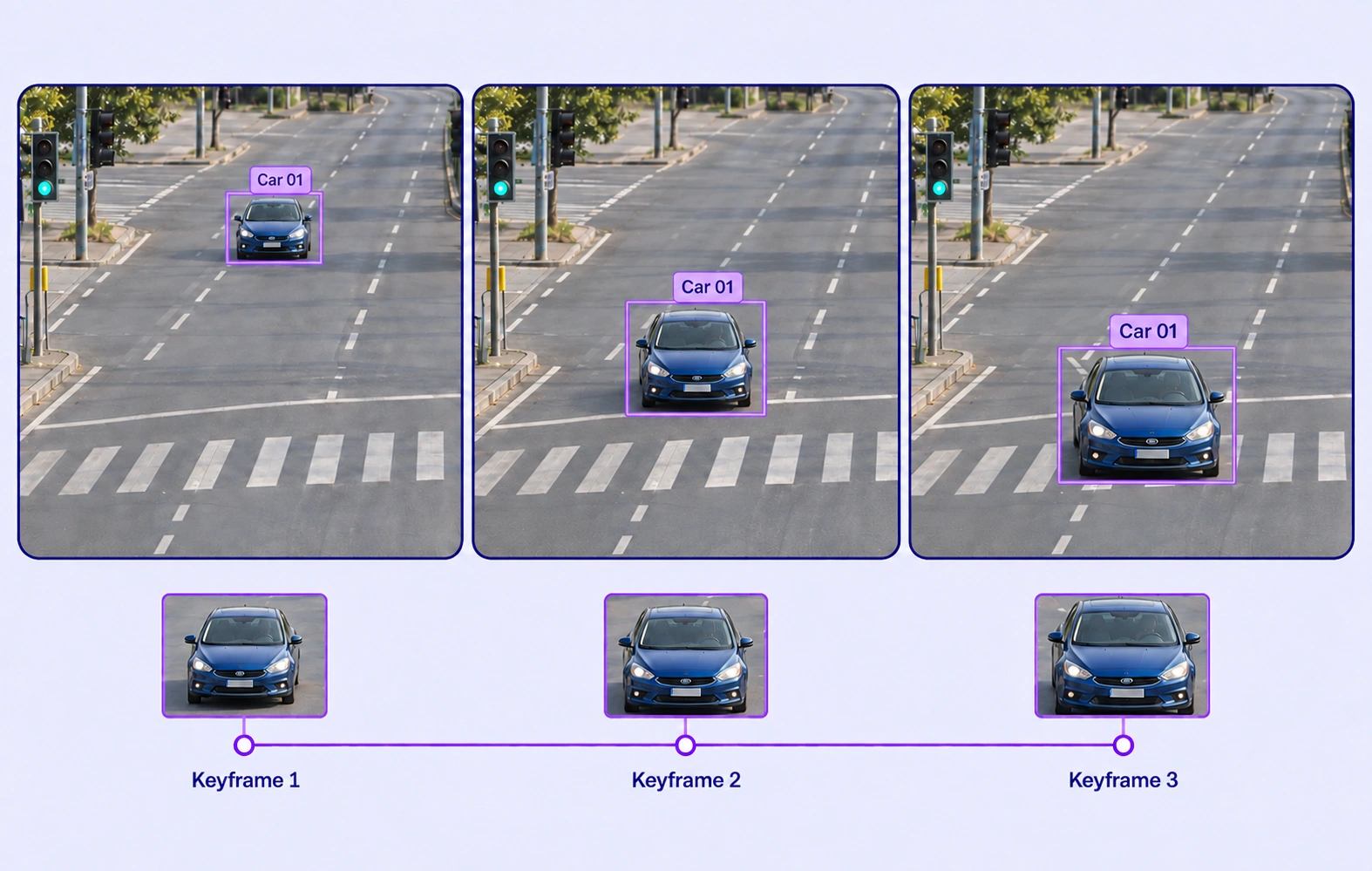
Vehicle tracks
Keep one vehicle identity attached to its visible path across successive frames.
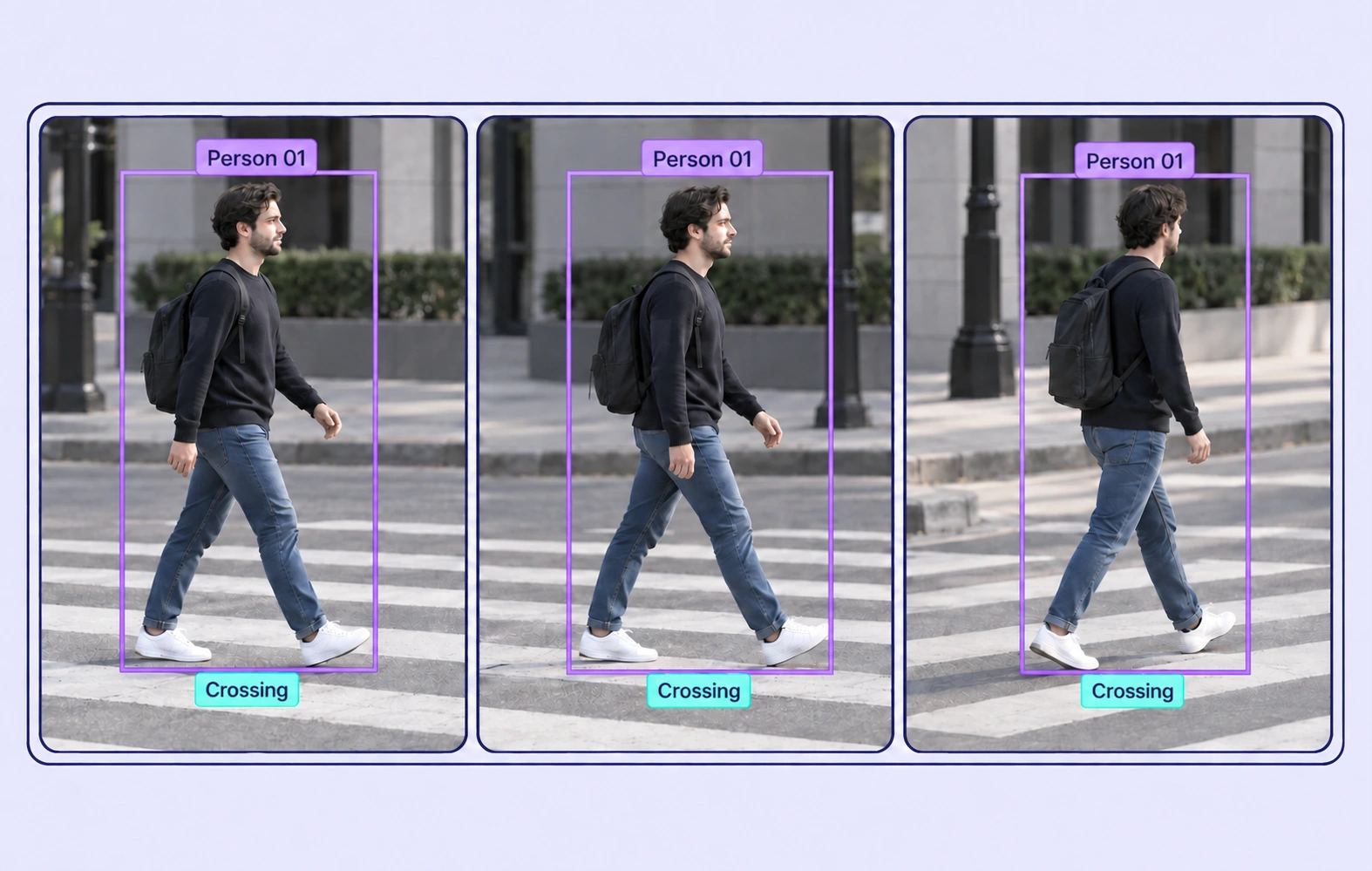
Pedestrian movement
Label people and visible crossing actions using explicit event definitions.
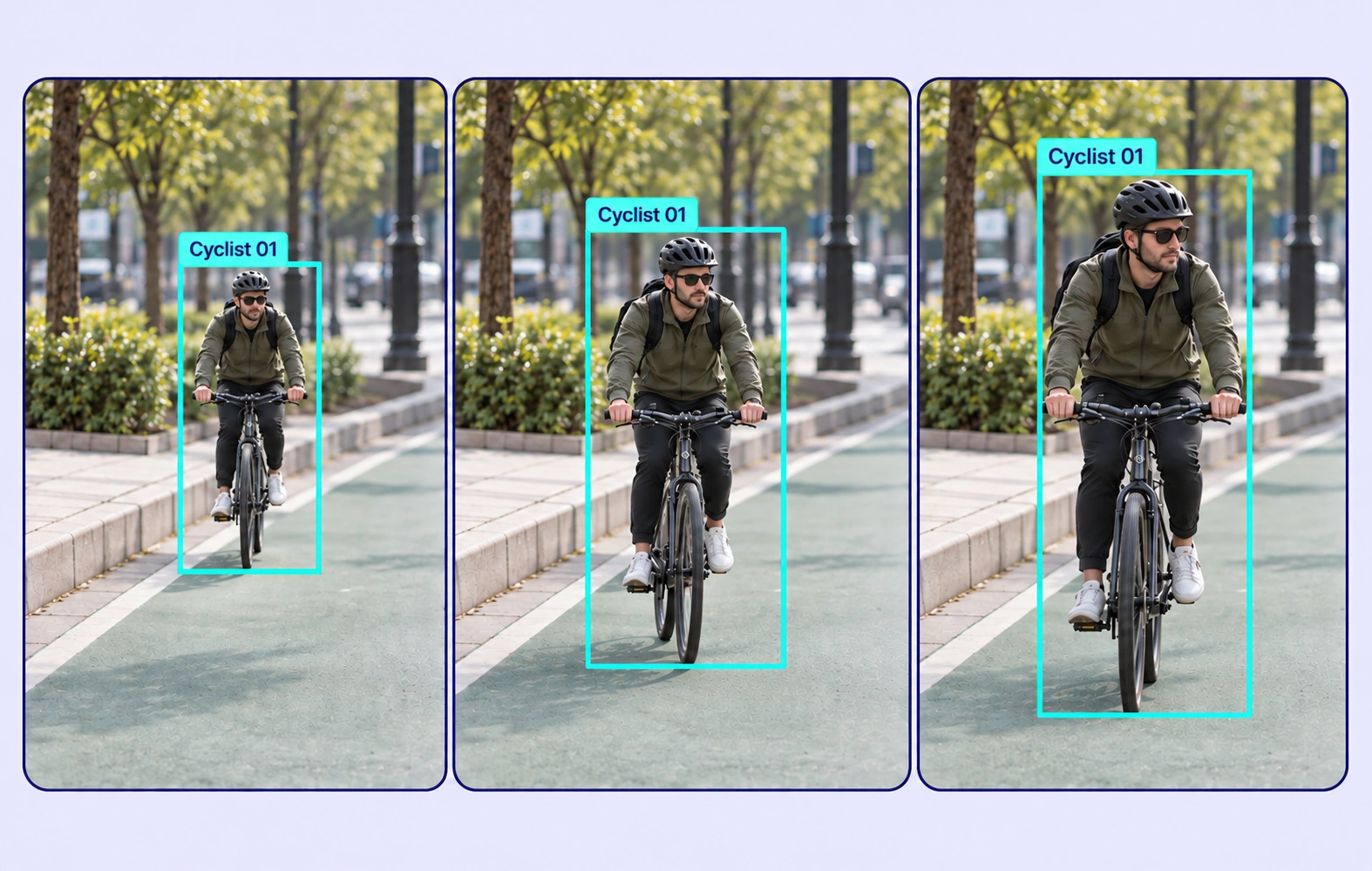
Cyclist tracking
Follow a cyclist through a sequence and inspect the rider-and-bicycle boundary.
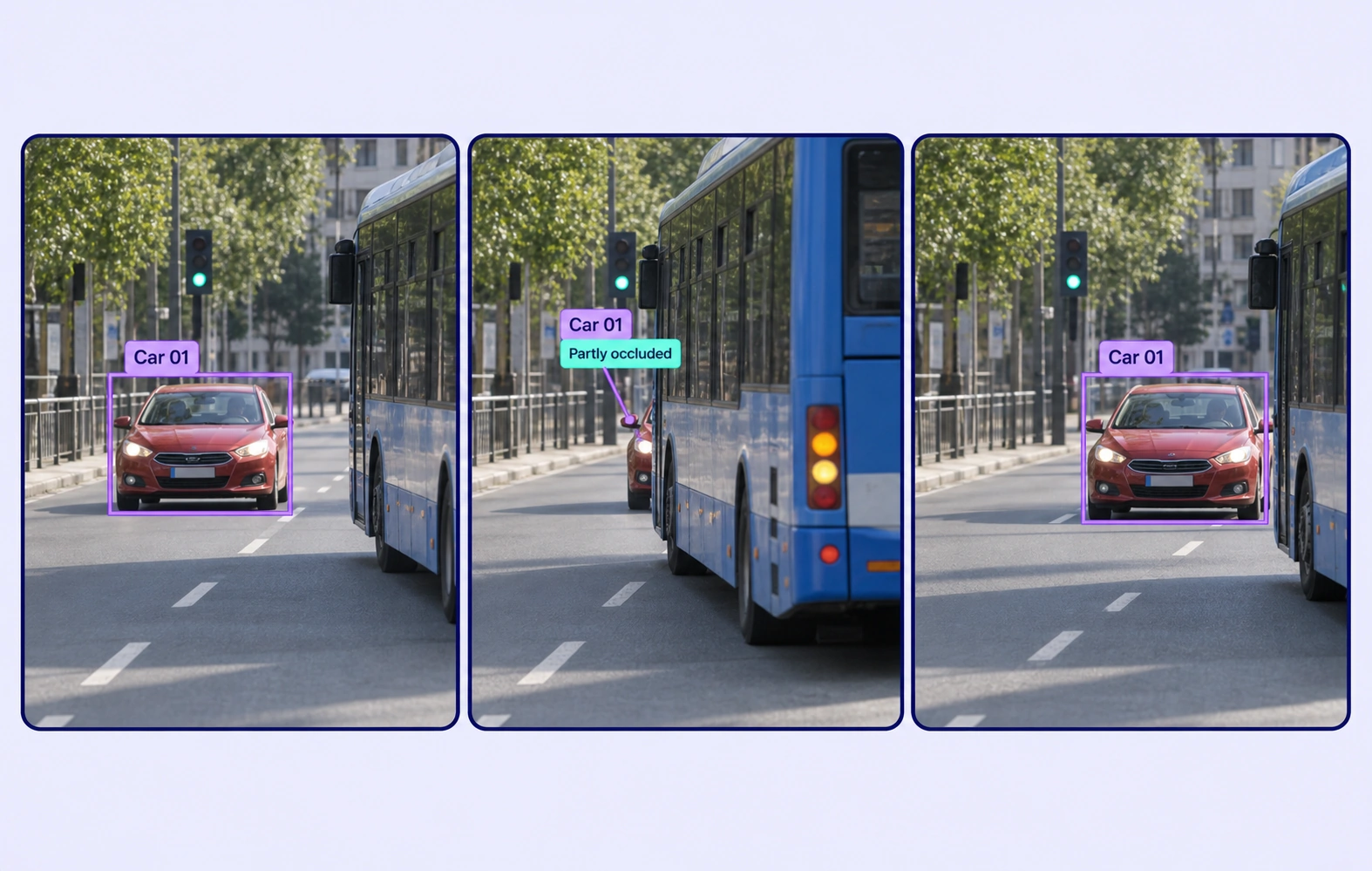
Occlusion and reappearance
Inspect difficult frames when objects disappear behind obstacles and reappear.
Built for AI Data at Scale
Connect data curation, shared label definitions, review, and dataset versions in one workflow.
15X
Faster video annotation
Track objects and label scene events with shared timelines and review workflows.
60%
Less time on data operations
Automate curation, management, and versioning of surveillance datasets.
5X
Lower Training Data Costs
Reusable ontologies and governed quality control reduce labeling and review rework.
Labels that preserve source context
Match the annotation geometry and properties to your model’s task.
Frame-by-frame object tracks
Maintain a consistent object ID as the subject moves. Check box placement when size, viewpoint, or lighting changes rather than assuming intermediate frames are correct.
Occlusion-aware review
Define when a track ends and when an object reappears. Review uncertain transitions against visible evidence and the project’s tracking rules.
Video Surveillance FAQs
What is data annotation for video surveillance?
Data annotation adds defined labels to source data so models can learn a specific task. For video surveillance, examples include vehicle tracks and pedestrian movement. Unitlab connects this work in its data annotation platform.
Which data types can teams annotate?
Choose the tools that match the source data: video annotation, image annotation. Keep linked sources together when the task requires shared context. Confirm input formats and annotation requirements before starting a project.
Which video surveillance use cases can I explore?
Explore traffic video annotation and sound event detection for focused labeling examples. These solution pages explain the training-data task; the linked modality pages describe the annotation tools.
How do I keep annotation rules consistent?
Define classes, required properties, and boundary rules before labeling. Use examples such as vehicle tracks to resolve ambiguous cases. See the classes and annotation types guide.
How do I select representative training data?
Use data curation to inspect examples and filter available metadata. Plan coverage across camera locations, lighting, occlusions, and observable events, then check for missing or overrepresented conditions before annotation.
How are annotations reviewed before training?
Use annotation quality assurance to inspect labels against the task guidelines. Consensus helps compare annotator agreement; Quality Gate stages apply configured checks before work advances. Route uncertain examples to the appropriate reviewer.
What is the difference between a dataset version and an annotation release?
A dataset version records a source-data selection; an annotation release packages the annotation outputs for downstream use. Use dataset management to inspect and organize data, and consult the guide to annotation releases before preparing training exports.
Can I export data and connect my training pipeline?
Choose an output format supported for your annotation task and validate the result with your training code. Read the export formats guide and the API, SDK, and CLI documentation for automation and integration options.
How do I get started?
Start with a representative sample, a clear label specification, and an agreed review process. Read the video annotation documentation or discuss your workflow with the Unitlab team.
Need help defining your annotation workflow?
Talk to UnitlabBuild your video surveillance dataset
Bring data selection, annotation, and reviewed dataset delivery into one workflow.
Talk to sales


