
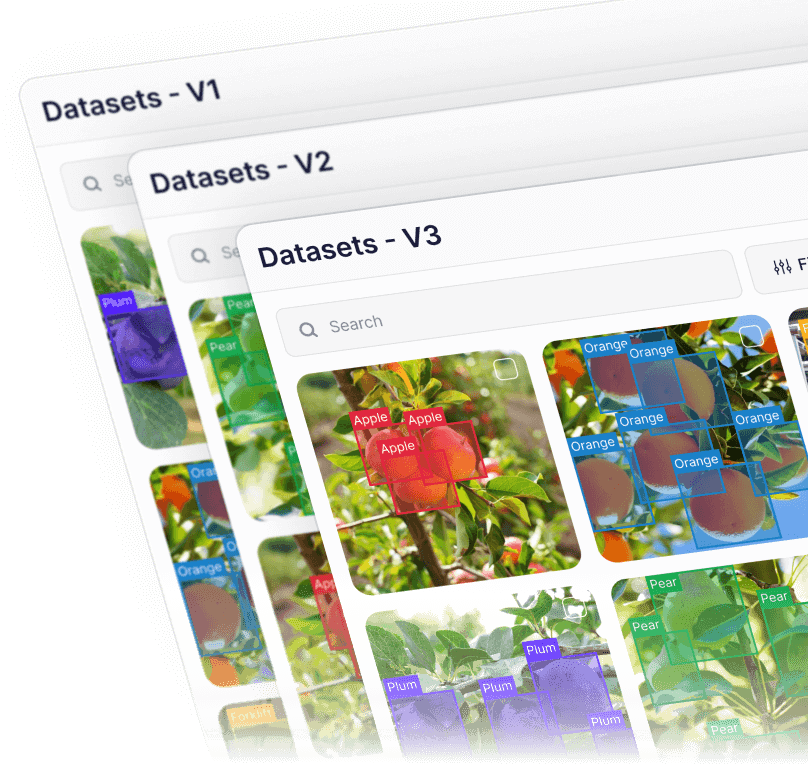
Dataset Versions
Create governed dataset versions as multimodal data evolves. Track changes, preserve dataset lineage, and keep every release auditable and production-ready.

Curate multimodal training data with semantic search, embeddings, duplicate detection, dataset balancing, versioning, and connected annotation workflows in one platform.
Explore multimodal data, find relevant samples, inspect embeddings, remove duplicates and outliers, balance coverage, and save versioned subsets for annotation and model training.
Create governed dataset versions as multimodal data evolves. Track changes, preserve dataset lineage, and keep every release auditable and production-ready.
.webp)
Search image, video, audio, document, text, medical, and other multimodal data by meaning and similarity. Find relevant samples and rare cases without relying only on metadata.
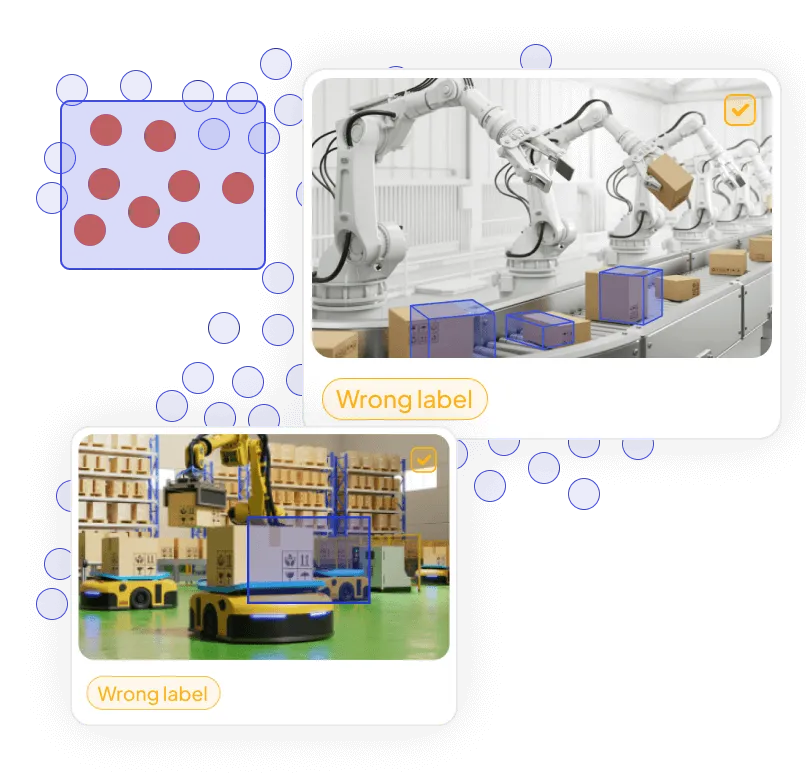
Visualize multimodal dataset structure to identify outliers, near duplicates, labeling issues, and coverage gaps before annotation or model training.
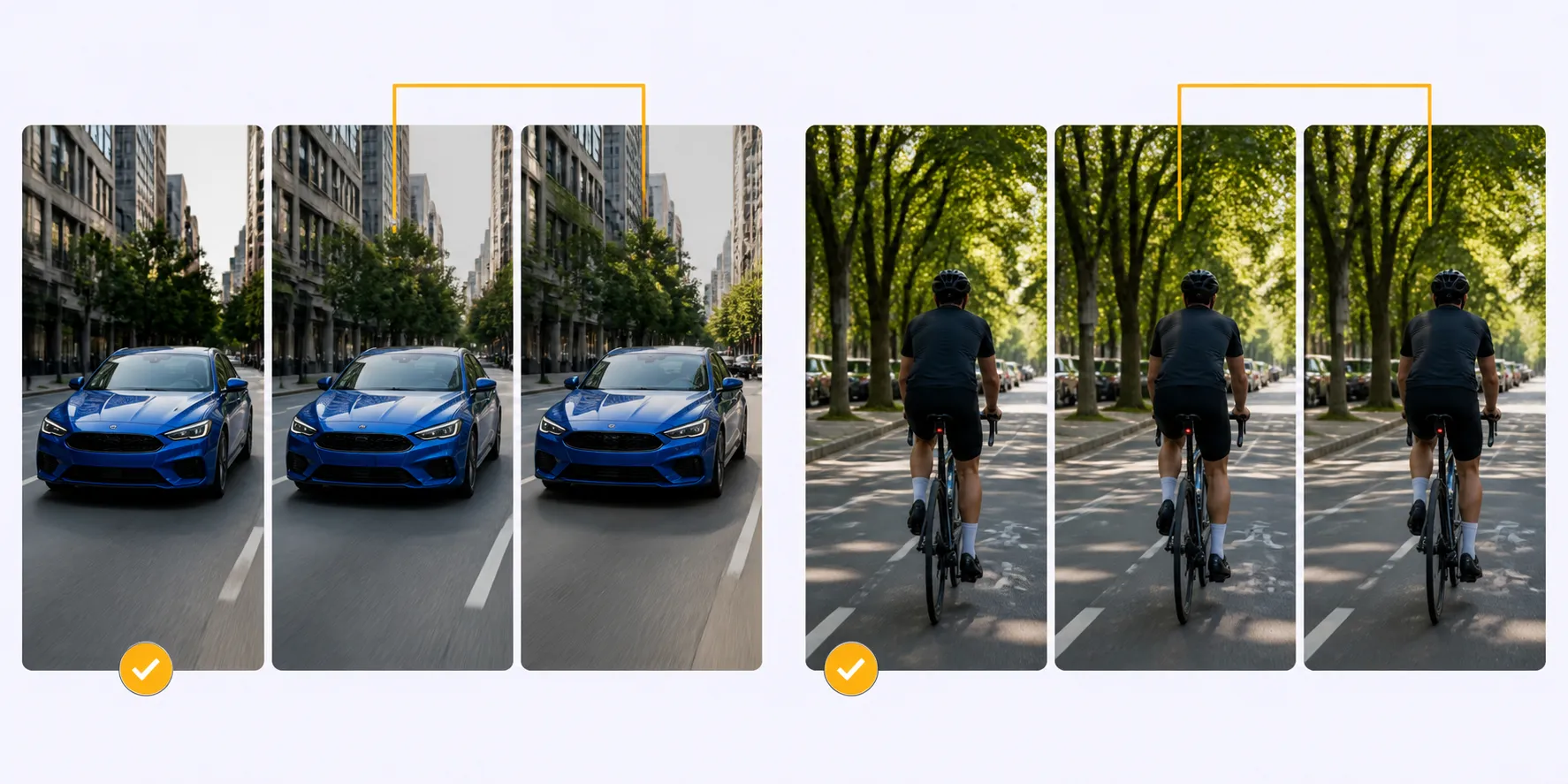
Find repeated frames and visually similar samples before labeling. Keep the strongest representative, remove redundant work, and prevent teams from annotating the same content twice.
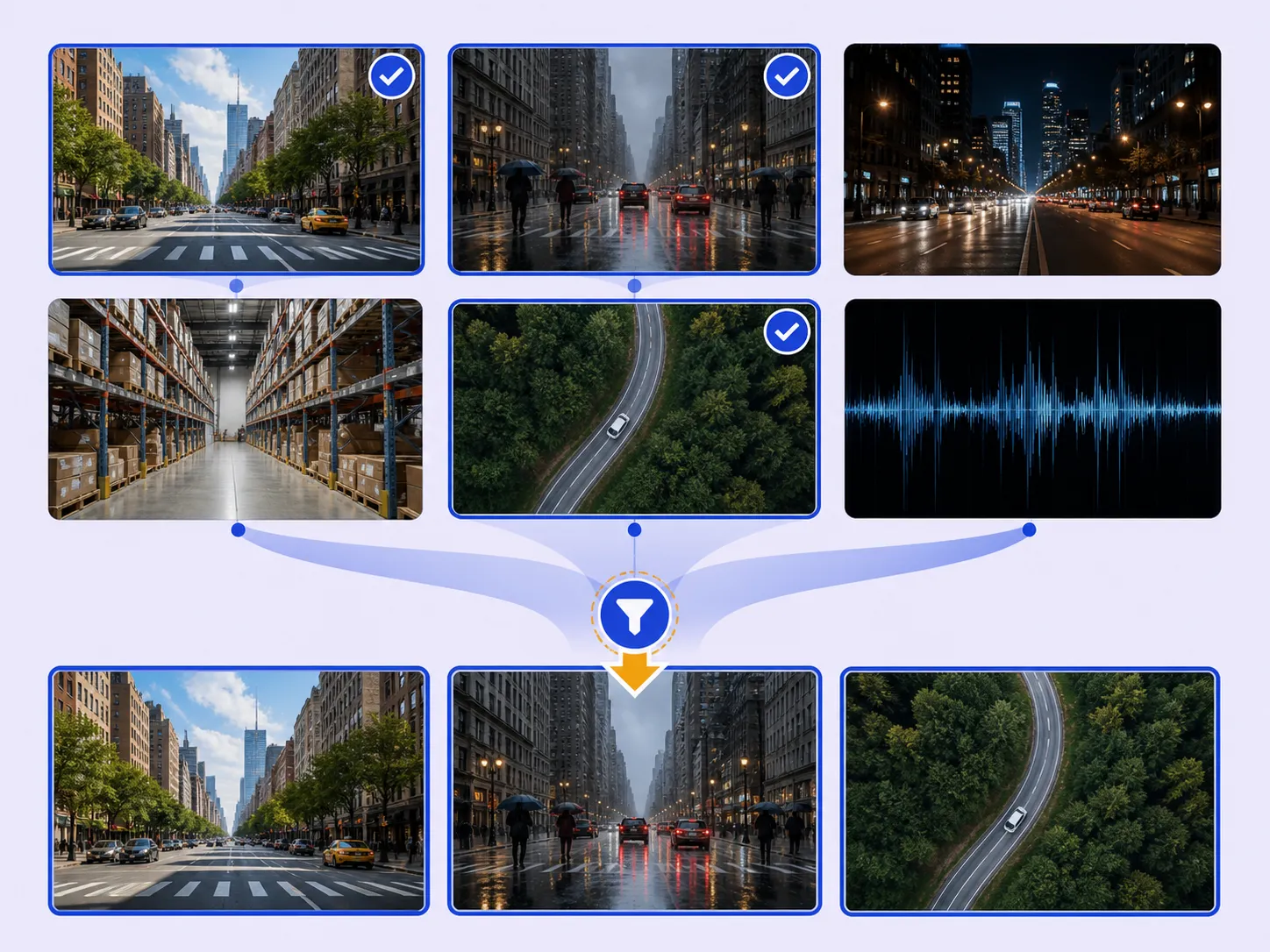
Combine source, environment, quality, annotation status, and model signals into reusable dataset views. Save focused subsets for assignment, review, export, and repeatable experiments.
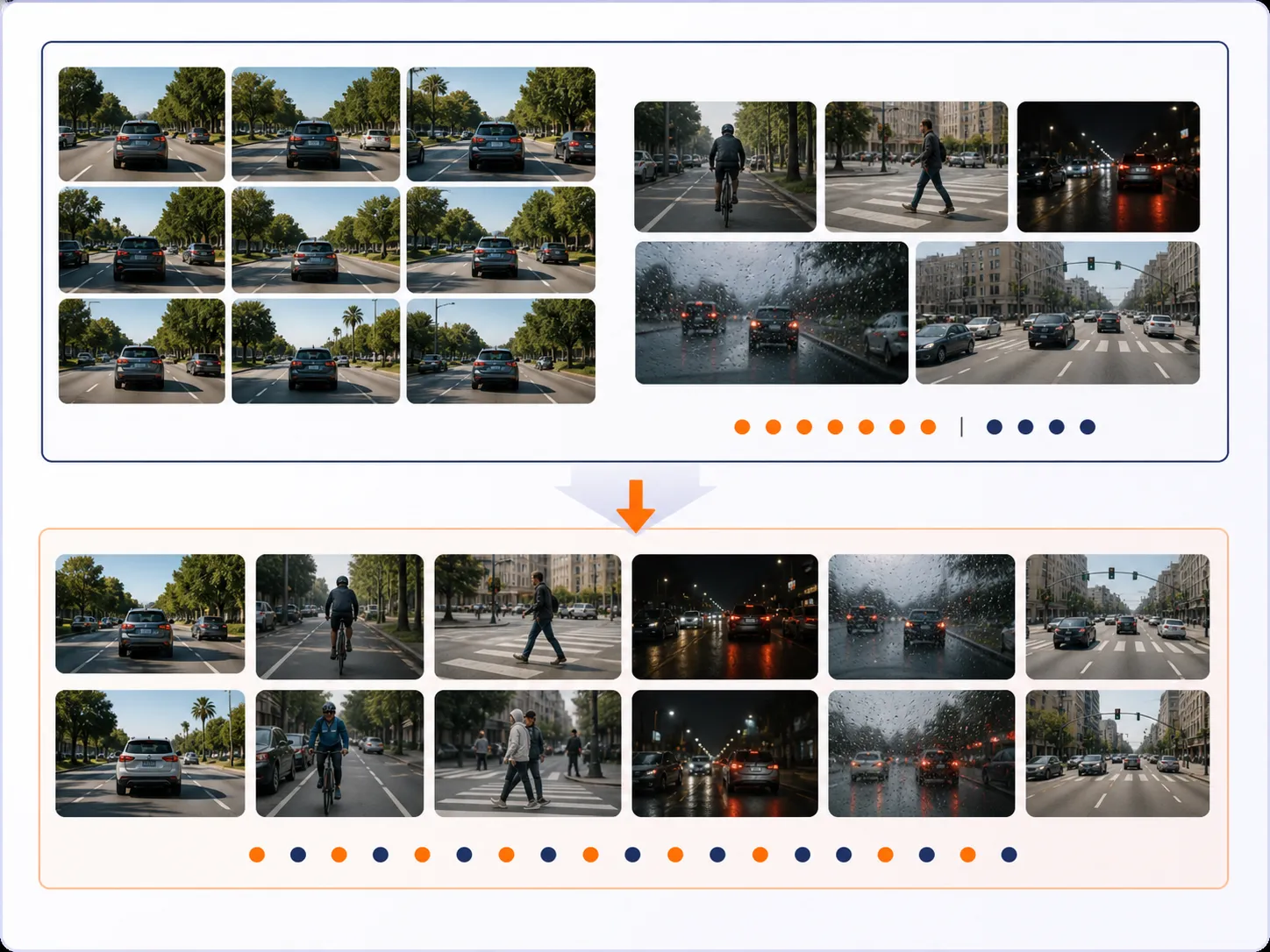
Measure class, condition, and scenario coverage, then build representative subsets that reduce dominant examples without losing rare, safety-critical cases.
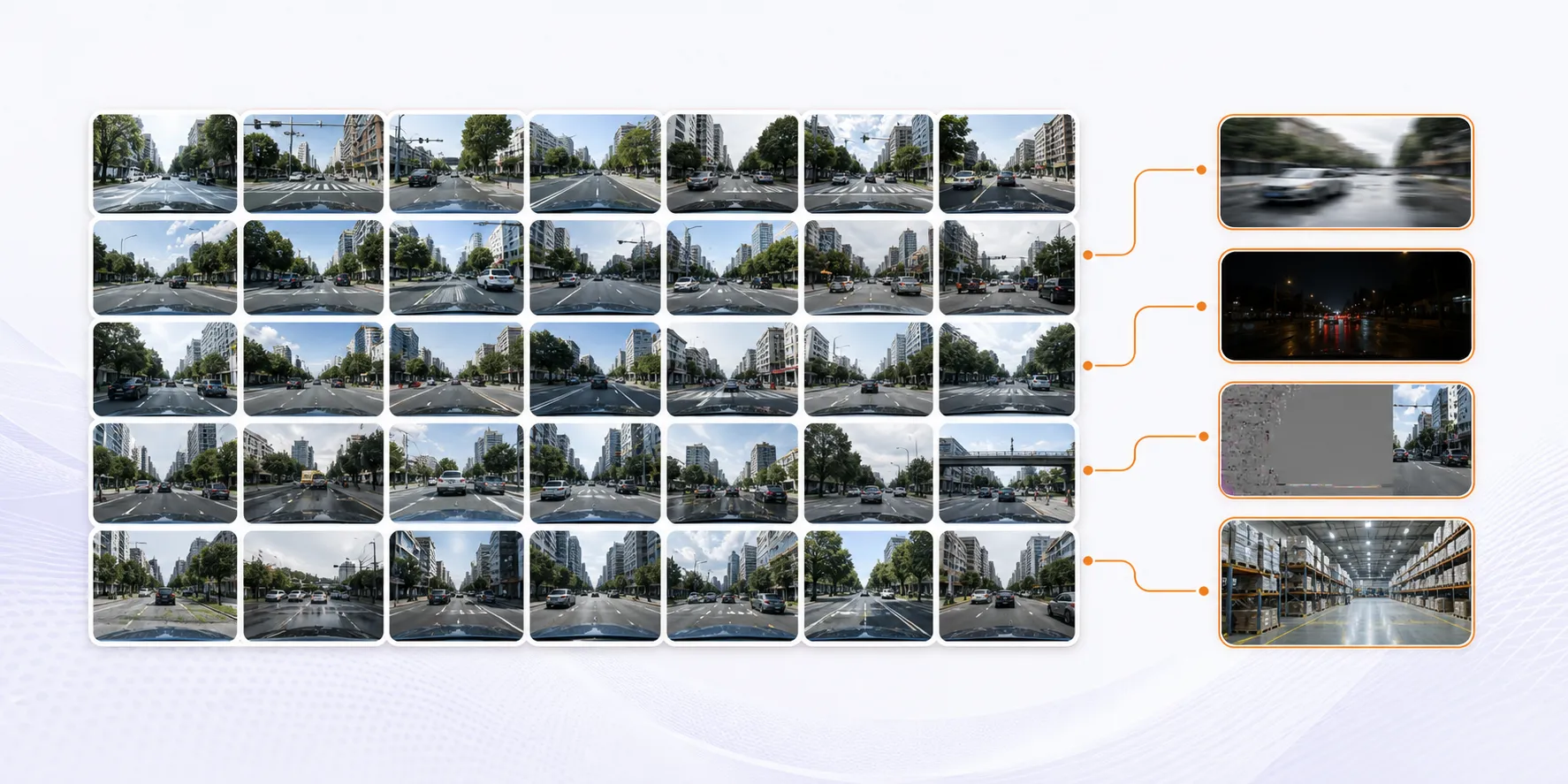
Surface blurred, underexposed, corrupted, and domain-shifted samples before labeling. Review genuine anomalies, remove unusable data, and preserve valuable edge cases.
Turn raw multimodal data into focused, versioned, training-ready datasets without separating curation from annotation and quality review.
Search and curate relevant samples in unified workflows before annotation.
Use semantic search and embedding views to focus review on relevant samples.
Curated data, reusable ontologies, and quality control reduce annotation rework.
Find relevant examples, improve dataset coverage, and prepare a traceable source set for annotation and model development.
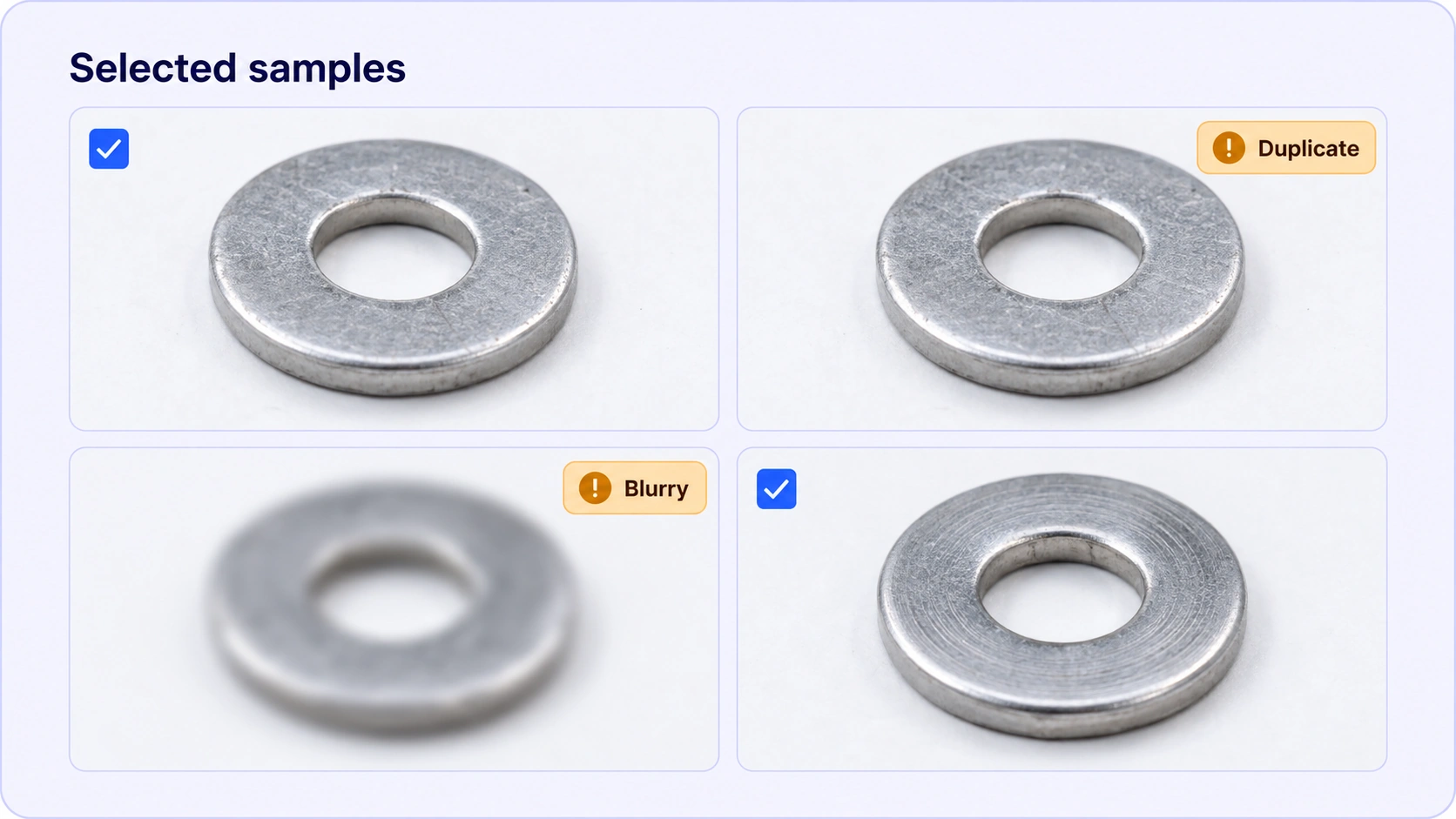
Find duplicate candidates and low-quality images. Compare the original samples and keep the examples worth annotating.
Explore dataset cleanup →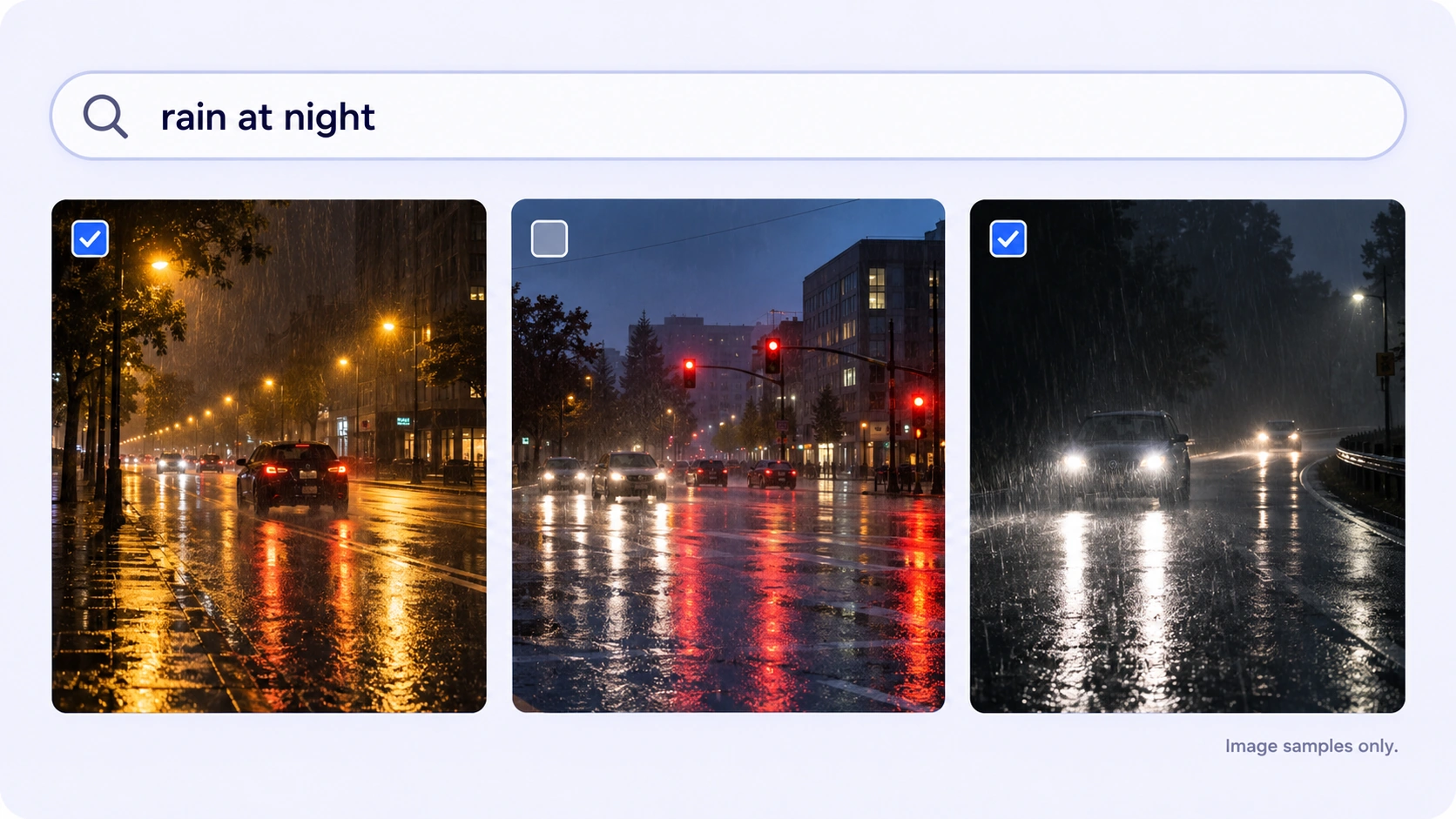
Find uncommon objects, scenes, and conditions with visual search and metadata. Select the examples your model needs to learn.
Explore rare-case discovery →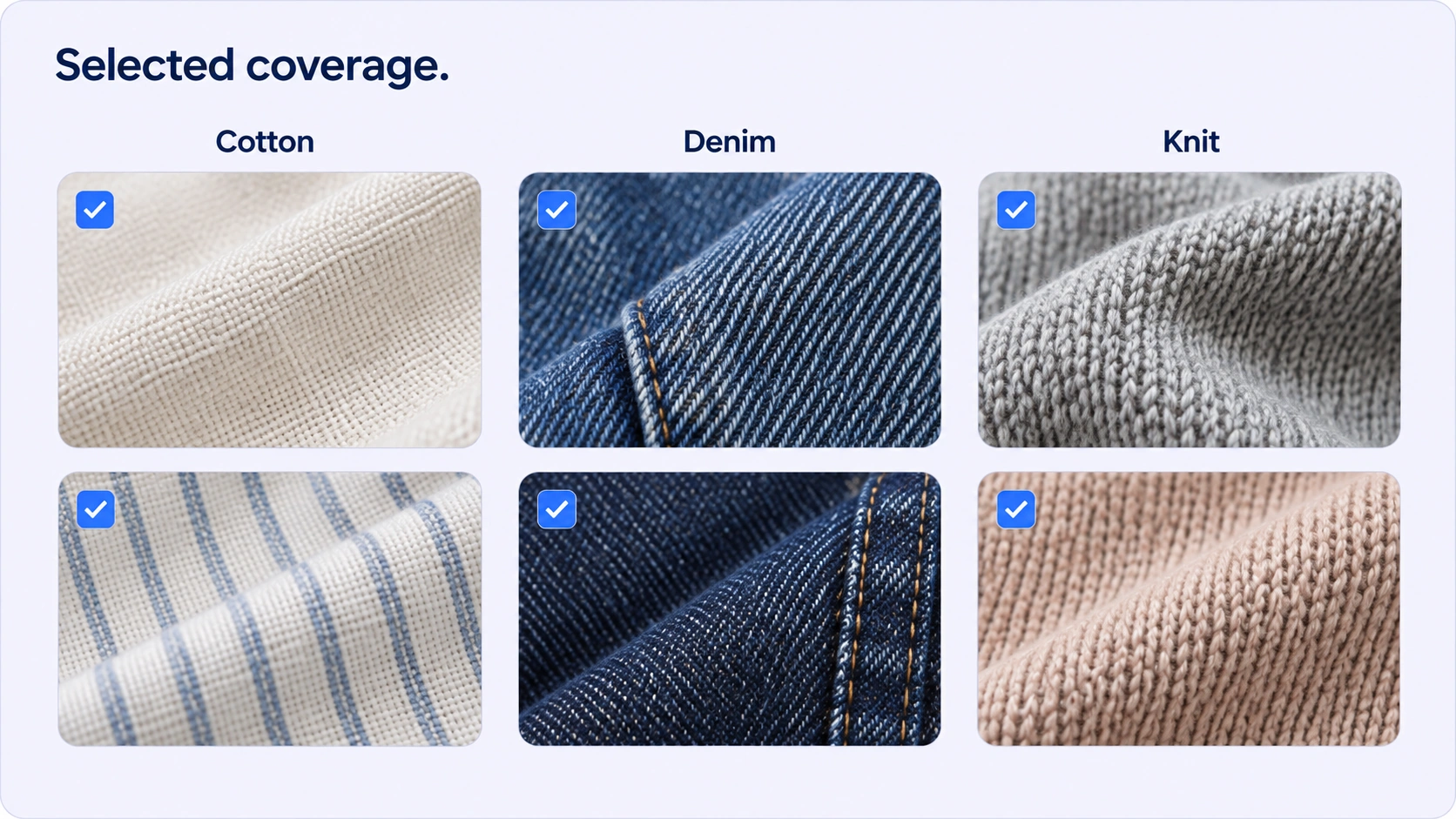
Review selected examples across known categories, viewpoints, and conditions. Address gaps in the dataset before annotation.
Explore dataset coverage →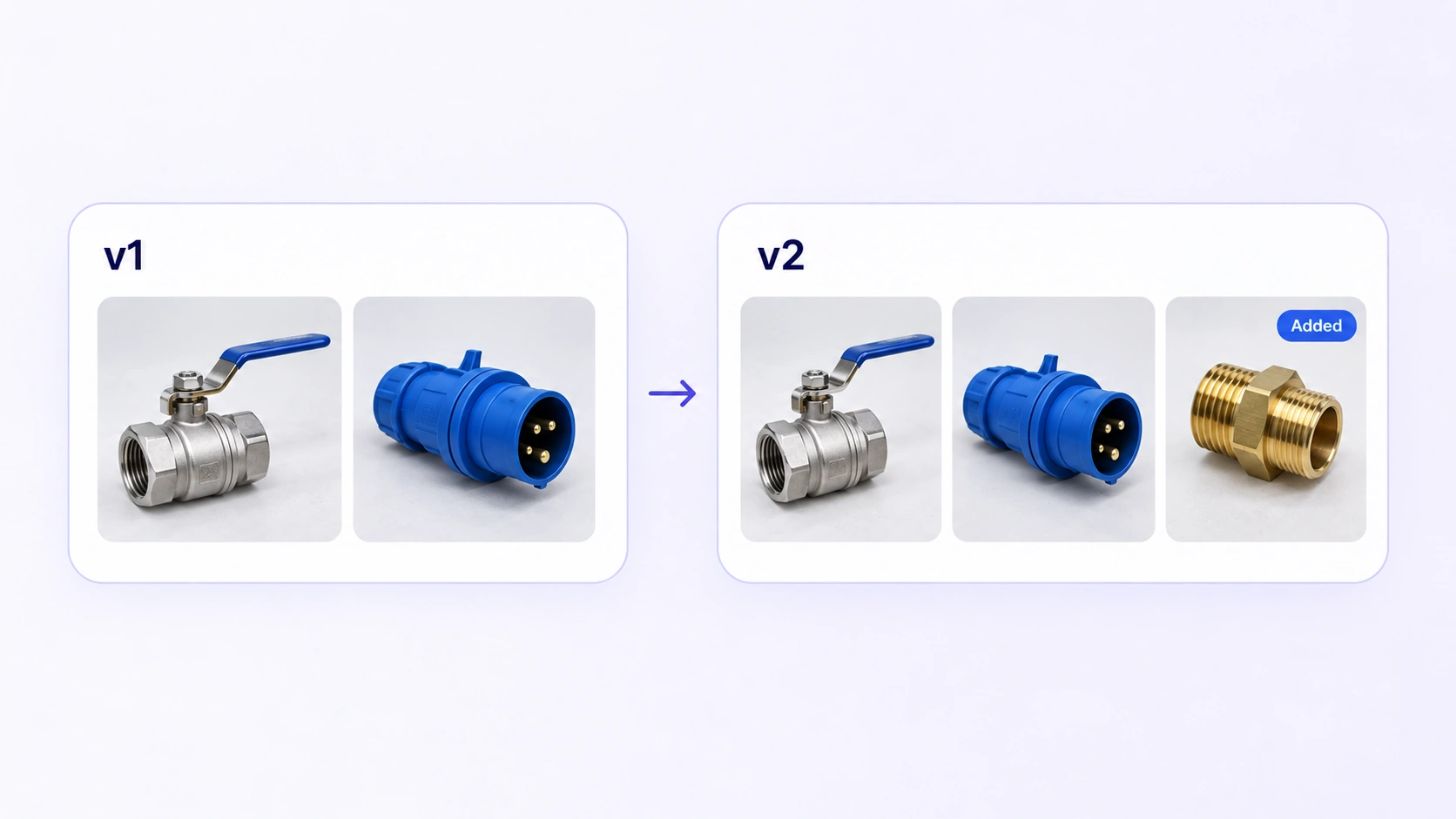
Create a fixed version of the selected dataset for annotation or training. Keep the handoff traceable as new data arrives.
Explore versioned handoff →Answers about AI data curation, dataset preparation, semantic and similarity search, embeddings, duplicate detection, balancing, lineage, annotation workflows, and governed review.
Talk with the Unitlab teamData curation is the process of selecting, cleaning, organizing, enriching, and versioning raw data so it becomes useful for model training and evaluation. Unitlab keeps those decisions connected to annotation, review, and dataset release.
Dataset management documentationSemantic search uses content meaning and similarity to surface relevant samples even when filenames and metadata are incomplete. Teams can discover rare cases, representative examples, and related media without inspecting every item manually.
Data exploration documentationYes. Embedding and similarity views help teams inspect dataset structure, isolate outliers, and group duplicate or near-duplicate samples. Curators can retain representative items and reduce redundant labeling before training.
Dataset curation documentationTeams create controlled versions as data is filtered, annotated, reviewed, or released. Version history and lineage preserve which samples changed, why a subset was created, and which dataset supported a model or evaluation run.
Dataset version documentationYes. Selected samples can move from curation into model-assisted annotation, human review, rework, approval, and release without exporting to a separate tool. This keeps assignments, issues, and quality decisions traceable.
Annotation workflow documentationUnitlab supports image, video, audio, text, document, medical imaging, geospatial, and pathology data. Teams can use consistent dataset, ontology, workflow, and review controls across modalities.
Multimodal data documentationYes. Teams can connect custom models to generate predictions, embeddings, pre-labels, and quality signals. Human review remains part of the governed workflow before curated data is approved or released.
Model integration documentationDiscover, filter, deduplicate, balance, version, and route multimodal training data into annotation and review from one governed workspace.


We use cookies to improve your experience. See our Privacy Policy and Cookie Policy.