Native PDF Annotation
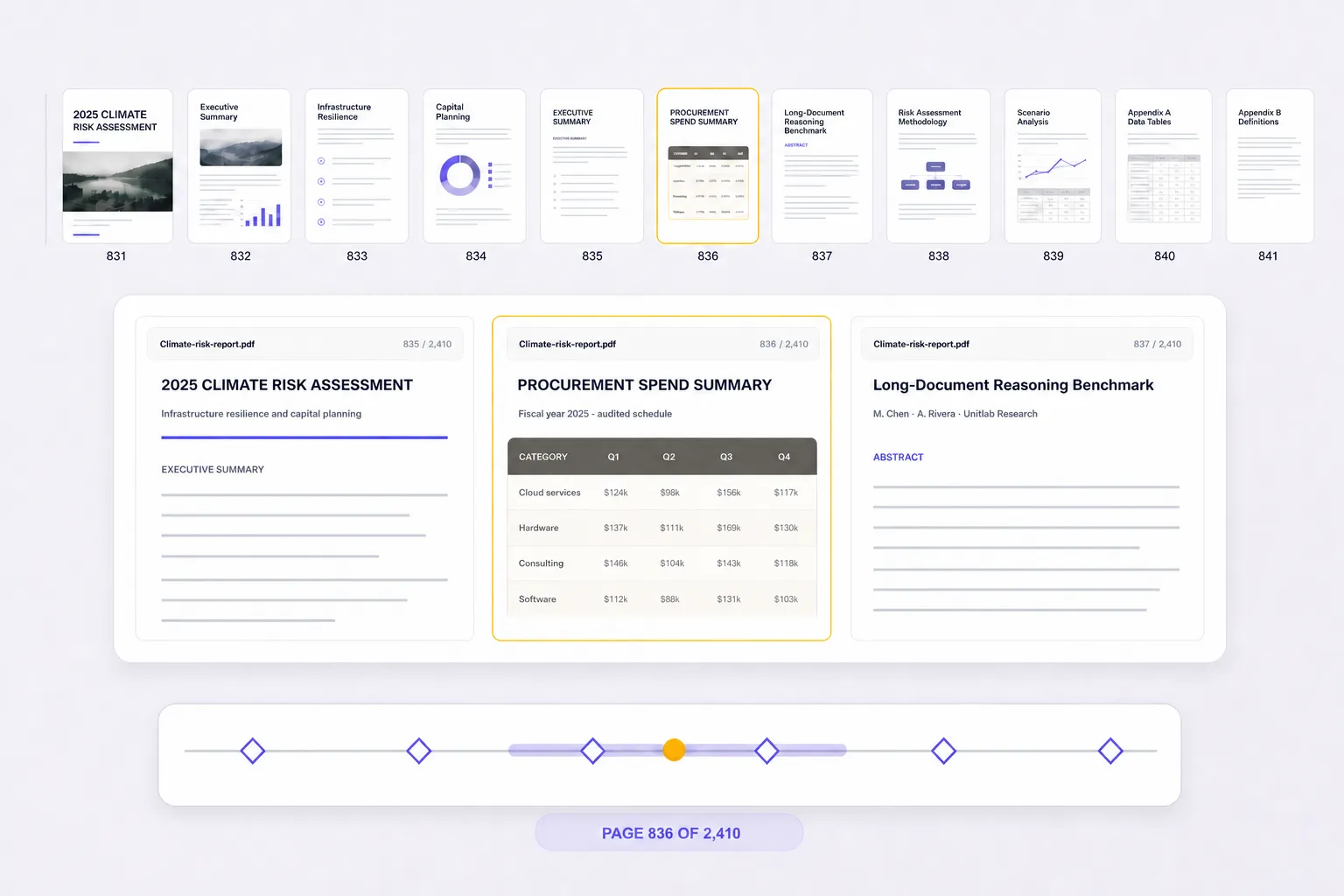
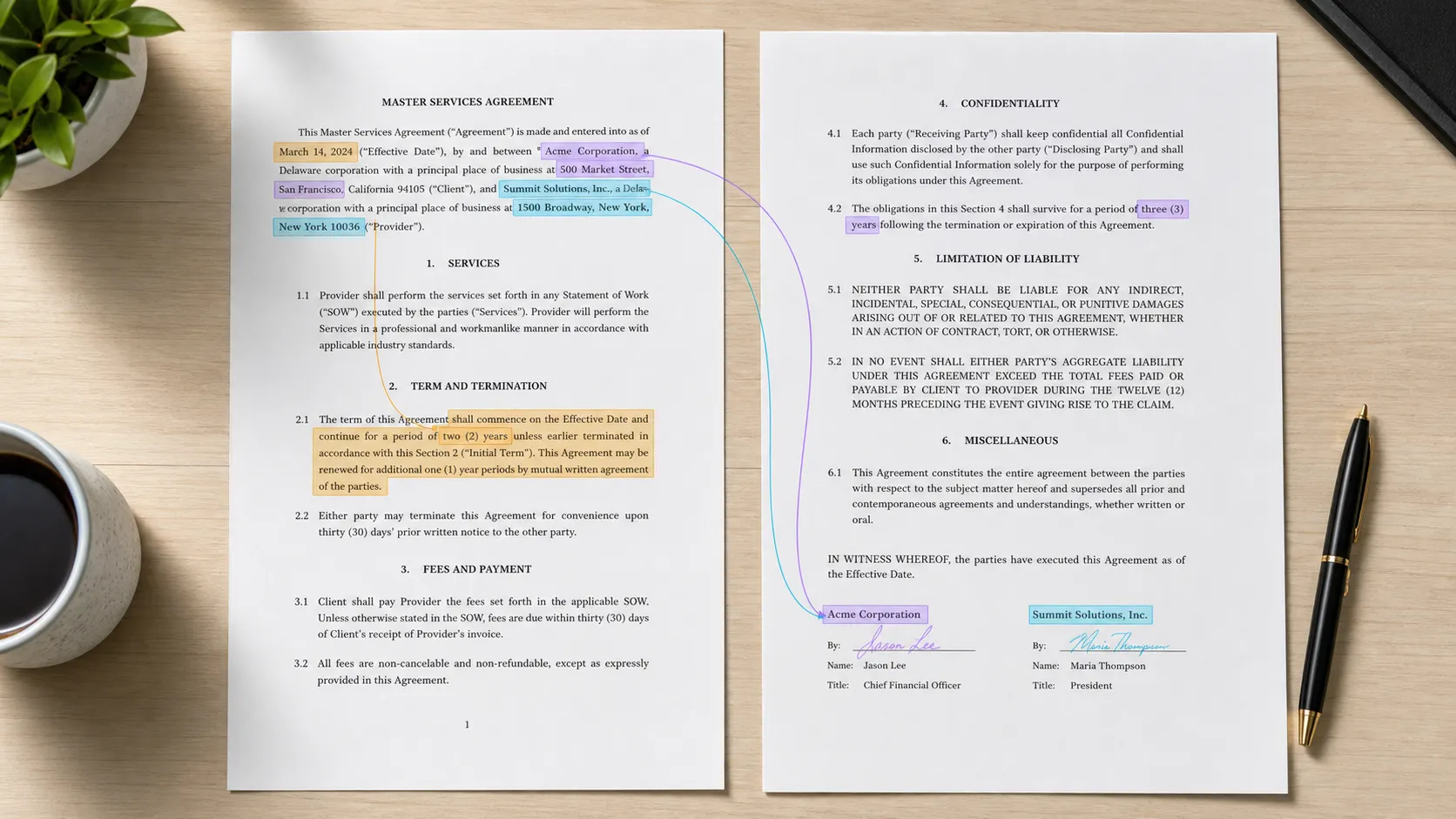
Annotate the original multipage PDF directly, without converting pages into image files. Navigate pages while preserving document identity, annotations, review state, history, and release context.
Annotate PDFs, invoices, forms, tables, and scanned documents for Document AI with OCR-aware regions, text entities, relations, and governed quality assurance.
Navigate multipage PDFs, select native text, create page-aware regions, apply document ontologies, and review every change without losing context.

Annotate the original multipage PDF directly, without converting pages into image files. Navigate pages while preserving document identity, annotations, review state, history, and release context.

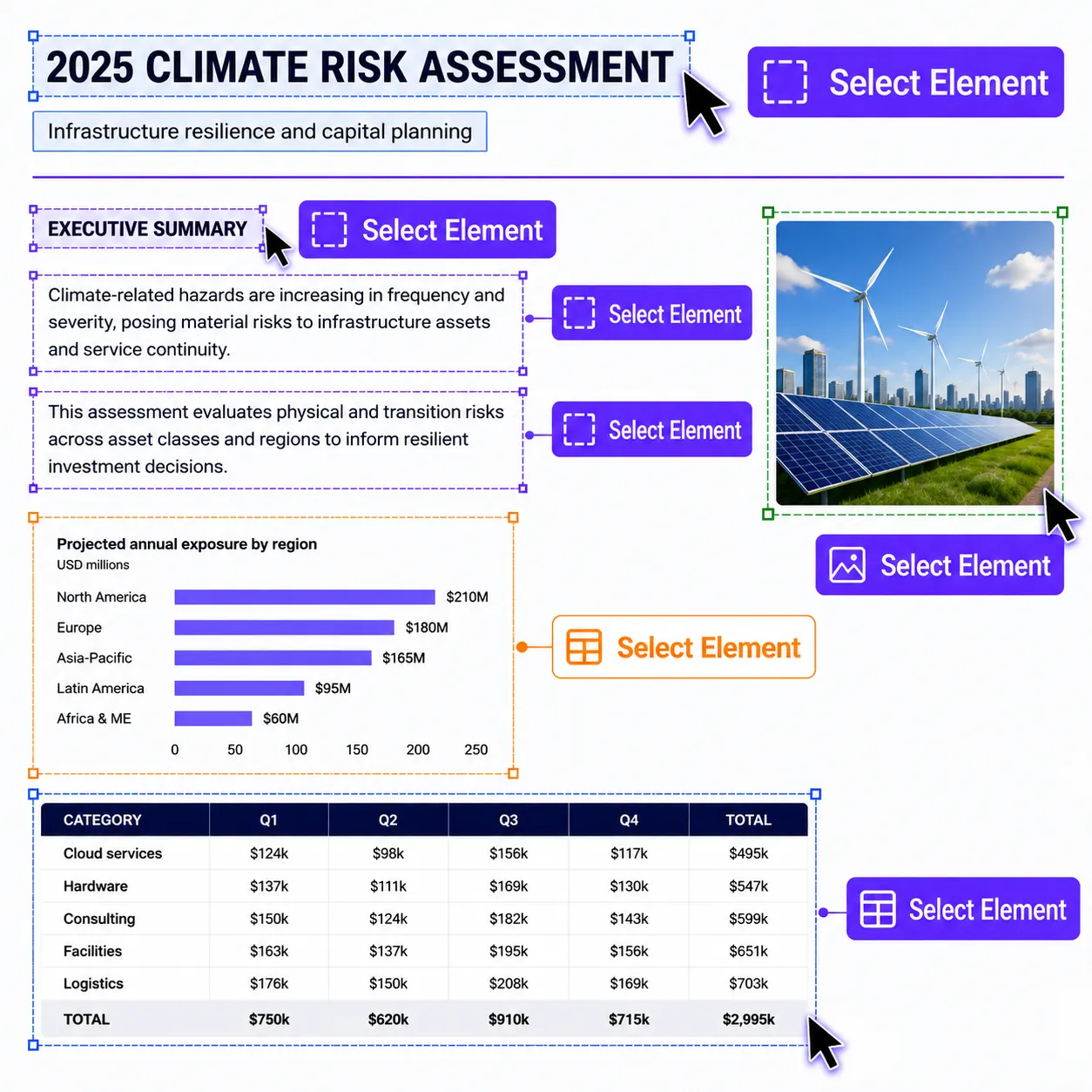
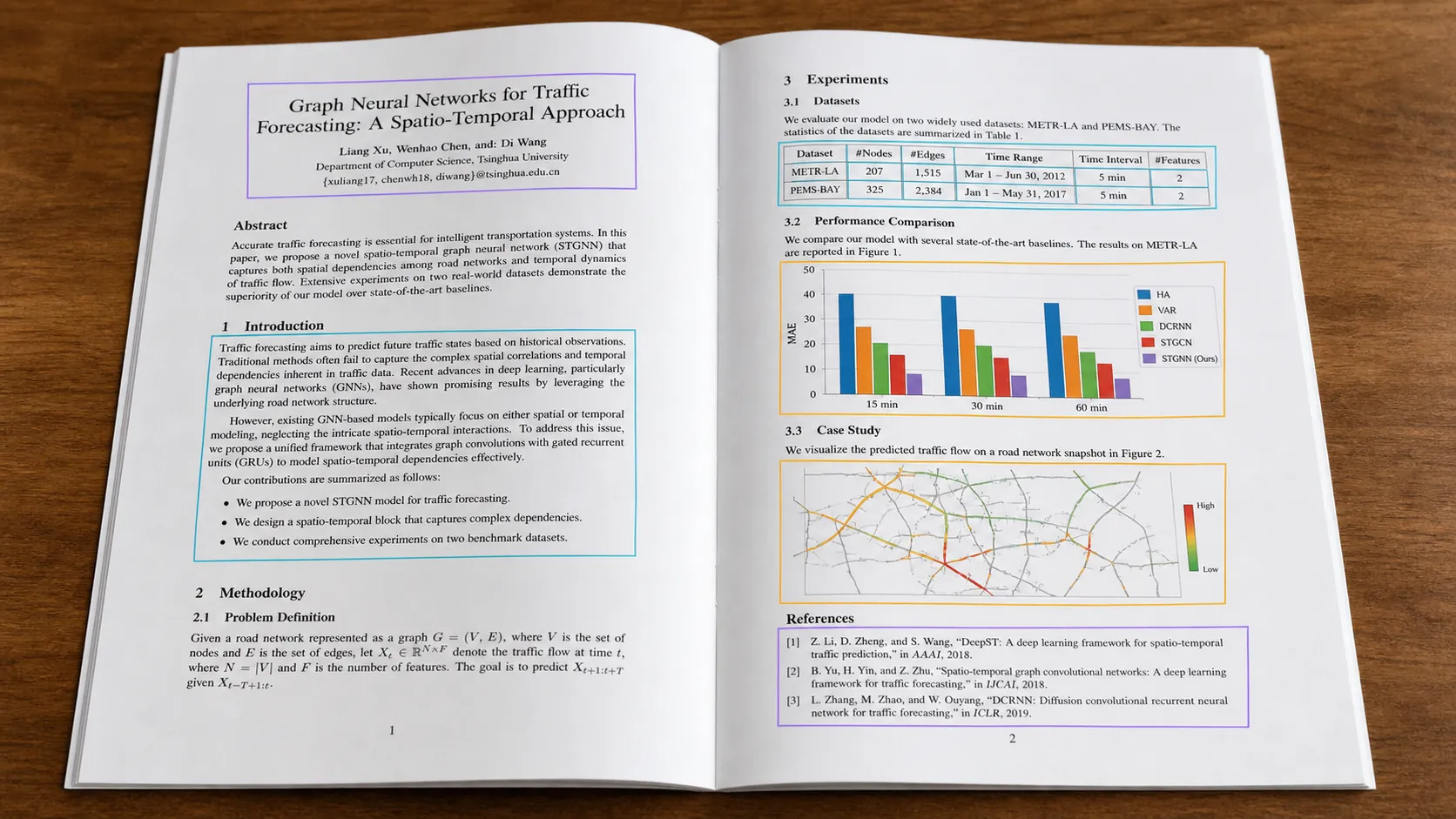
Select native PDF text, images, tables, and other embedded page content directly. Copy text normally or turn selected content into structured, page-aware annotations.

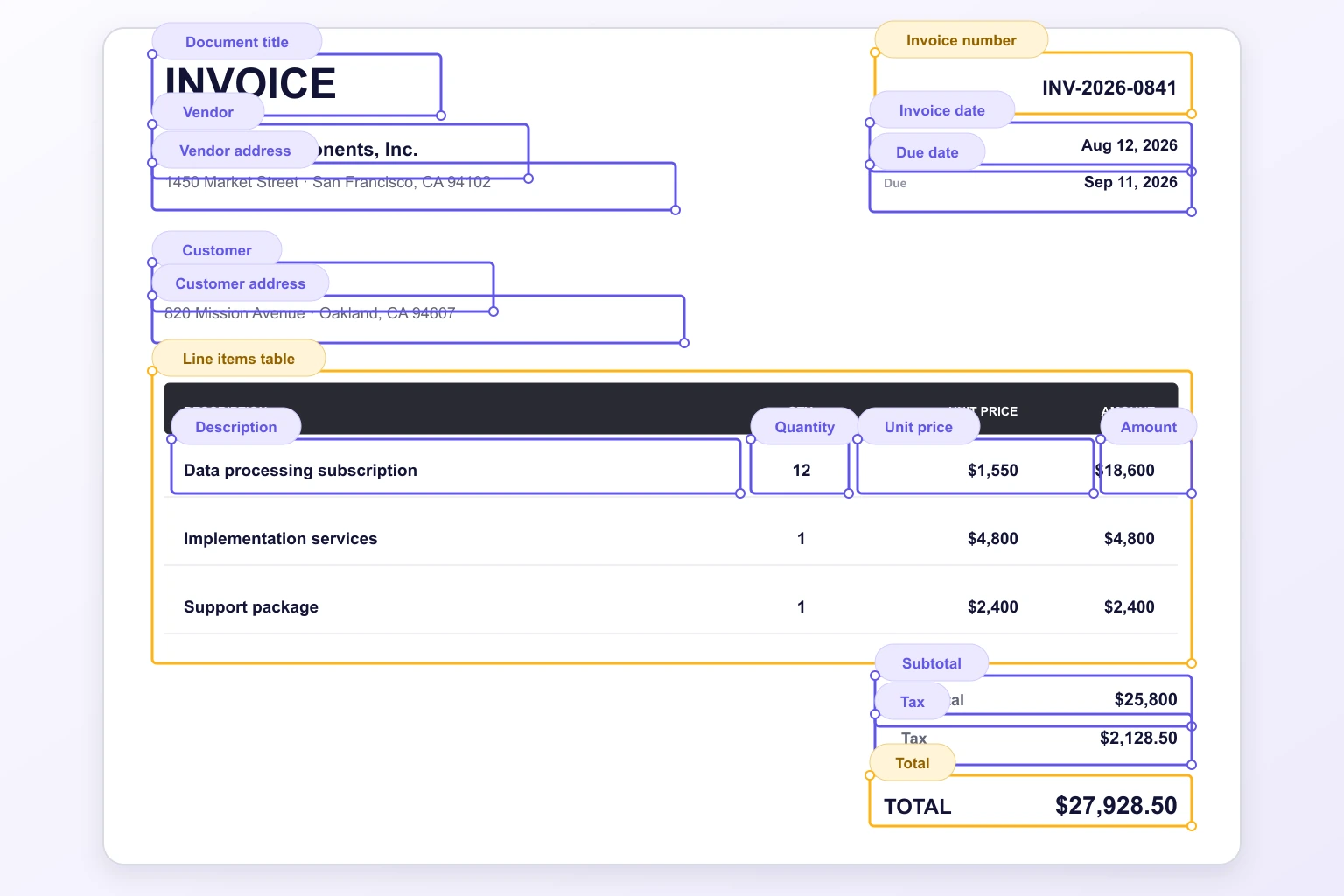
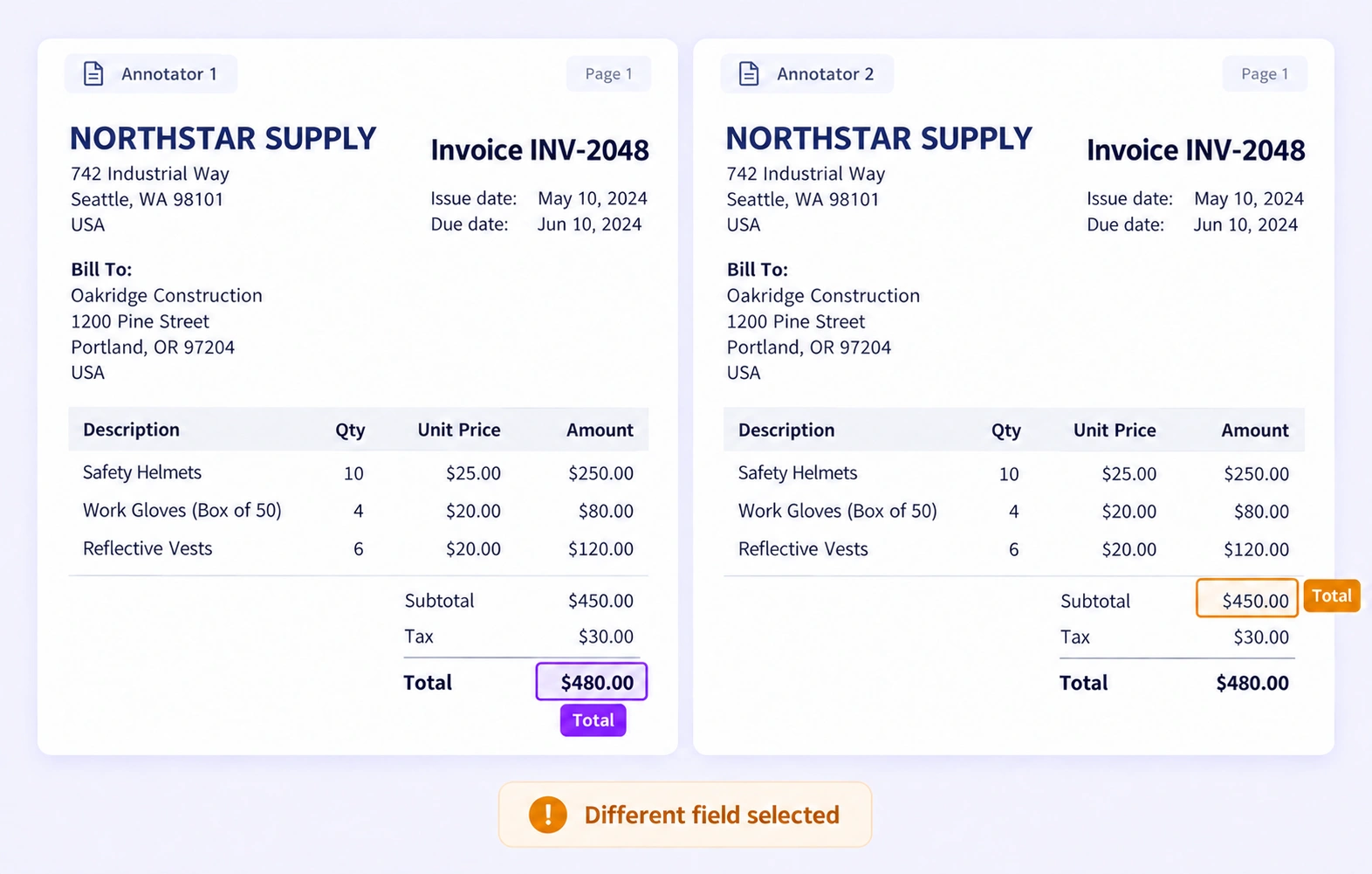
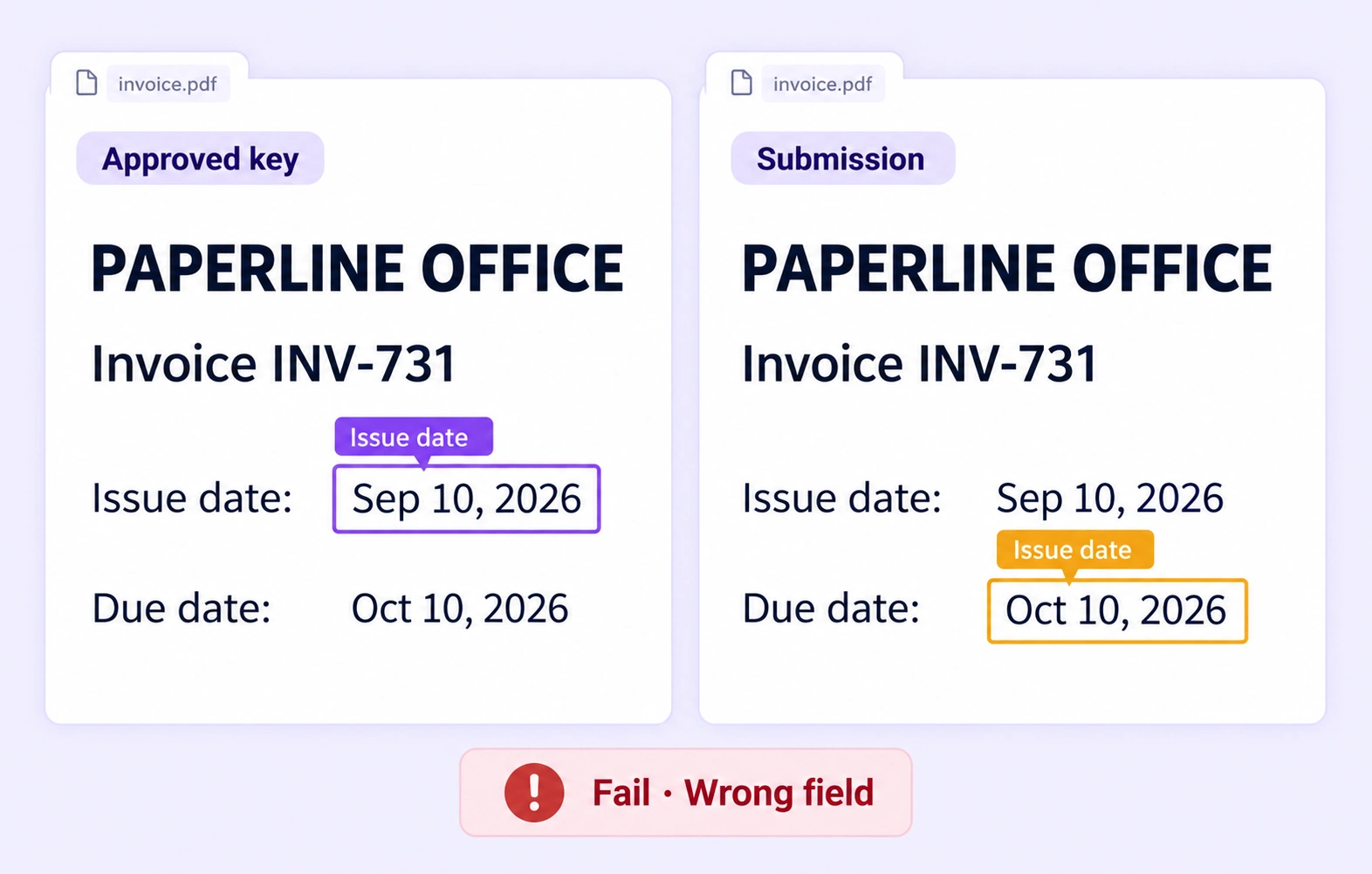
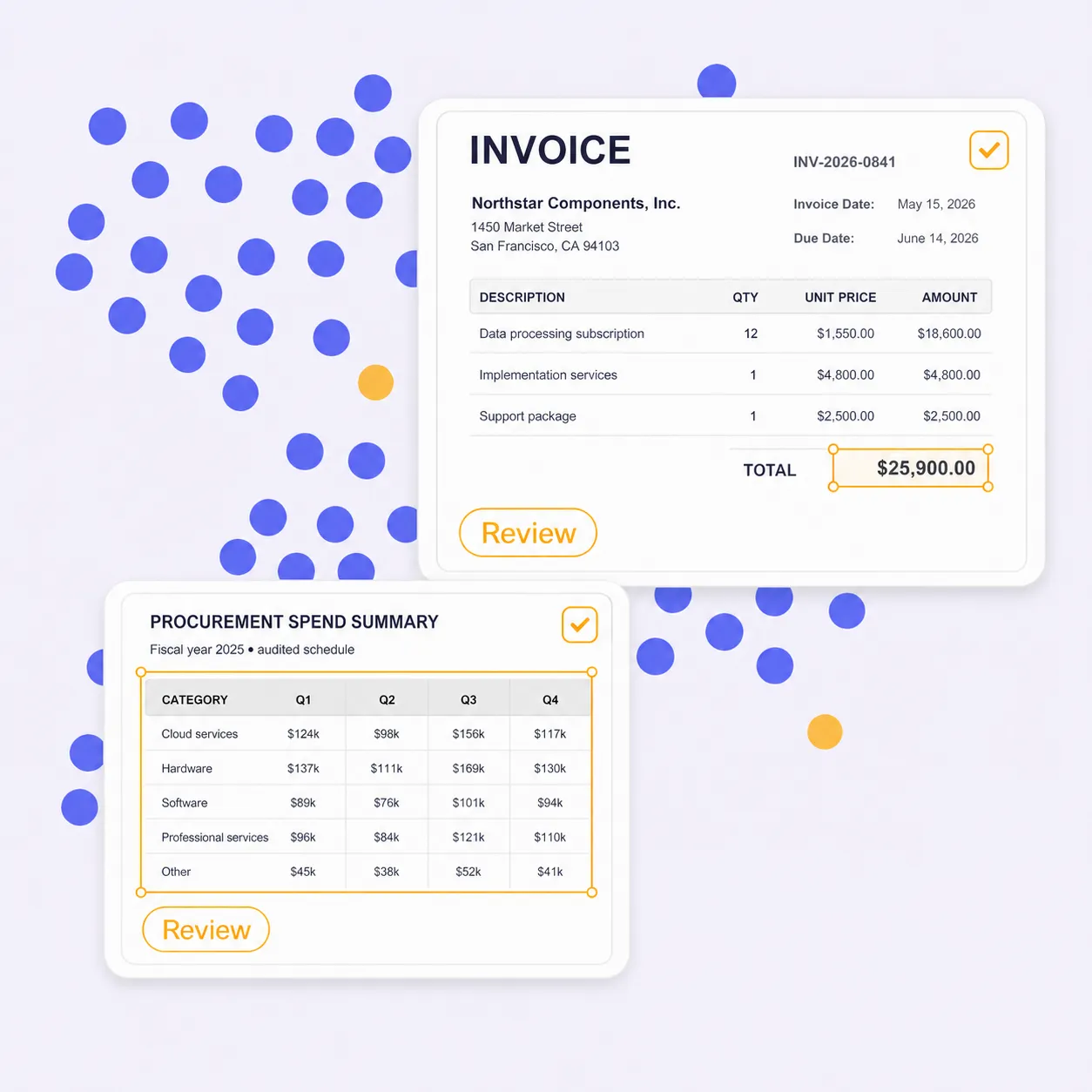
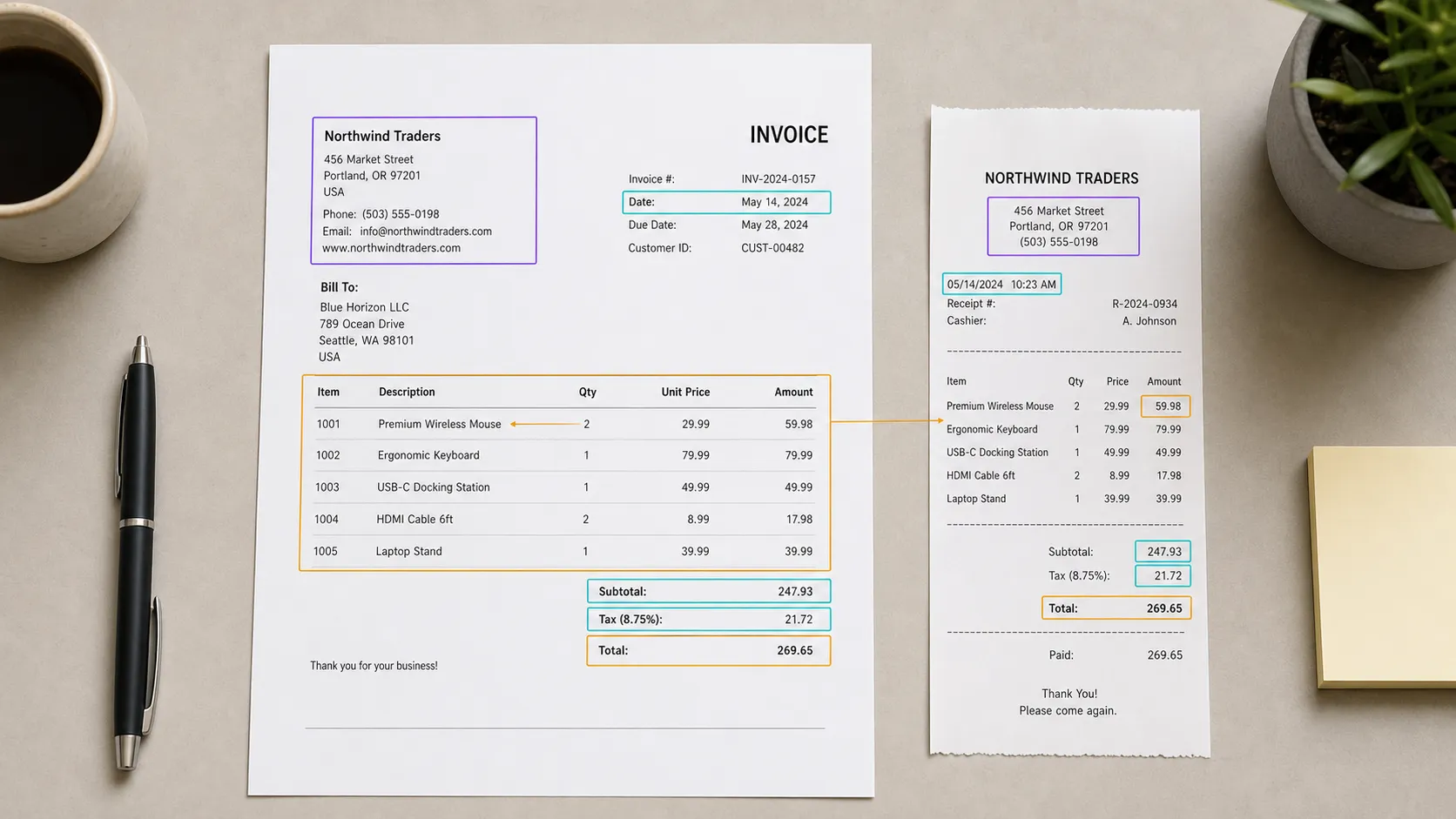
Review OCR output from invoices, label every text field and line-item table, and preserve extracted values with page-aware classes, properties, and relations.

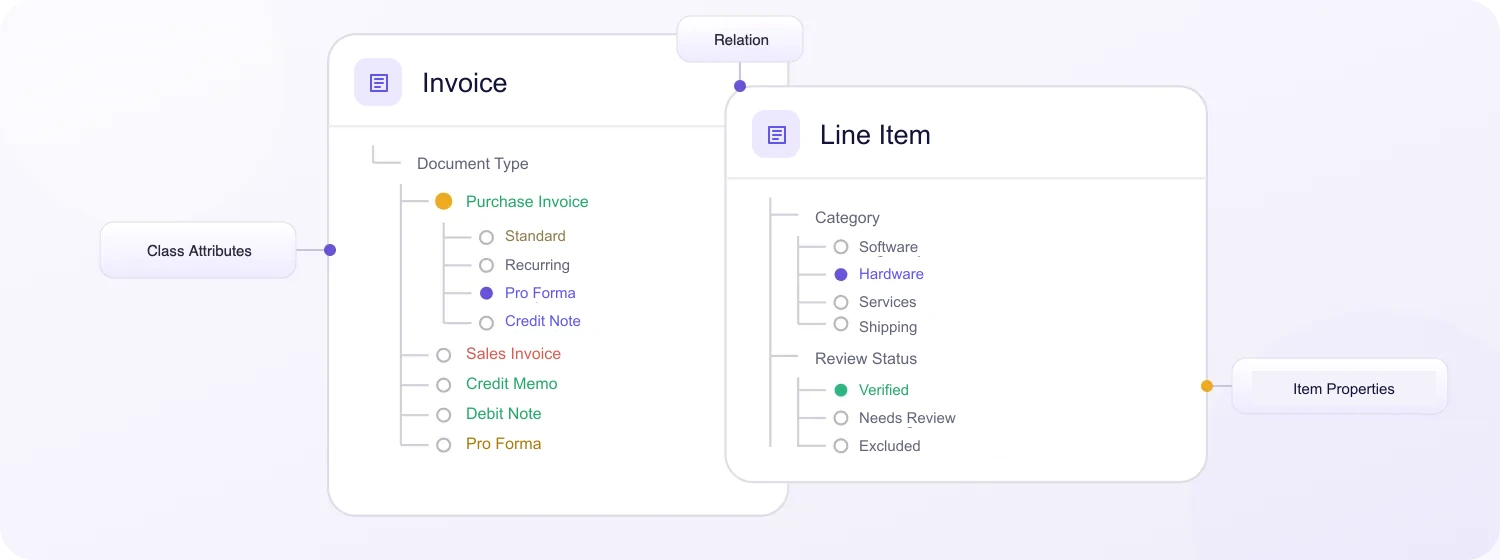
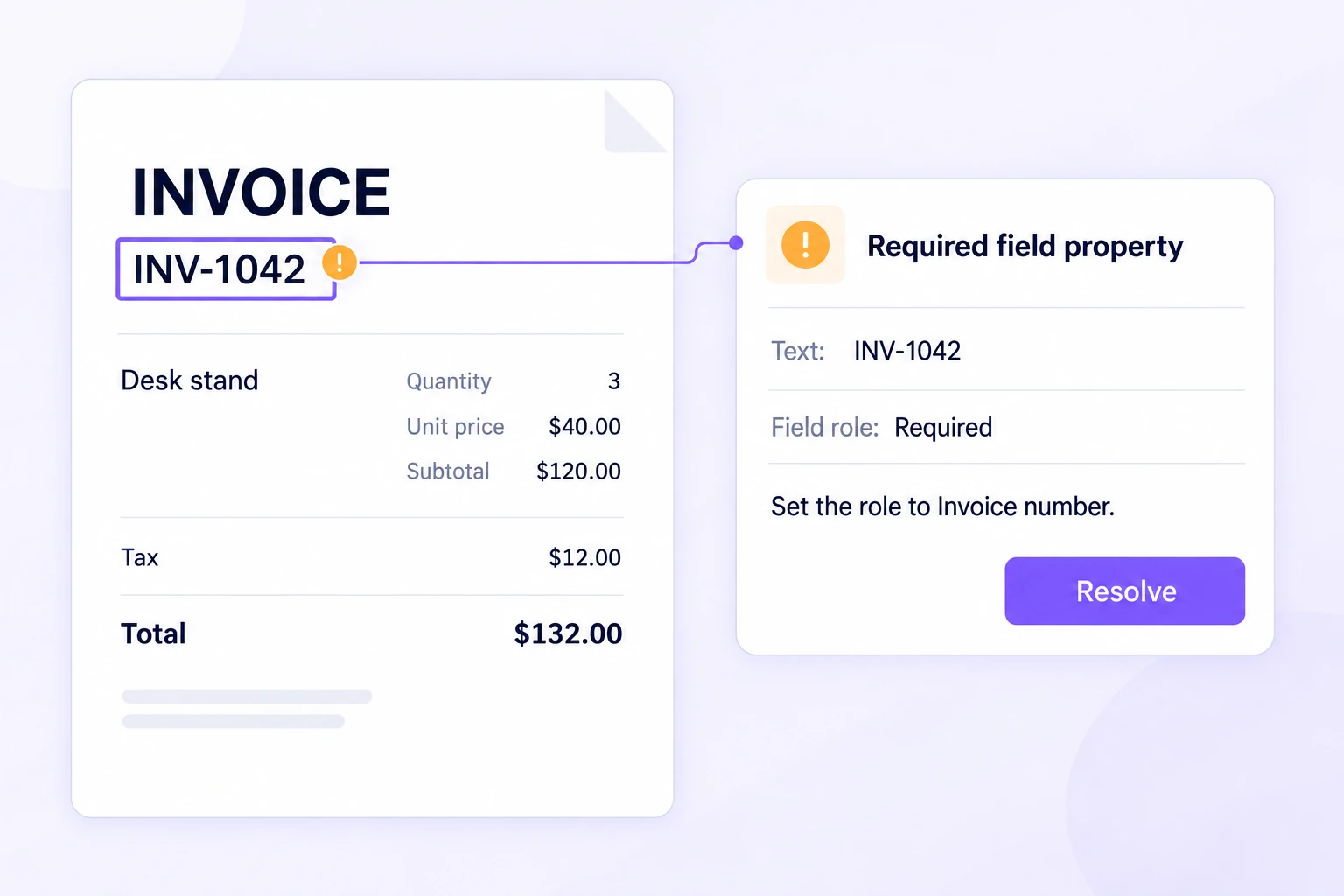
Model invoices, line items, clauses, parties, and other document concepts with nested class attributes, Item Properties, and relations while preserving page and document context.

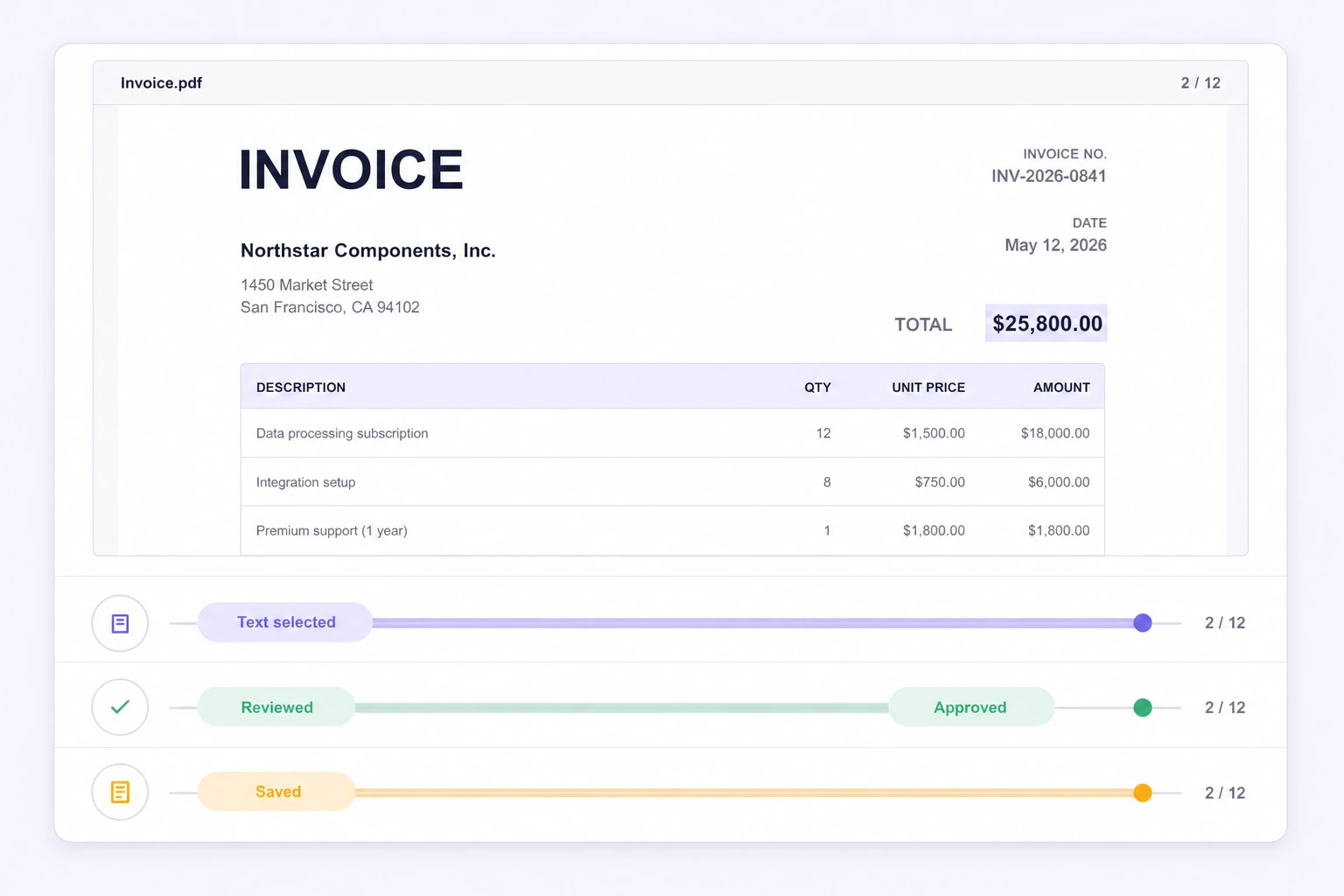
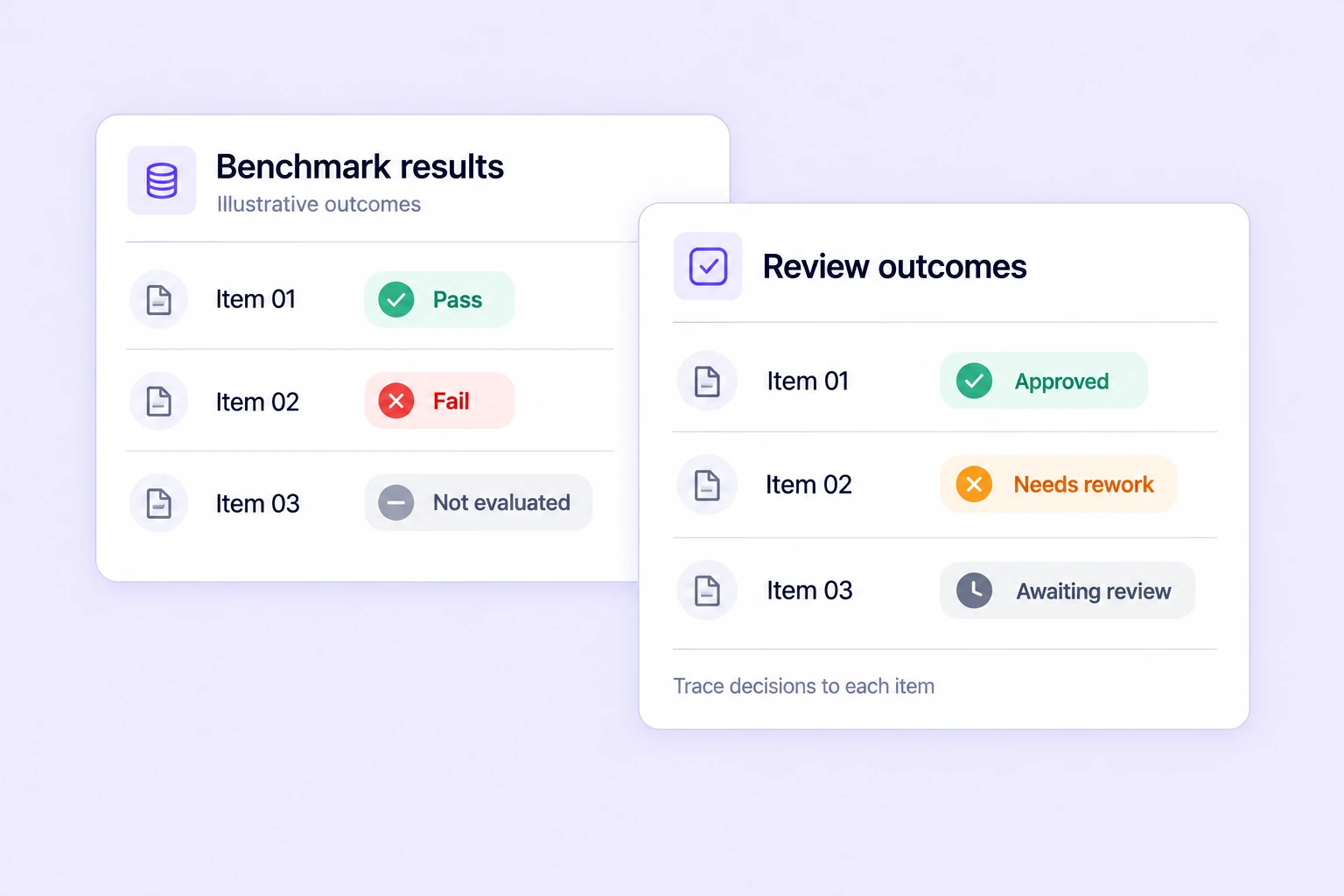
Review page identity, selected text, labels, relations, comments, issues, save events, and approval decisions in one document-level history.

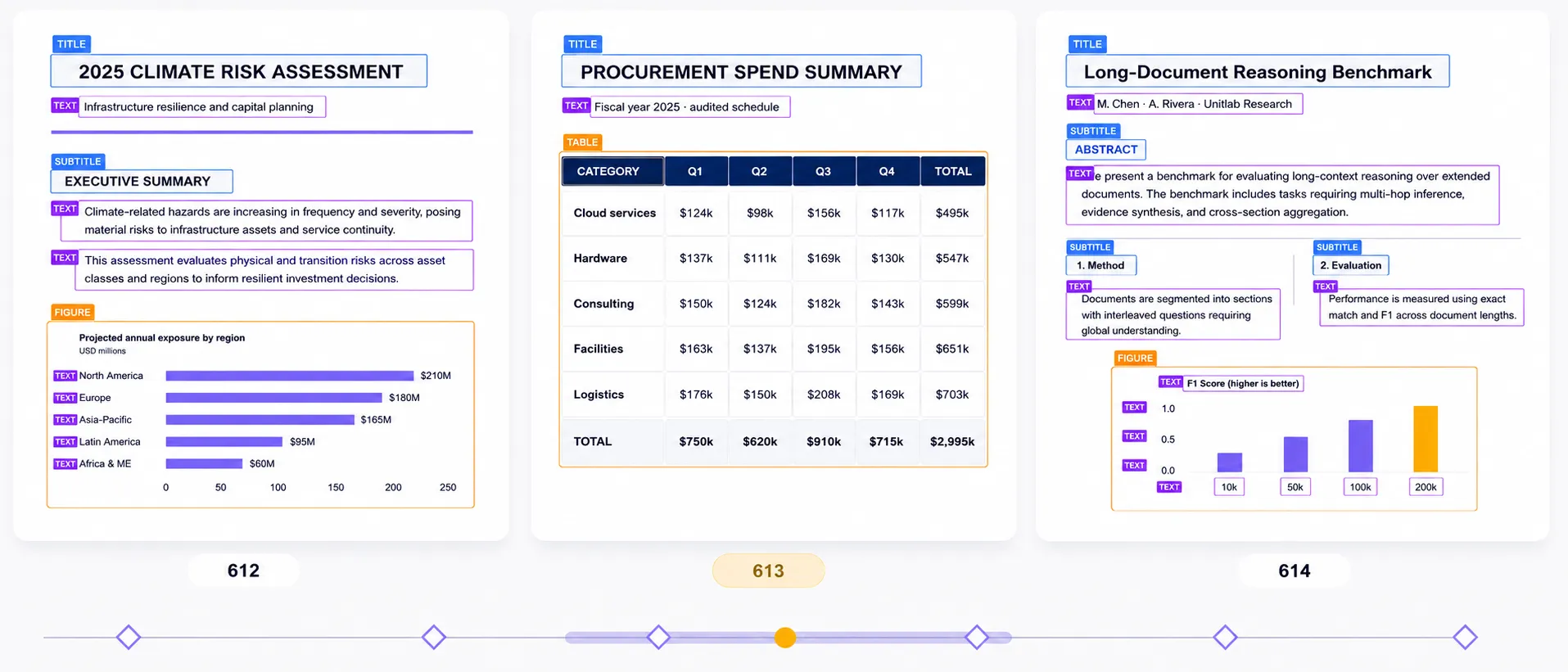
Navigate 2,410-page PDFs with thumbnails and footer controls while preserving off-page annotations, Item Properties, review state, and complete document history.
Annotate complex document datasets faster with AI-assisted automation, scalable workflows, and lower operational costs.
Label text and entities, page-aware regions, document layouts, tables, OCR fields, classifications, figures, document properties, and relations on PDF pages.
Label selectable text spans and document entities with reusable classes, attributes, and page context.
Mark text, field, image, or visual regions with page-aware bounding boxes.
Label headers, paragraphs, sections, columns, and other layout regions on PDF pages.
Annotate tables, rows, columns, cells, headers, and line-item relationships.
Review OCR text and label fields, values, and extracted text regions on scanned or native PDFs.
Assign document type, page type, intent, status, or other whole-item labels.
Mark figures, diagrams, signatures, logos, and embedded image regions.
Describe the complete PDF with source, quality, category, and other document-level context.
Connect clauses, parties, visual regions, properties, and other document objects explicitly.
Search, version, and inspect document datasets, connect AI models, and move annotations through review and approval.

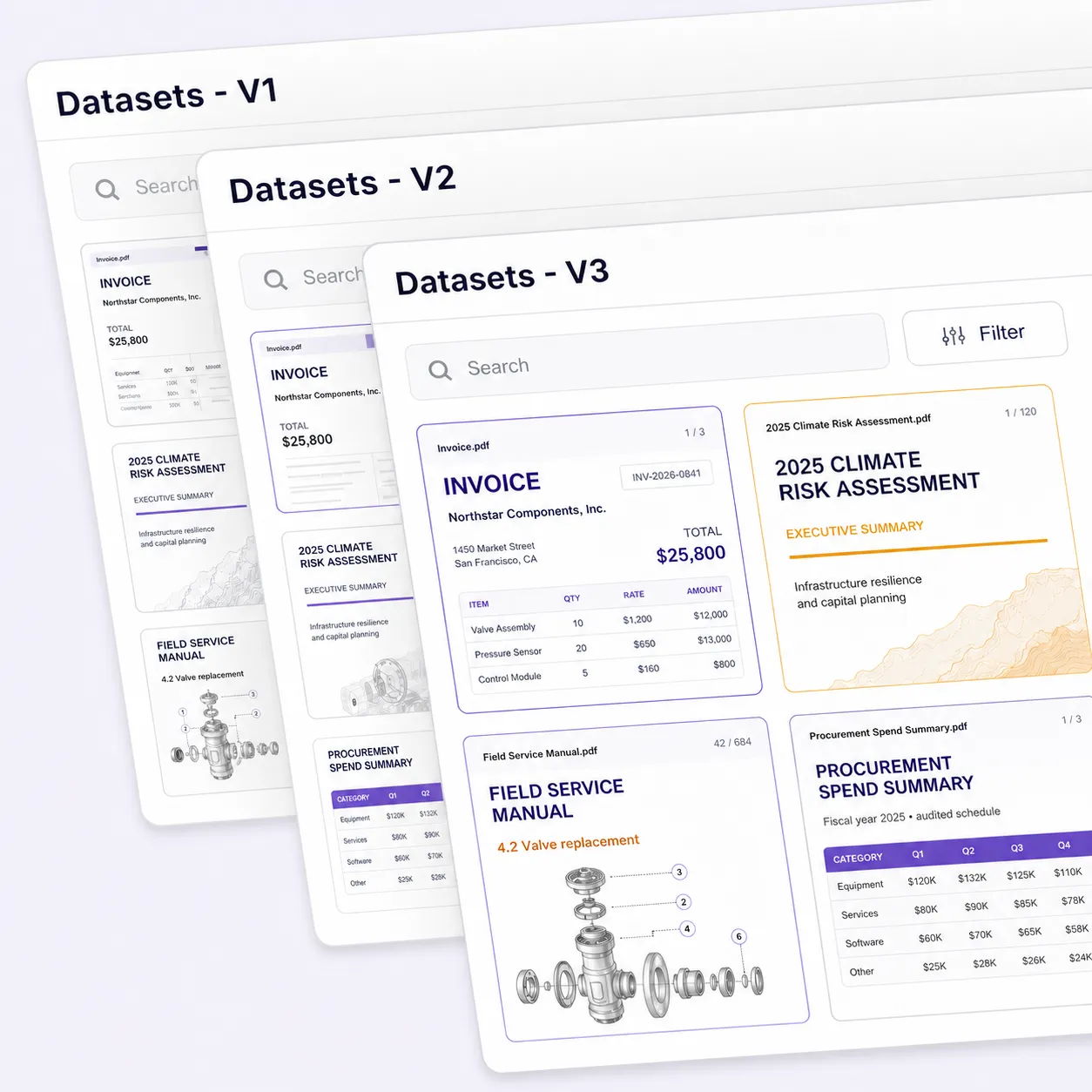
Create versioned snapshots of PDF datasets, page annotations, and curated collections while keeping every release traceable.

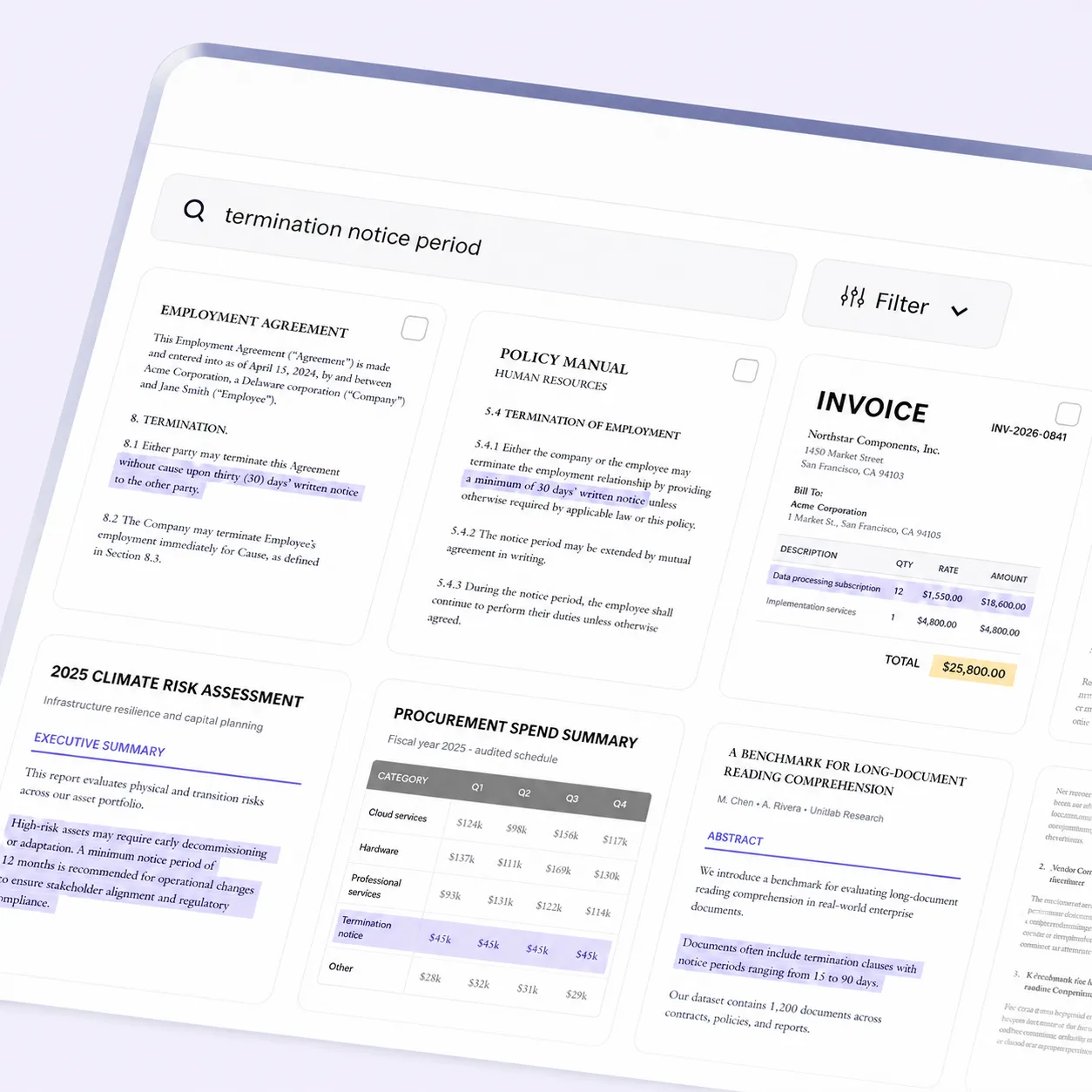
Search document datasets with natural-language queries and return only relevant PDFs, pages, or cases for curation and review.

Explore similar documents and pages, clusters, outliers, duplicates, and labeling issues before training.

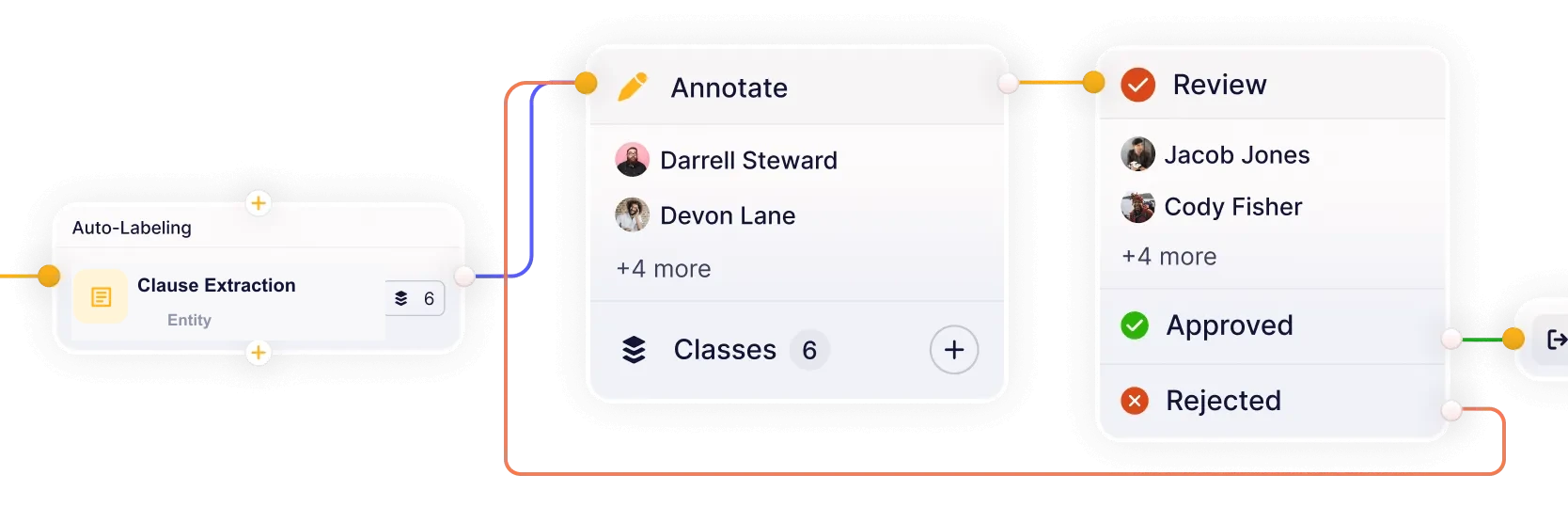
Build workflows that connect models, annotation, review, and quality assurance in one continuous loop. Reduce handoffs and keep datasets moving from labeling to approval.
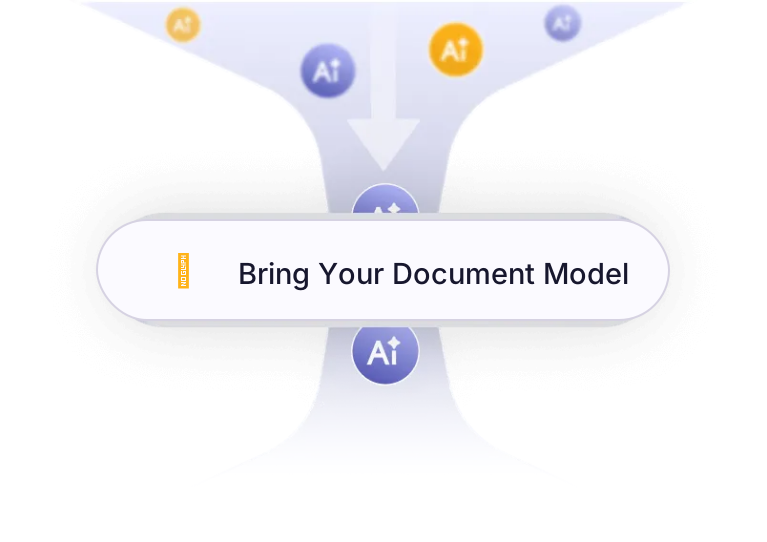
Connect document models for pre-labeling or extraction, then route predictions through human correction, review, and approval.
Create structured, review-ready datasets from invoices, forms, contracts, reports, and technical PDFs.

Annotate fields, line items, totals, tables, and relationships across invoices, receipts, and financial documents.
Explore fintech solutions
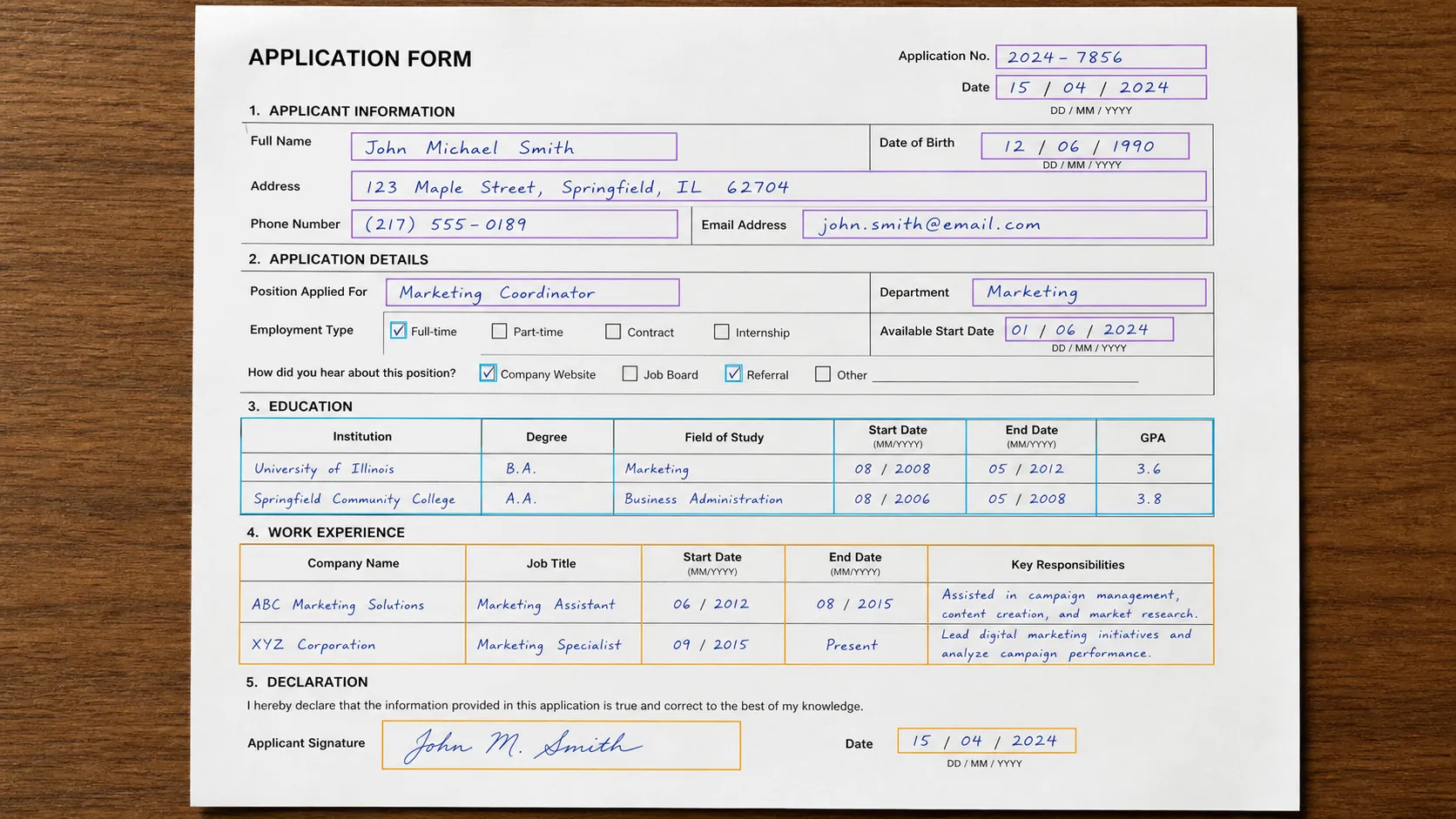
Label fields, checkboxes, sections, tables, and document structure across forms and scanned records.
Explore fintech solutions
Annotate clauses, entities, obligations, dates, relationships, and document sections for legal and contract intelligence.
Explore fintech solutions
Extract and annotate text, figures, tables, references, and structured information across reports, papers, and technical PDFs.
Explore education solutionsAnswers about PDF annotation, OCR review, document labeling, layout and table annotation, text extraction, ontologies, quality workflows, and Document AI datasets in Unitlab.
Talk with the Unitlab teamUnitlab supports native PDF text and entity annotation, page-aware regions, layout regions, tables, OCR fields, classifications, figures, document properties, and relations.
Document annotation documentationOne uploaded PDF remains one work item. Top-center previous and next controls change work items, while the bottom page footer changes pages inside the current PDF without losing off-page annotations.
PDF page navigation documentationYes. When a native text layer is available, Select PDF Text enables normal selection and copying. Selected text rectangles can become editable page-aware bounding regions; scanned PDFs can require different OCR handling.
PDF text selection documentationDocument ontologies define classes, nested attributes, Item Properties, and relations. Each text or visual annotation keeps its page context while document-level properties describe the complete PDF.
Properties and relations documentationConfigurable workflows route document tasks through annotation, review, rework, and approval. Instructions, assignments, comments, issues, annotation history, dataset versions, and releases keep quality decisions traceable for individual experts and enterprise teams.
Annotation and review documentationYes. Unitlab can bring custom models into the annotation workflow to generate pre-labels and predictions. Annotators review and correct model output instead of starting from zero, while human approval remains part of the governed quality process.
Model integration documentationYes. Teams can curate document data with metadata filters, semantic search, embeddings, similarity, and outlier discovery, then annotate selected samples, review results, and publish controlled dataset versions for reproducible AI development.
Dataset management documentationAnnotate, review, and manage native PDF data in one AI-assisted workspace. Move from selectable text and page-aware regions to governed approval and versioned releases without losing document context.