
Multiplanar Editing
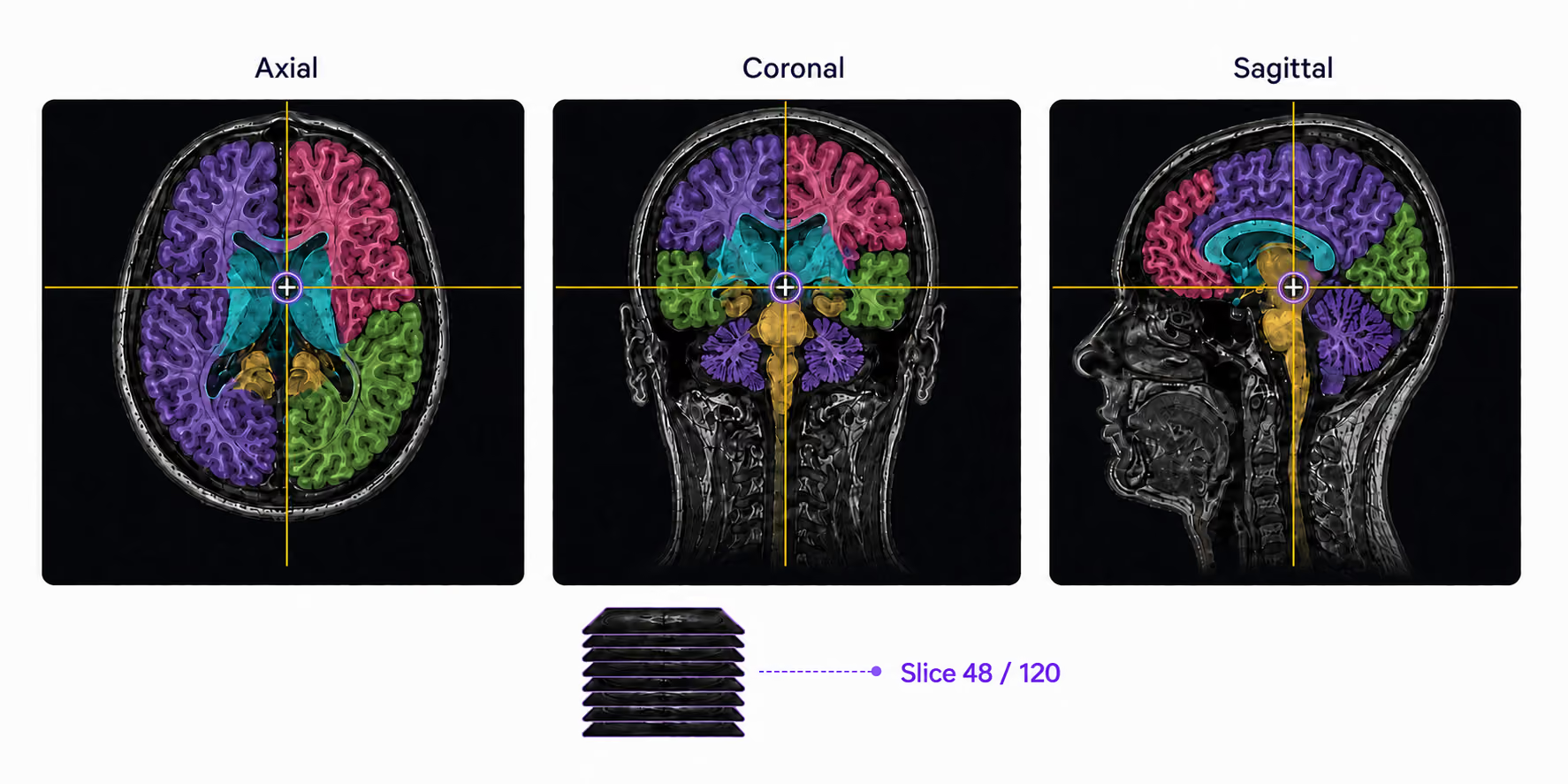
Annotate in any anatomical plane, then review the same structure across axial, coronal, sagittal, and 3D views with synchronized crosshairs and geometry.

Annotate DICOM, NIfTI, and NRRD medical imaging, including CT and MRI volumes, with synchronized multiplanar views, volumetric segmentation, clinical ontologies, and expert review.
Annotate DICOM volumes and medical imaging sequences, refine AI-assisted masks, and capture clinical context in one governed workspace.
Annotate in any anatomical plane, then review the same structure across axial, coronal, sagittal, and 3D views with synchronized crosshairs and geometry.
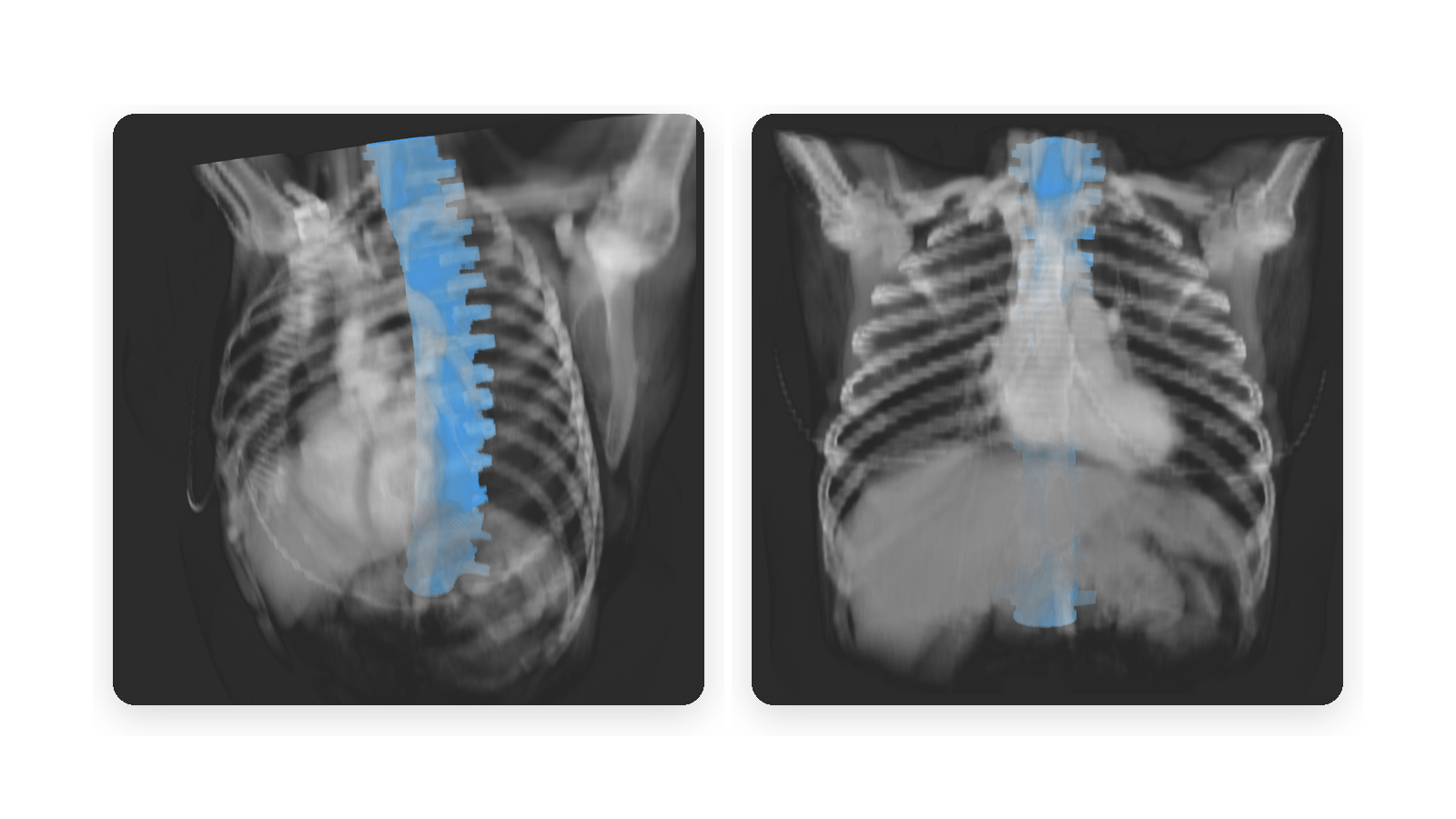
Move between linked views and an interactive 3D volume while positioning, segmentation, and annotation context remain synchronized.
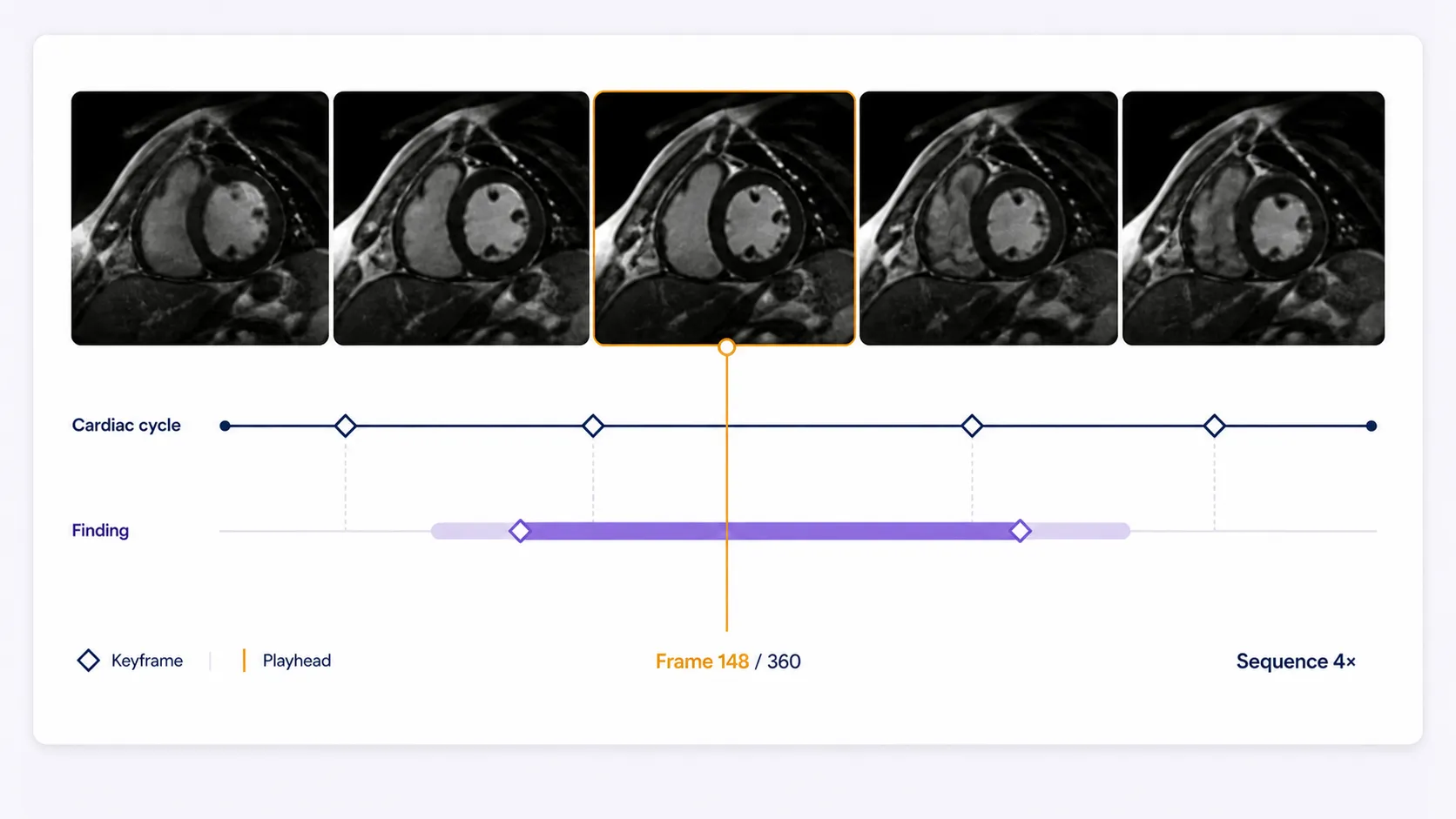
Navigate frames and slices precisely while geometry, clinical states, and study-level context remain aligned.
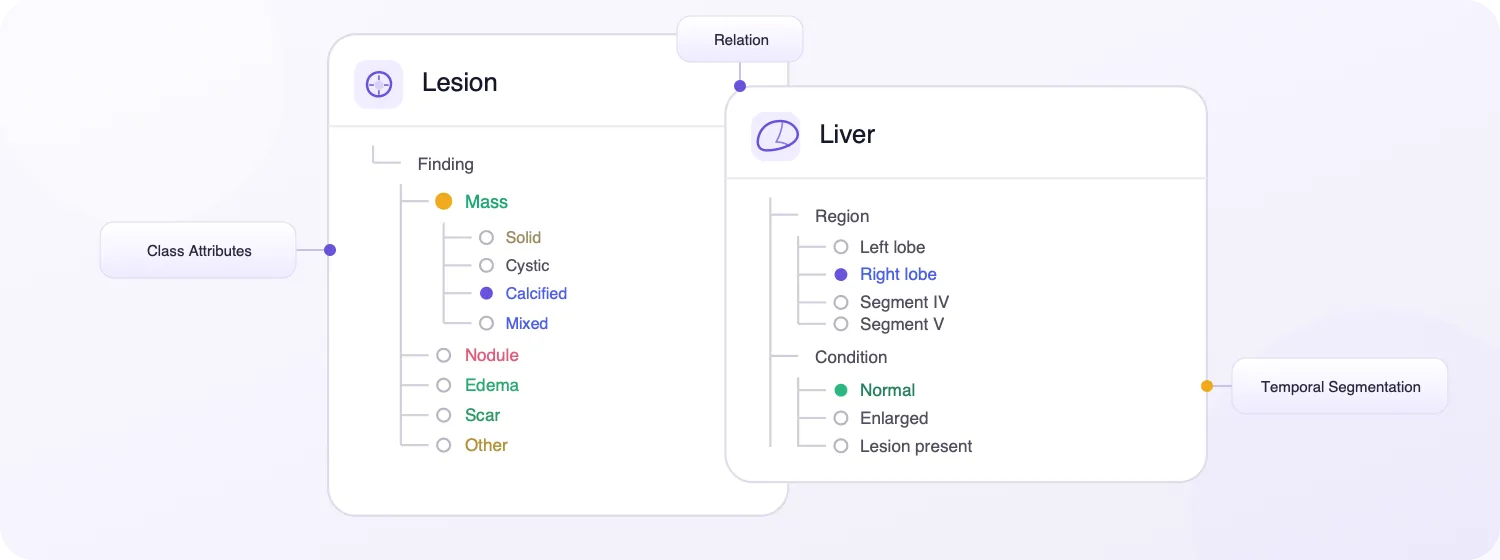
Define classes, clinical findings, attributes, nested properties, relations, and study- or object-level context in one reusable medical schema.
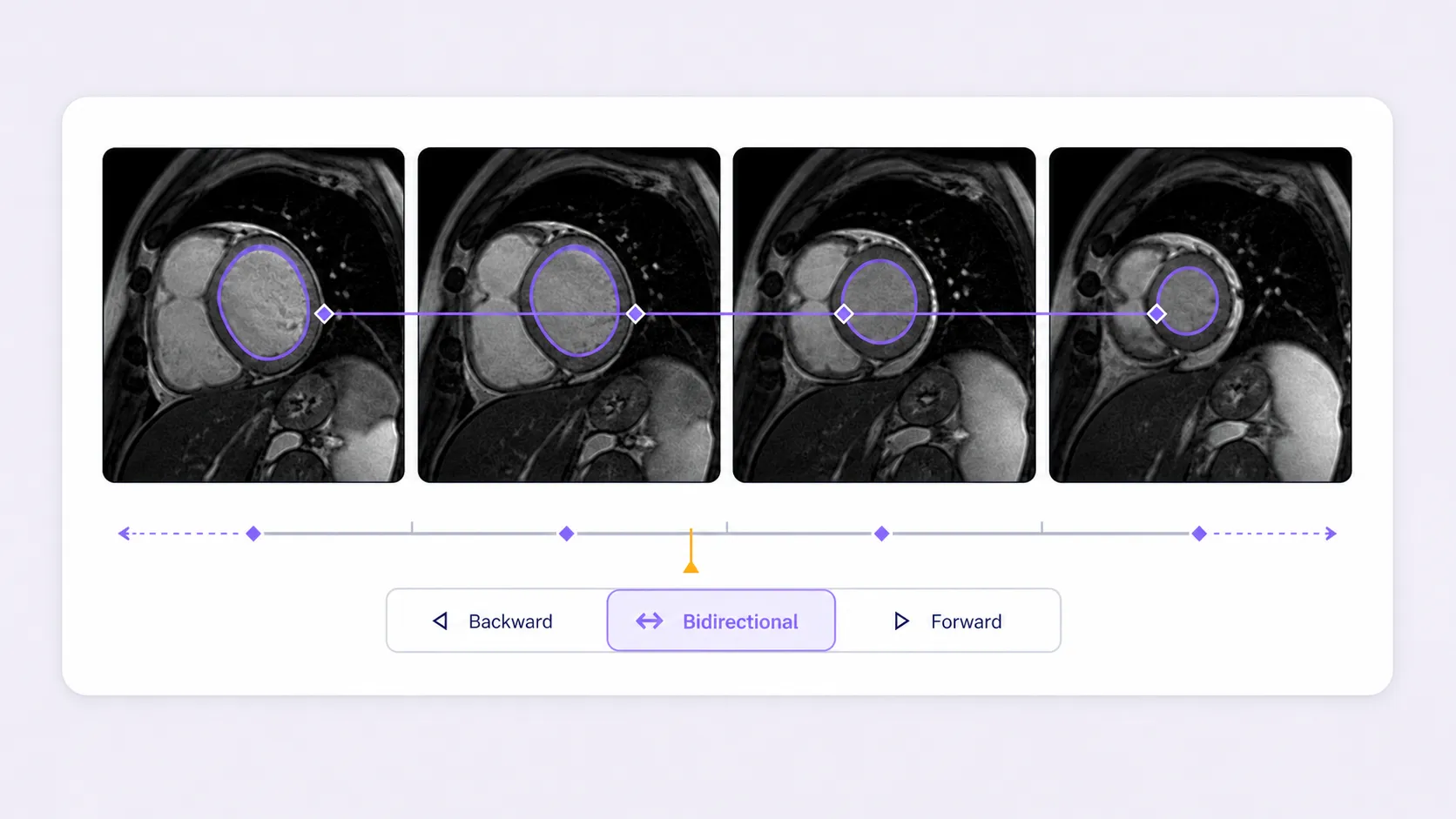
Track lesions, organs, or regions through complete medical sequences, or only forward or backward, then review generated tracks and correct keyframes that need expert judgment.
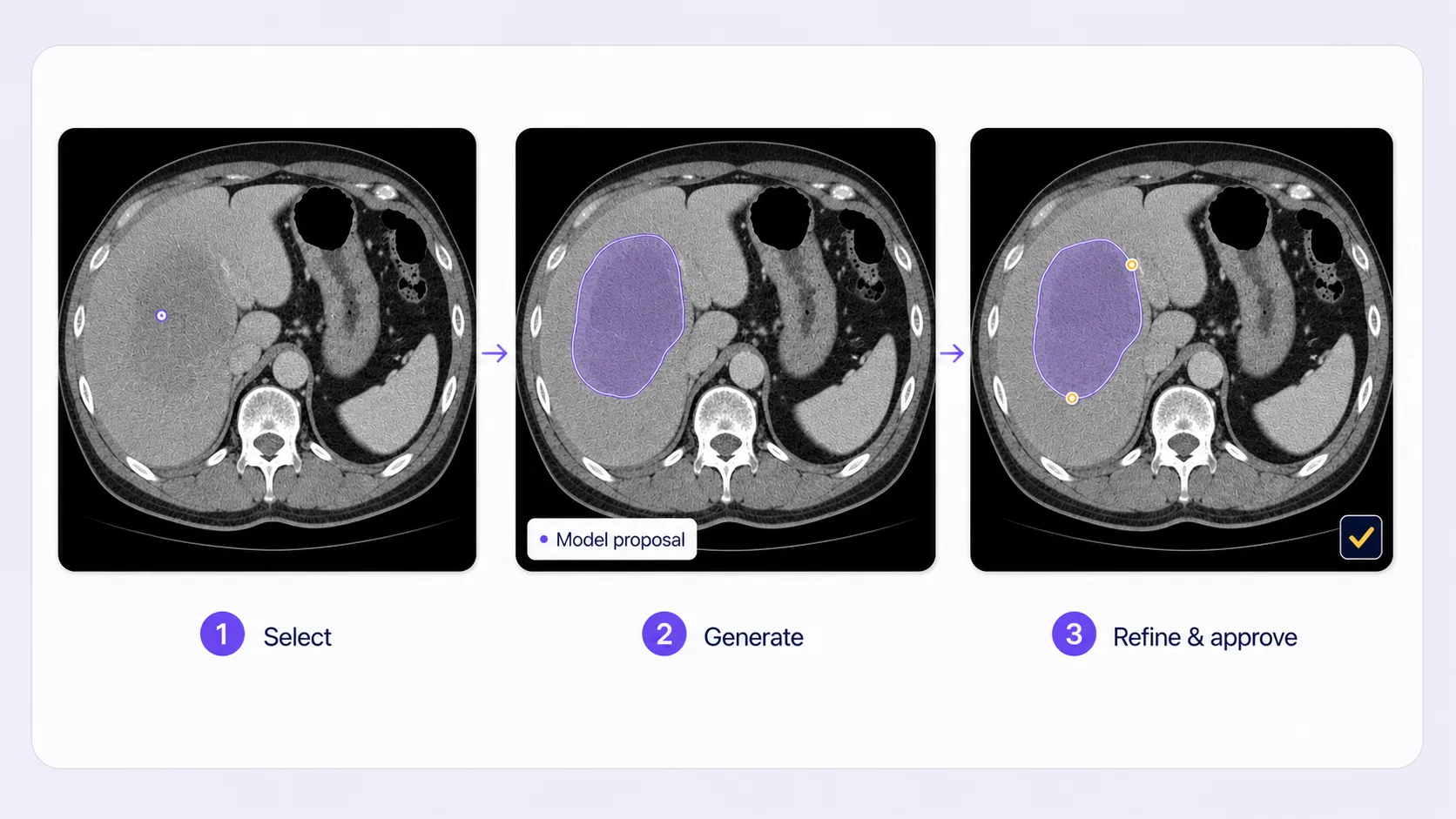
Generate complex medical masks and regions faster, then refine boundaries and approve results under expert review.
Accelerate expert labeling, automate repeatable work, and keep review and quality operations connected across medical datasets.
Batch, Find Similar, Prompt Auto-Labeling, Auto-Tracking, and automated workflows reduce repetitive manual medical image labeling.
On average, 80% of medical image labels are pre-labeled automatically, then reviewed and refined by humans.
The cost per accepted label can be up to 5× lower as curation, annotation, and QA are automated.
Create volumetric masks, regions of interest, boxes, landmarks, measurements, properties, and relations across radiology studies and medical imaging sequences.
Mark rectangular findings, anatomy, lesions, and regions of interest across medical images or sequences.
Create pixel-accurate and volumetric masks for anatomy, lesions, tumors, and other clinical regions.
Outline irregular findings and regions of interest across slices, frames, or medical sequences.
Model anatomical structures and articulated movement with connected keypoints.
Trace vessels, boundaries, paths, contours, and measurement lines in medical data.
Place exact anatomical landmarks for localization, alignment, and keypoint tasks.
Represent volumetric findings and anatomy with depth-aware 3D boxes.
Describe modality, quality, cohort, procedure, and other whole-study attributes.
Connect anatomy, findings, observations, and related objects explicitly.
Compare labels on the same scans, check them against approved references, and resolve boundary issues in anatomical context. Support expert review with traceable annotation evidence.
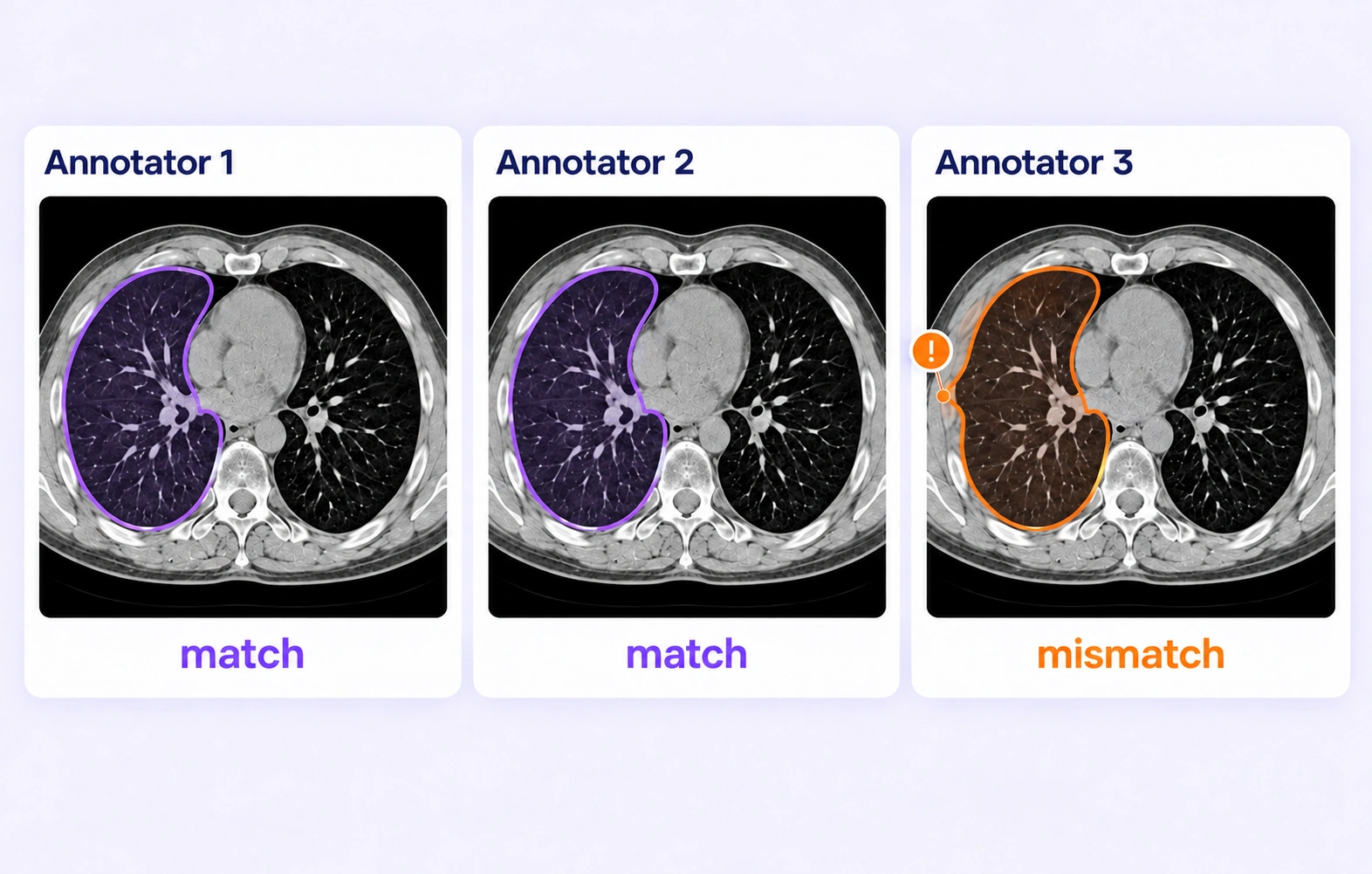
Compare independent contours and classes on the same scan and slice. Surface disputed regions for expert review against the project's labeling protocol.
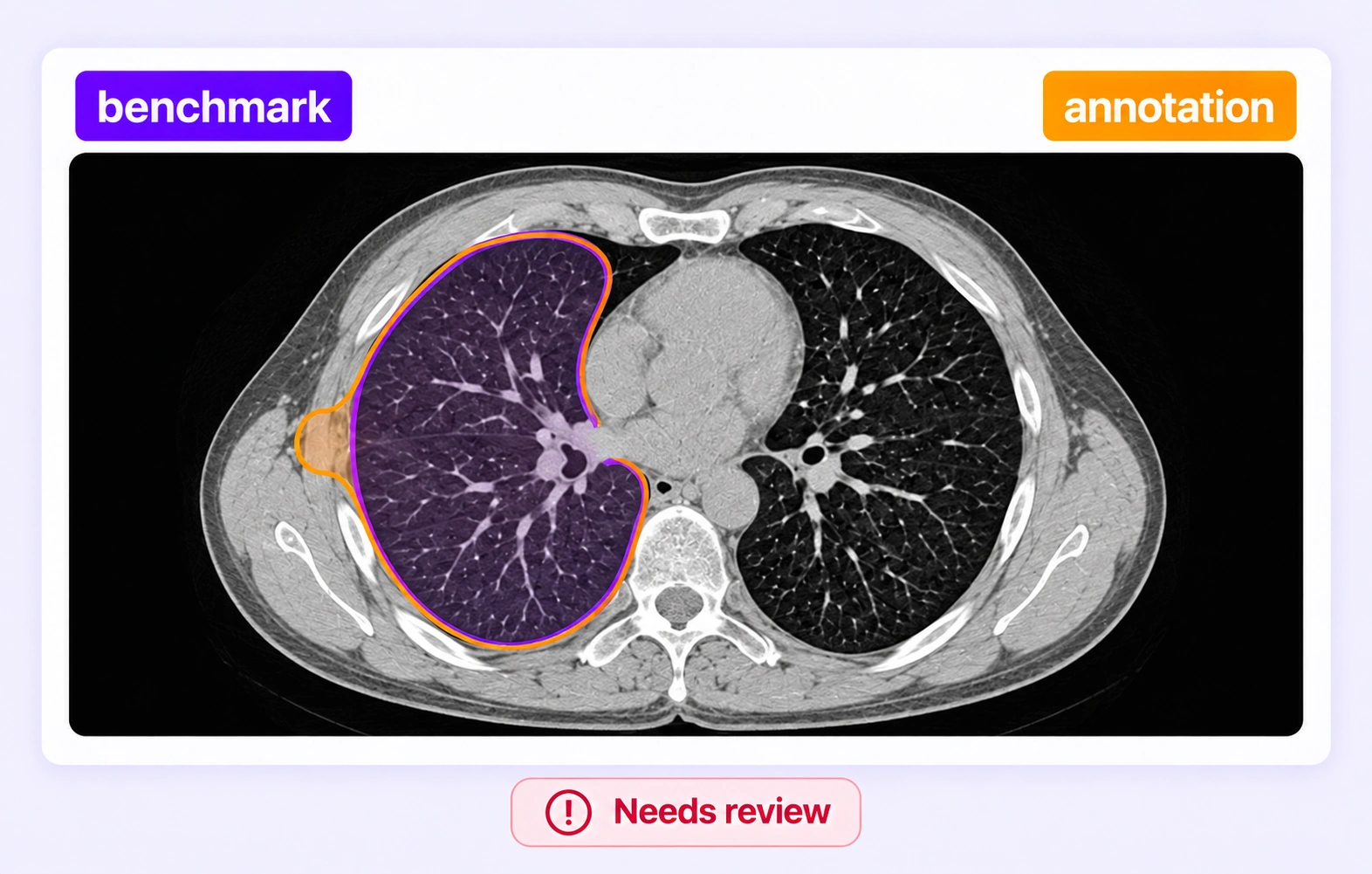
Check medical annotations against approved reference labels hidden from annotators. Use configured quality criteria to route submissions for acceptance, correction, or further review.
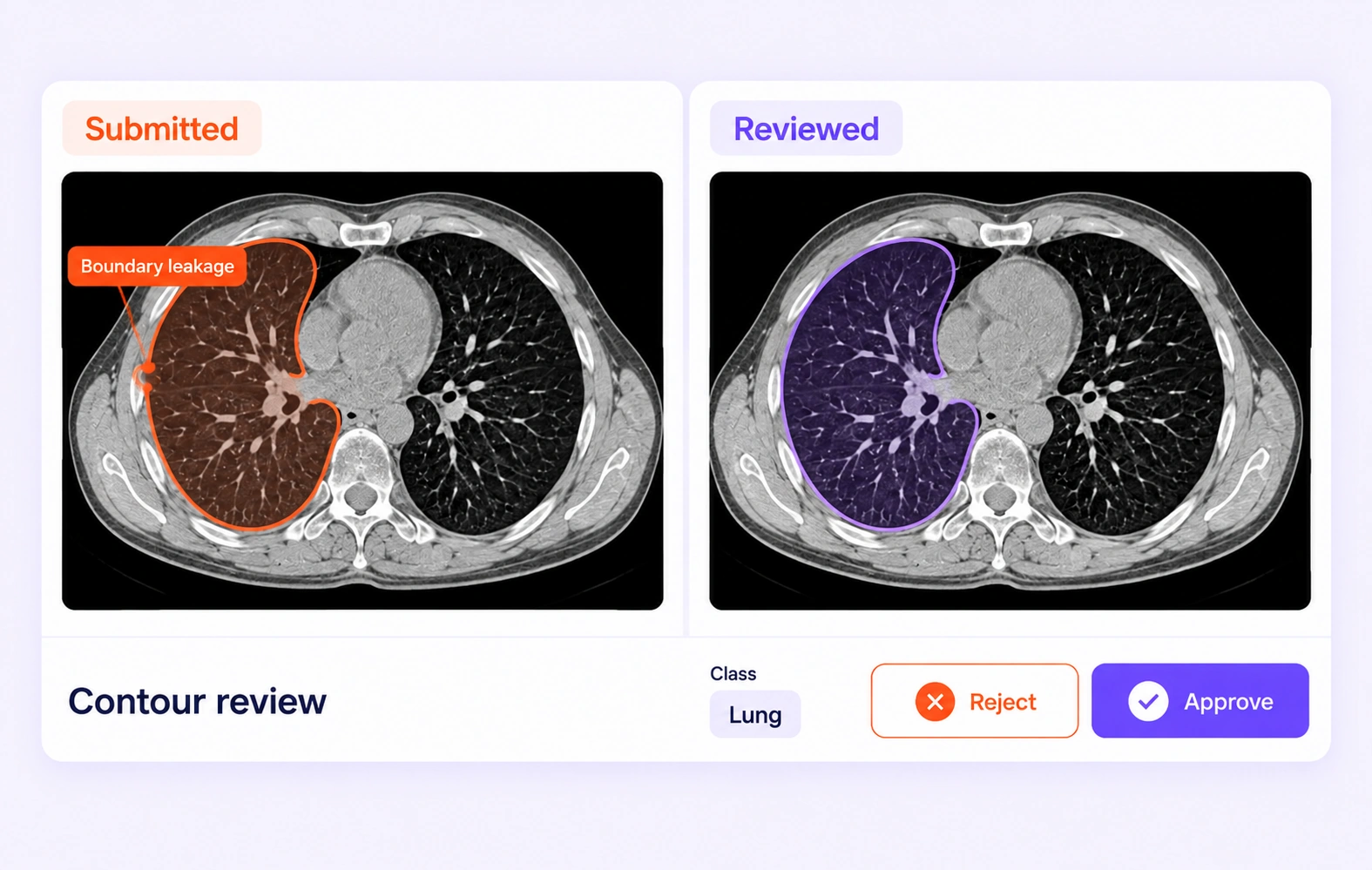
Inspect required properties, region classes, and contour boundaries with the original scan in view. Correct affected labels and resolve review issues before approval.
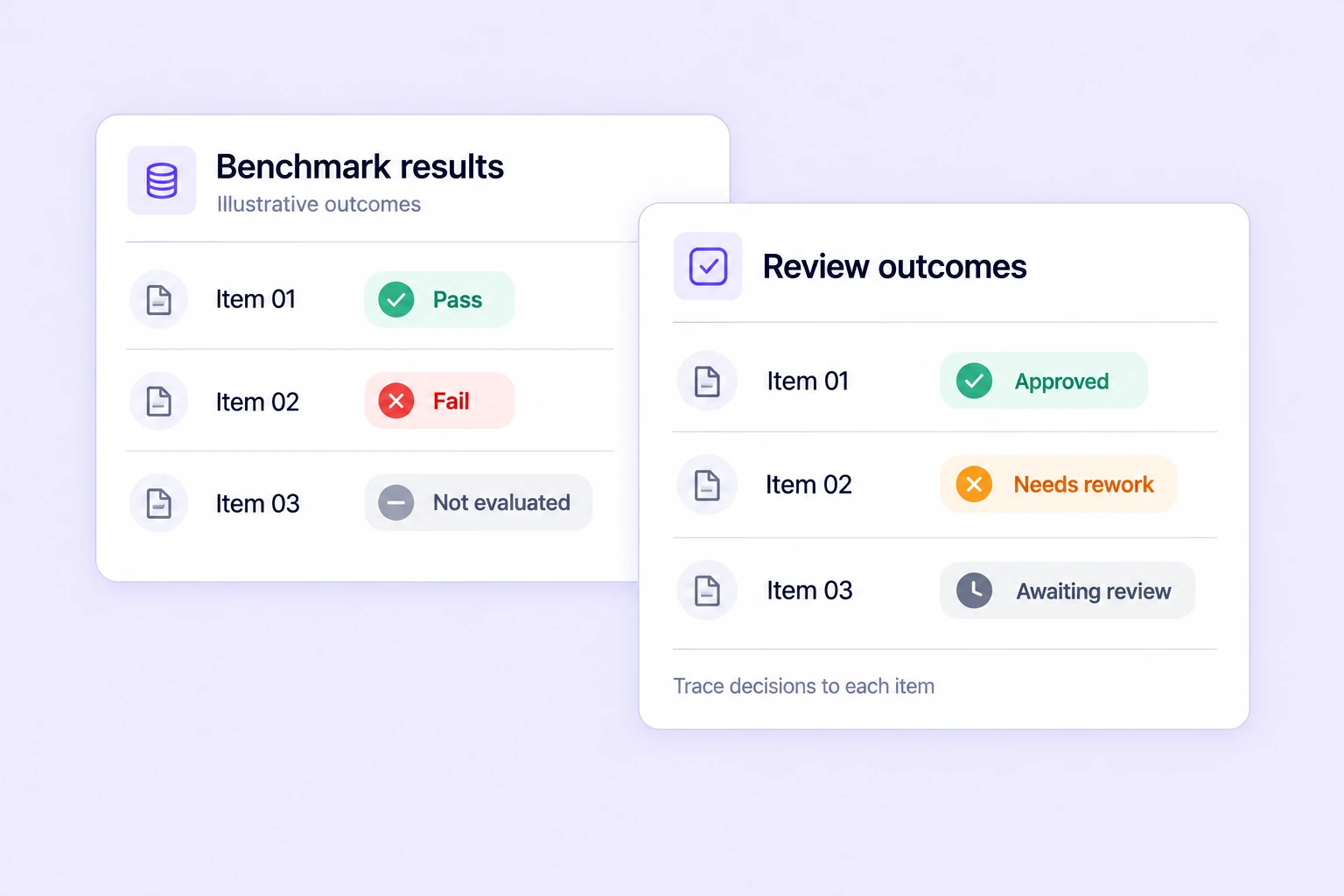
Track benchmark results, annotation agreement, and review outcomes across medical labeling tasks. Focus expert attention on disputed cases and recurring annotation problems.
Search, version, and inspect medical imaging studies and sequences, connect medical AI models, and route annotations through expert review and approval.
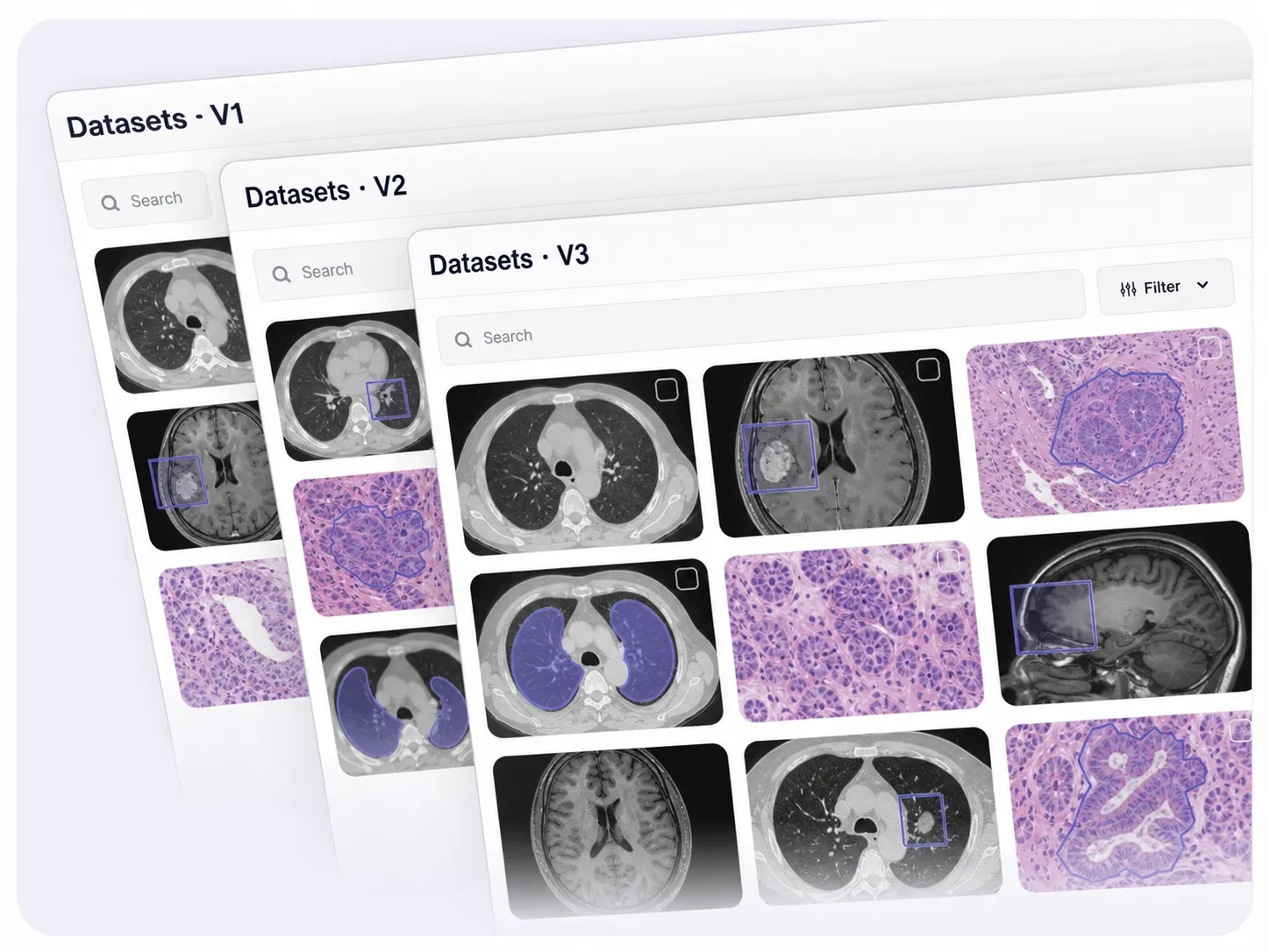
Version medical datasets, annotations, curated cohorts, and dataset changes while preserving traceability from source to release.
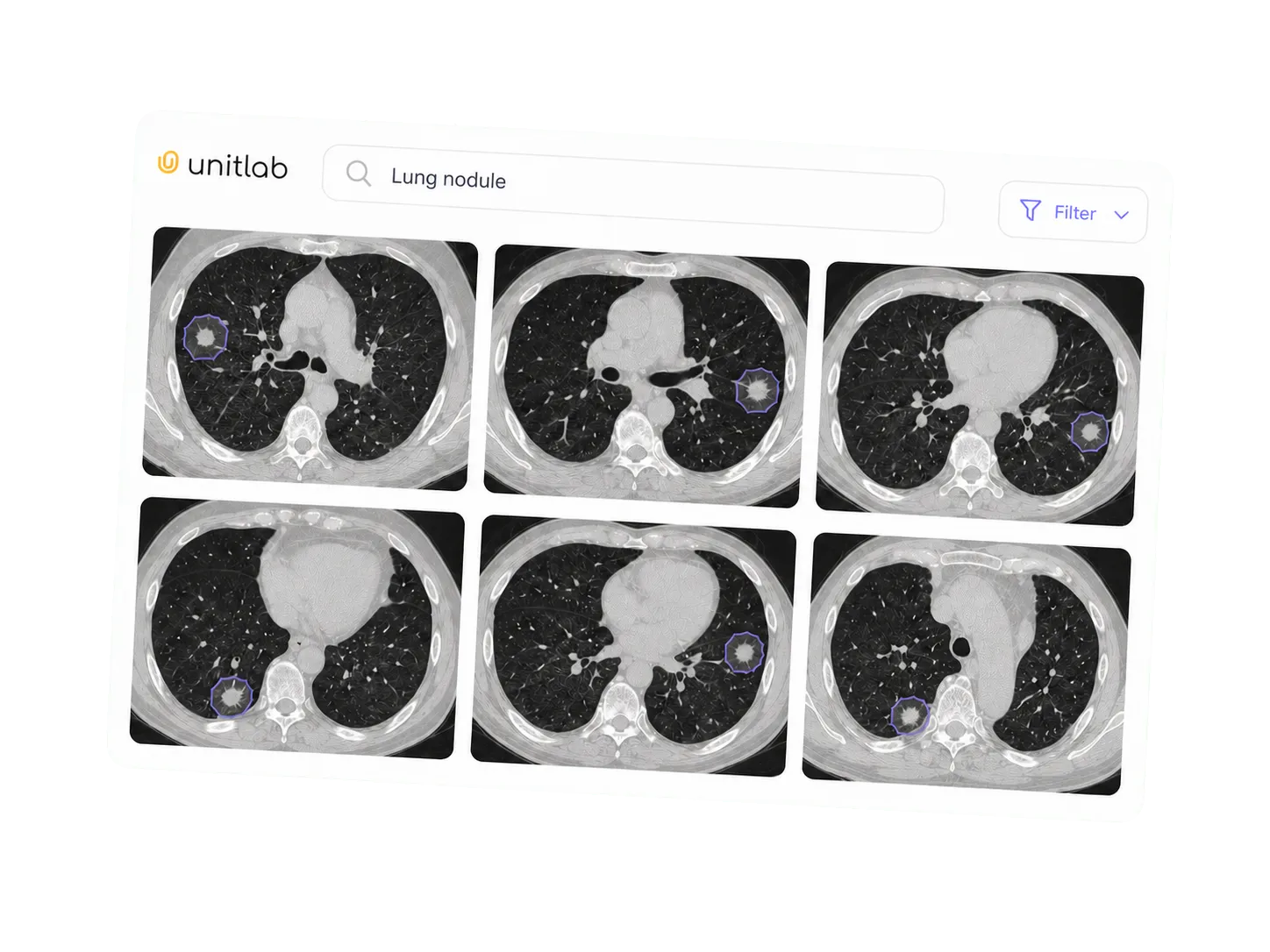
Find relevant studies, scans, series, and similar cases across large medical imaging datasets without relying on manual folders.
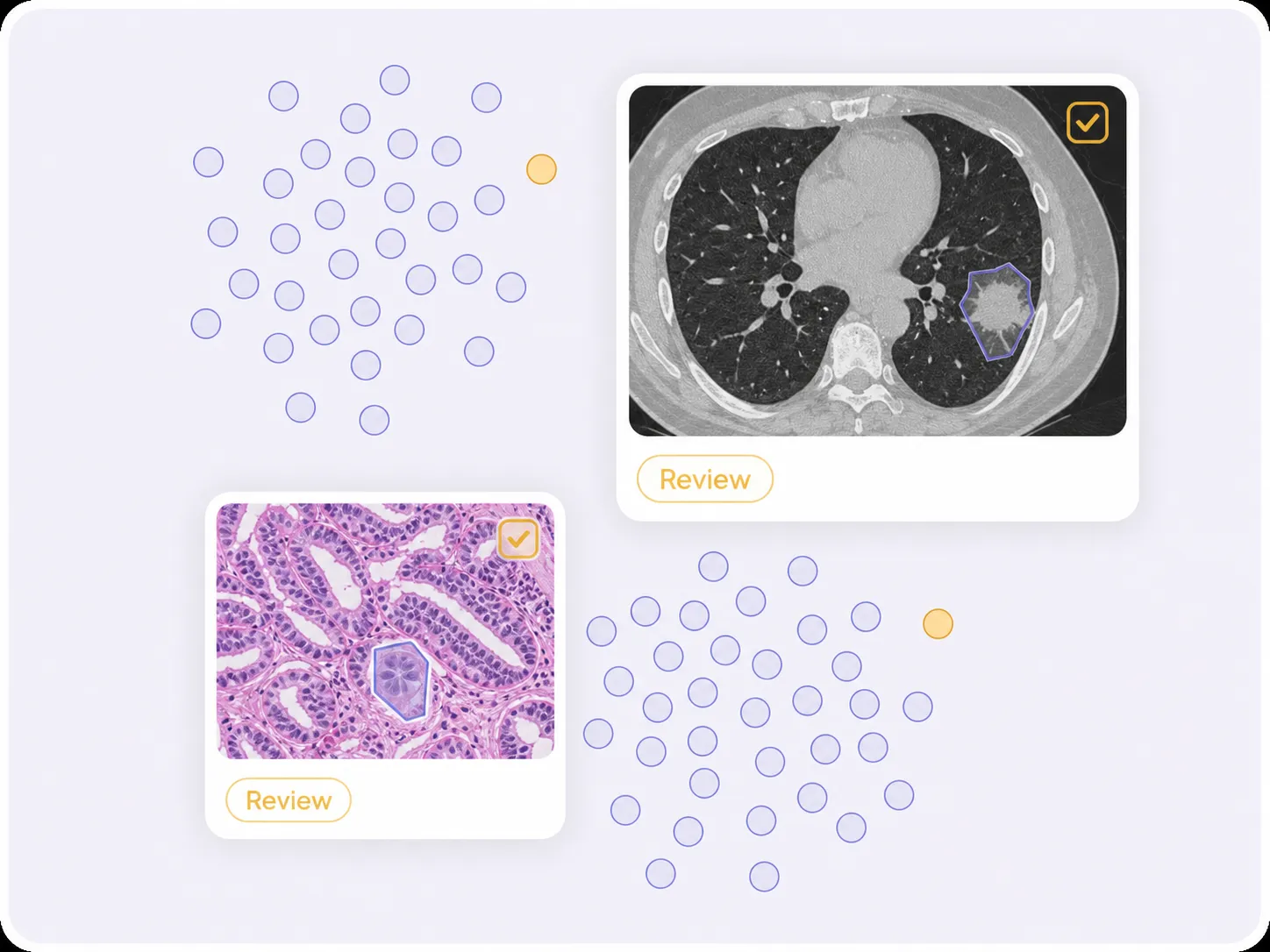
Explore dataset distributions, similar cases, outliers, clusters, and potential data-quality problems before training.
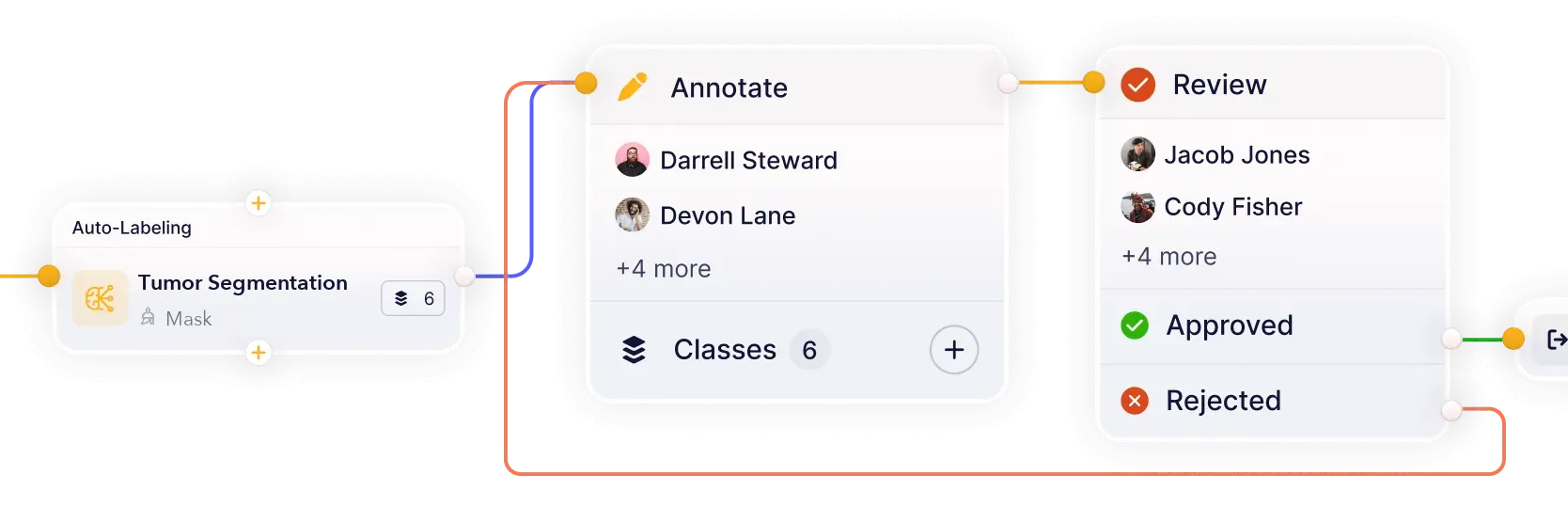
Connect annotation, expert review, QA, rework, and approval in structured medical workflows with clear ownership and traceable outcomes.
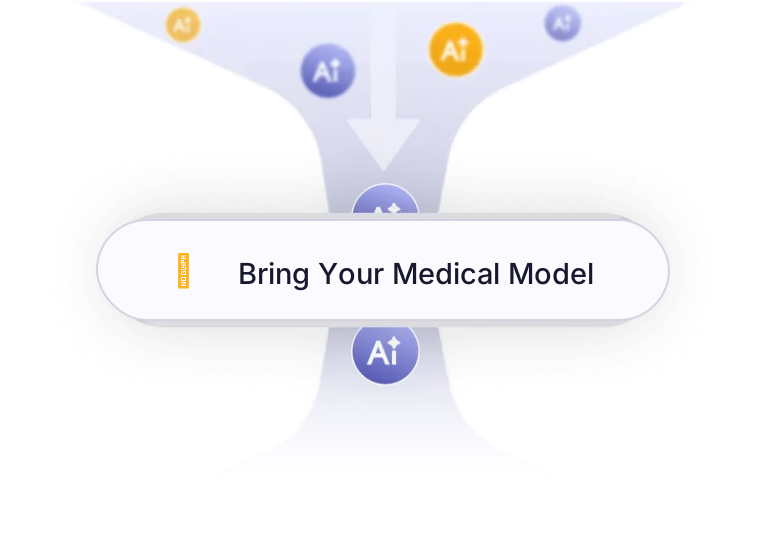
Connect medical AI models for pre-labeling, segmentation, automation, and model-assisted annotation while keeping reviewers in control.
Prepare radiology and longitudinal imaging datasets with precise, clinically structured annotations and governed expert review.
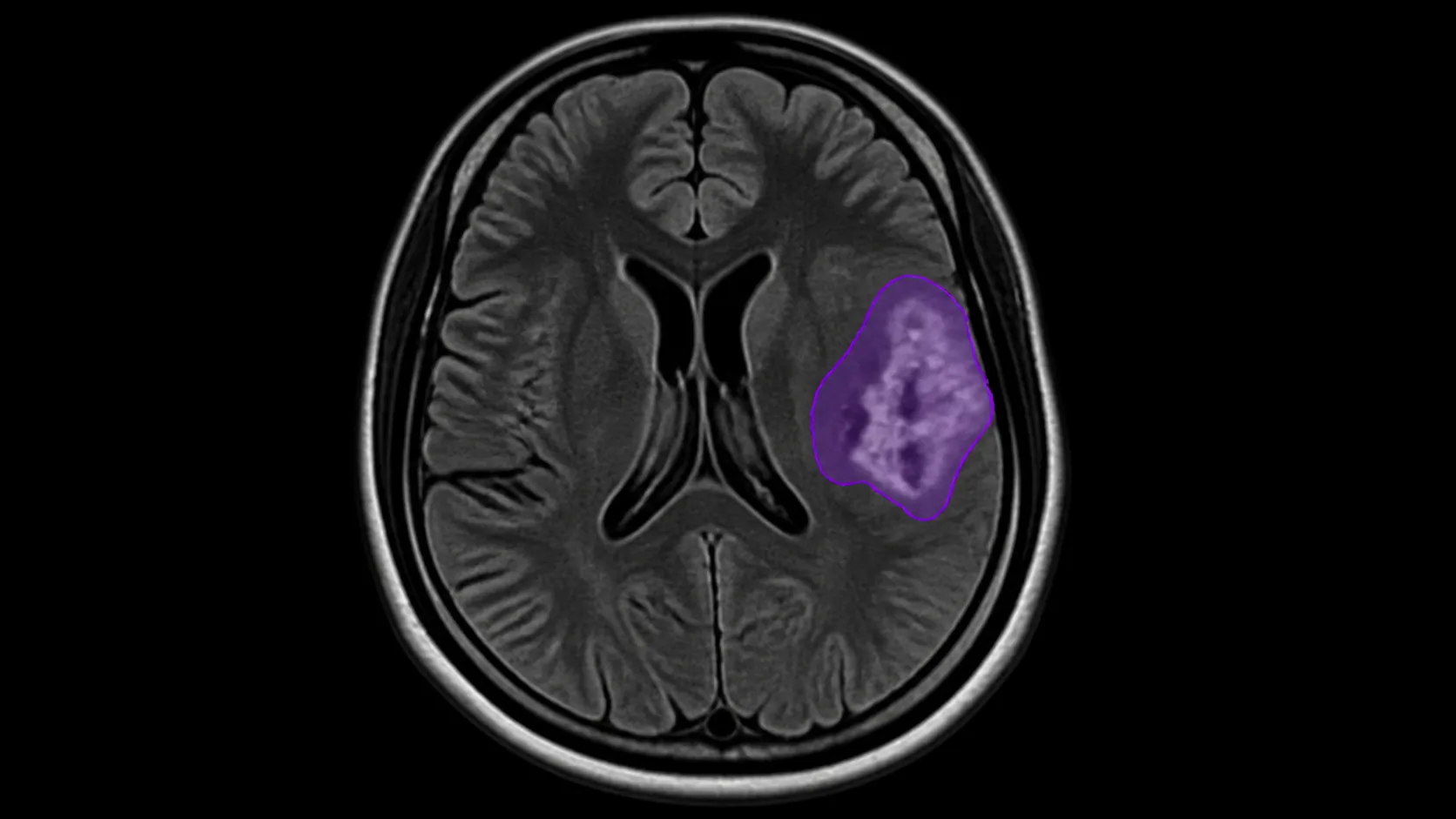
Create precise volumetric labels for tumors, lesions, abnormalities, and regions of clinical interest.
Explore tumor & lesion segmentation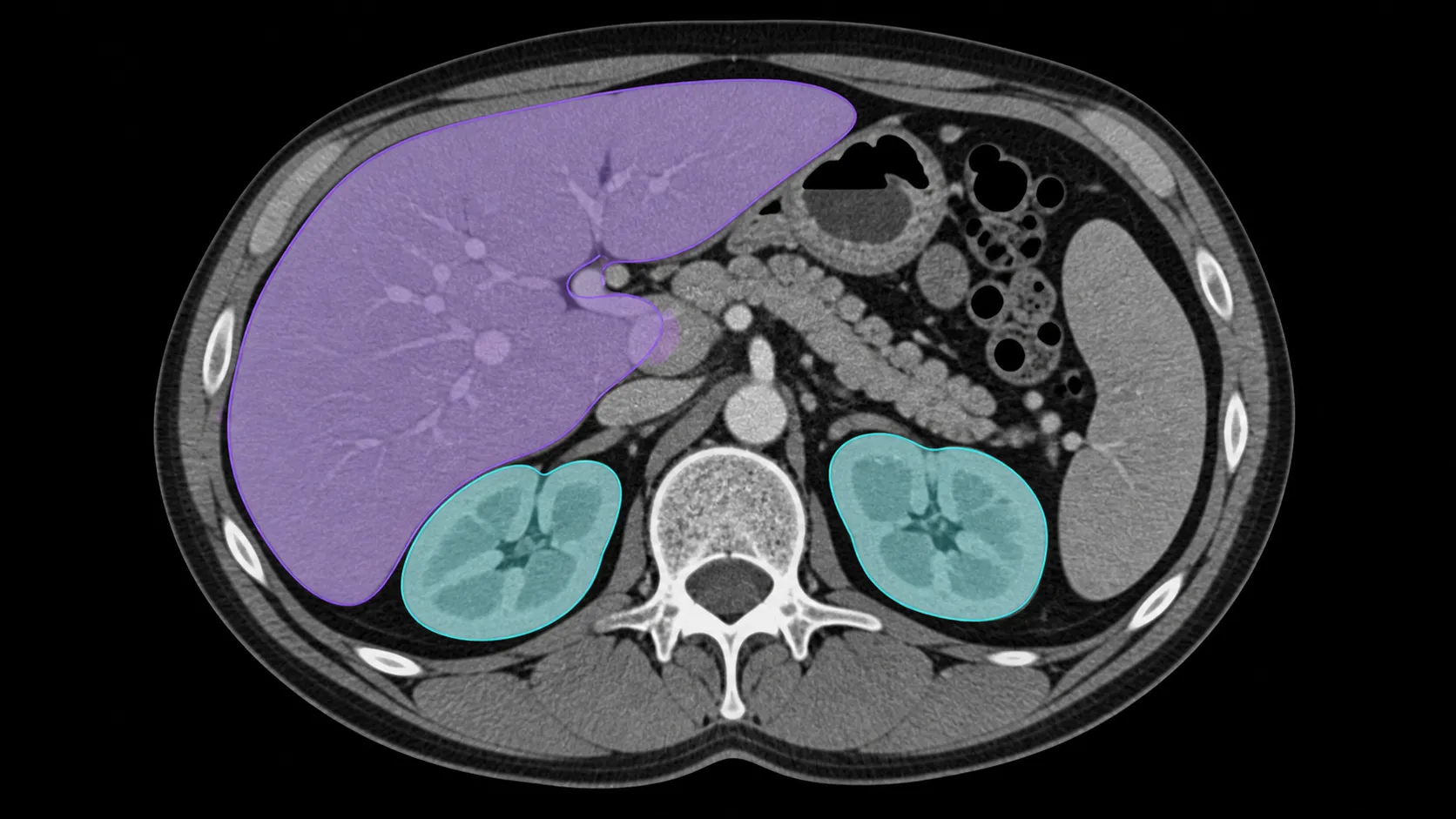
Annotate organs, anatomical structures, and tissue regions across synchronized axial, coronal, and sagittal views.
Explore organ & anatomy segmentation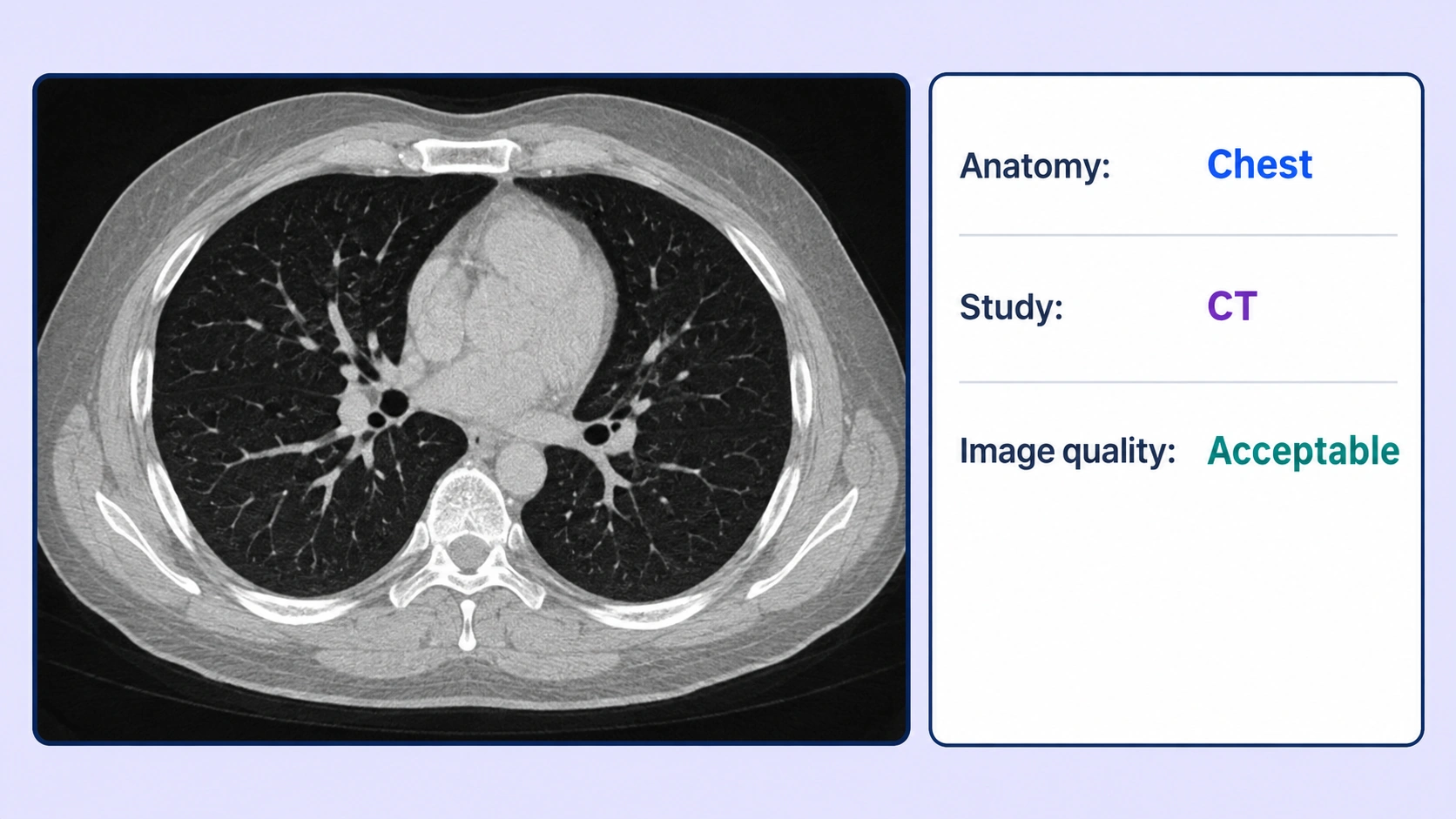
Assign expert-defined finding, anatomy, and image-quality labels to medical images and volumes for classification datasets.
Explore medical image classificationAnswers about DICOM annotation, CT and MRI imaging, NIfTI and NRRD volumes, synchronized multiplanar views, volumetric segmentation, clinical ontologies, and expert review in Unitlab.
Talk with the Unitlab teamUnitlab supports medical imaging workflows for DICOM studies, CT and MRI series, NIfTI and NRRD volumes, and common image formats. Teams can annotate masks, regions, boxes, landmarks, measurements, classifications, properties, and relations in reusable medical ontologies. Whole-slide pathology workflows are covered on Unitlab’s dedicated Pathology Annotation page.
DICOM studies open in synchronized axial, coronal, sagittal, and 3D views. Position, window and level, crosshairs, and annotation context stay aligned so experts can inspect and edit findings across planes.
Yes. Unitlab supports slice-level multiplanar editing and frame- or slice-aware navigation for dynamic medical imaging sequences while preserving annotation context across synchronized views.
Medical ontologies define anatomy, findings, classifications, nested properties, measurements, and relations. Static and dynamic properties capture clinical context at object, image, series, or study level.
Properties and relations documentationConfigurable workflows route tasks through expert annotation, review, rework, QA, and approval. Assignments, comments, issue tracking, history, dataset versions, and releases keep decisions traceable.
Annotation and review documentationYes. Connect medical AI models for pre-labeling, segmentation, and model-assisted annotation. Experts review and refine predictions before approval, preserving human control.
Model integration documentationYes. Teams can search, curate, annotate, review, and publish controlled versions of medical imaging datasets, including studies, scans, series, cohorts, annotations, and release changes.
Dataset management documentationAnnotate, review, curate, and manage complex medical data in one collaborative AI-assisted platform.


We use cookies to improve your experience. See our Privacy Policy and Cookie Policy.