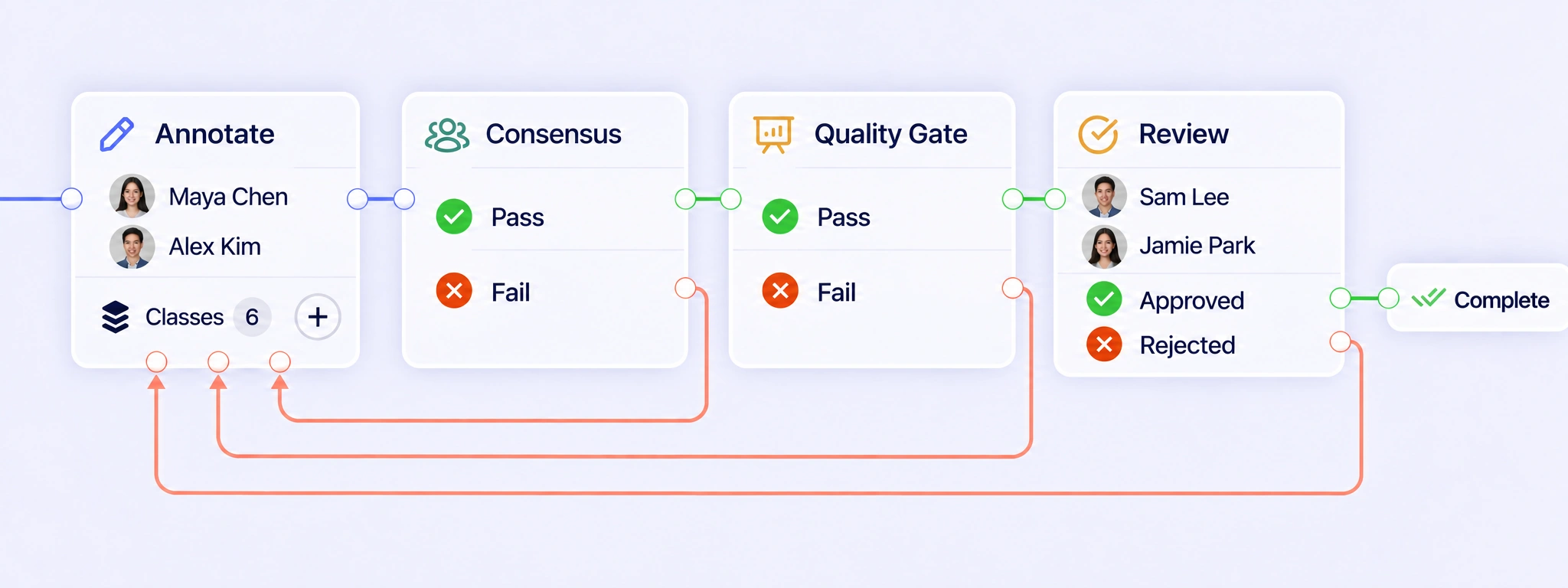


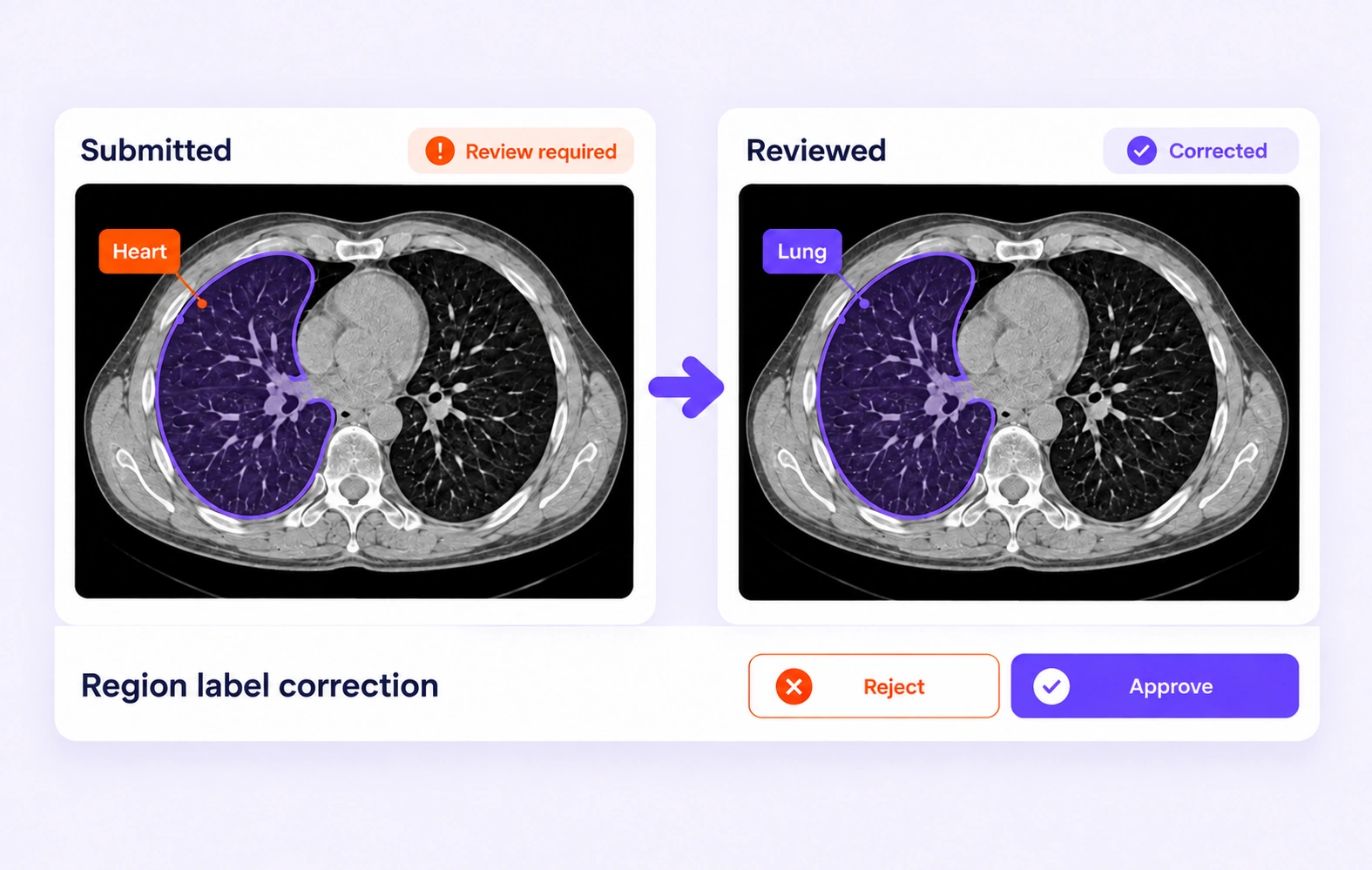
Connect medical annotation, consensus, benchmark checks, and expert review. Return failed or rejected items for correction while keeping scan context and reviewer decisions together.
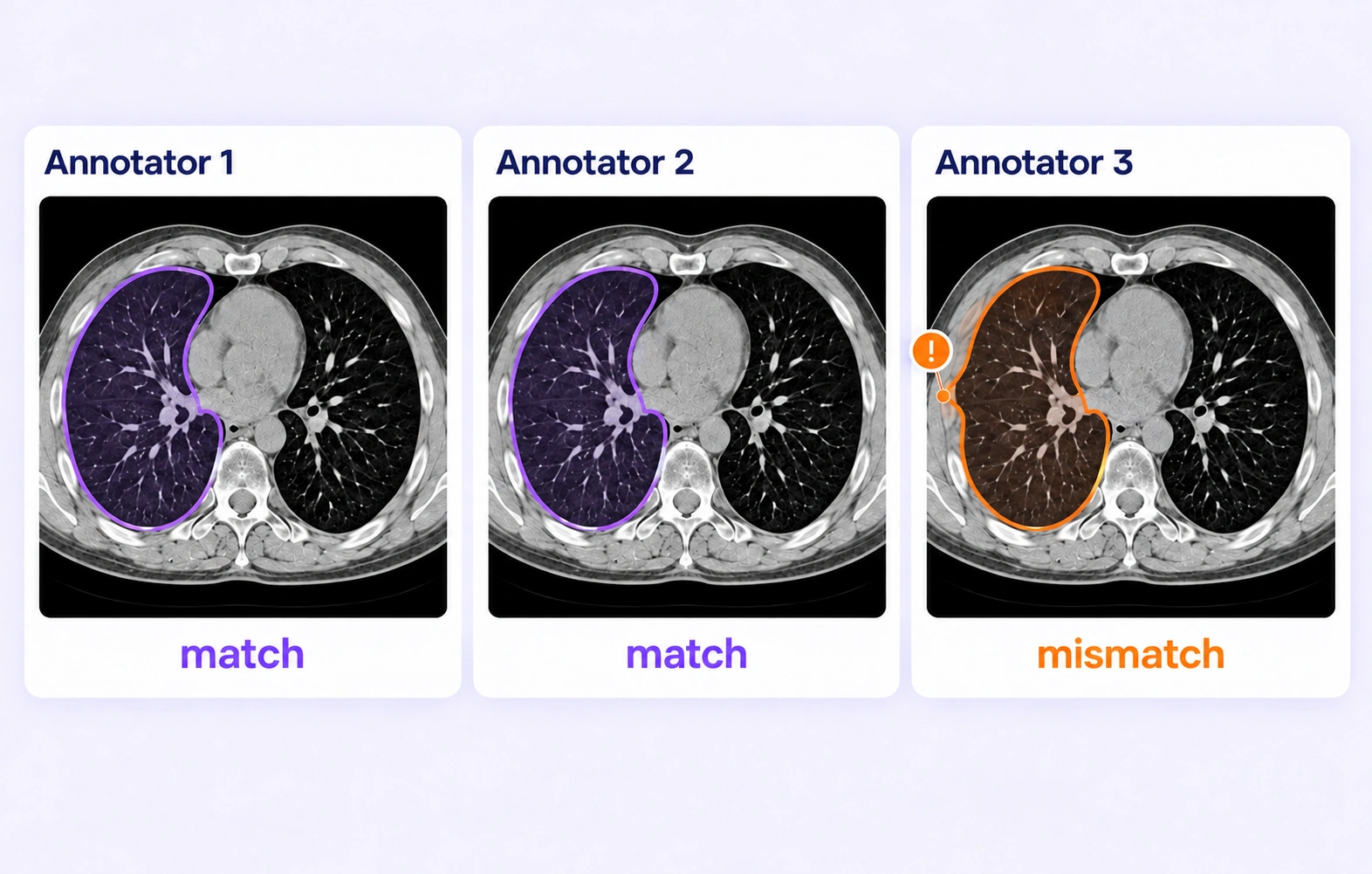
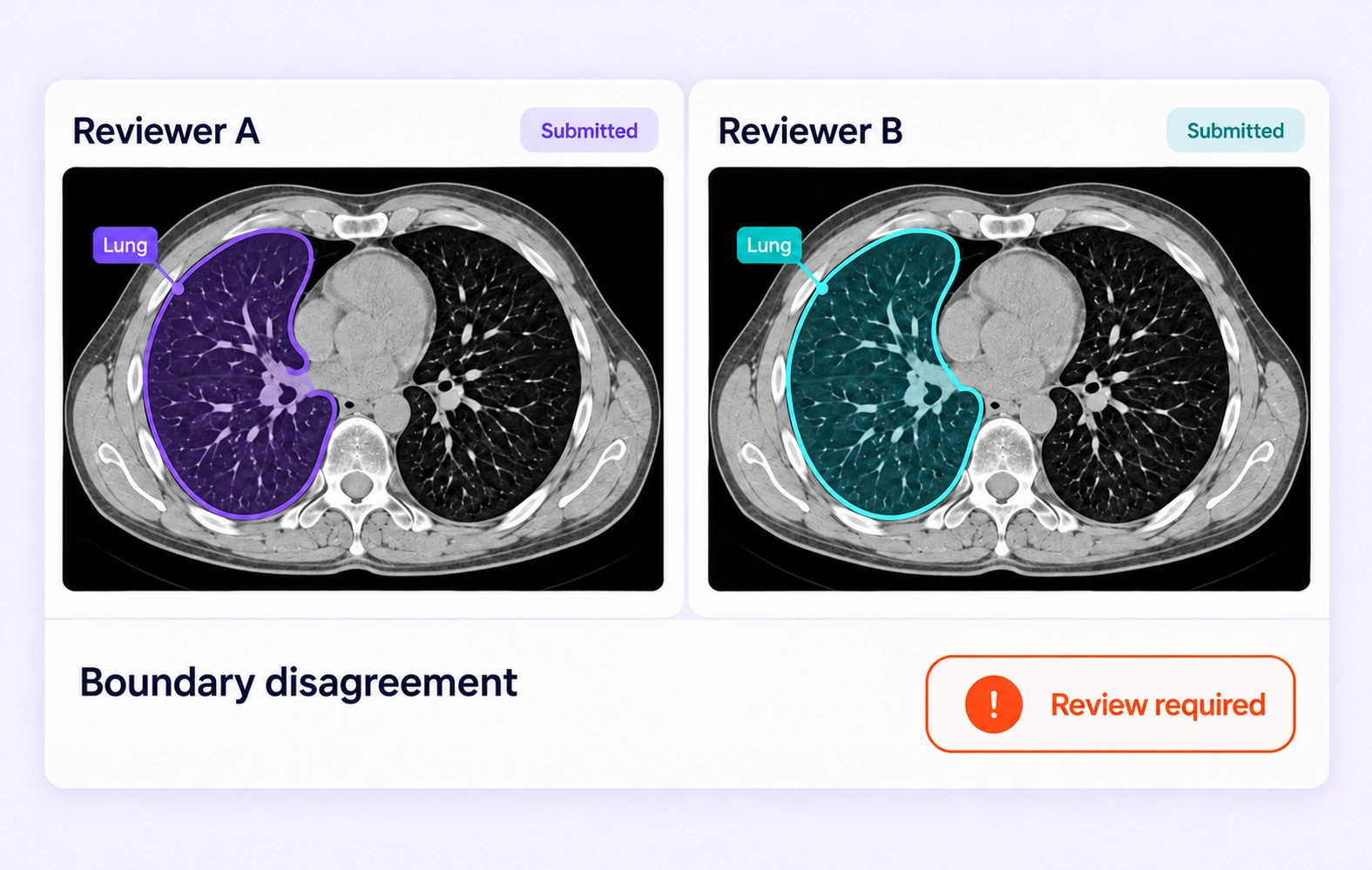
Compare independent annotations of the same medical input. Surface differing region boundaries and class choices for qualified reviewers to resolve under the study protocol.
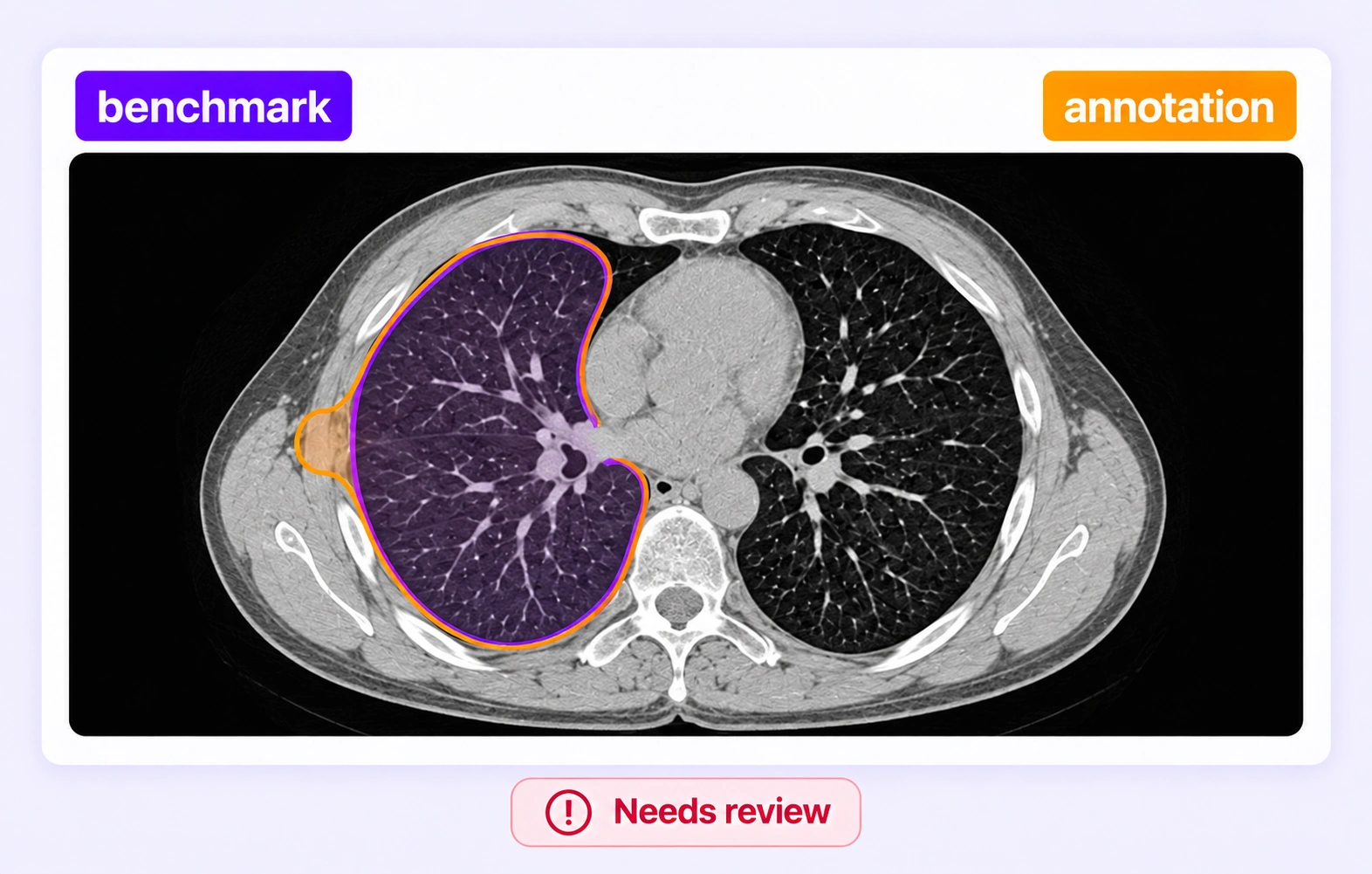
Compare eligible medical annotations with an approved hidden answer key. Check protocol-defined regions while routing unavailable comparisons separately from Pass and Fail.
Built-in auto-labeling tools and automated workflows reduce manual annotation work.
Automate curation, dataset management, and versioning so engineers can focus on models.
Curated data, reusable ontologies, and quality control reduce annotation rework.
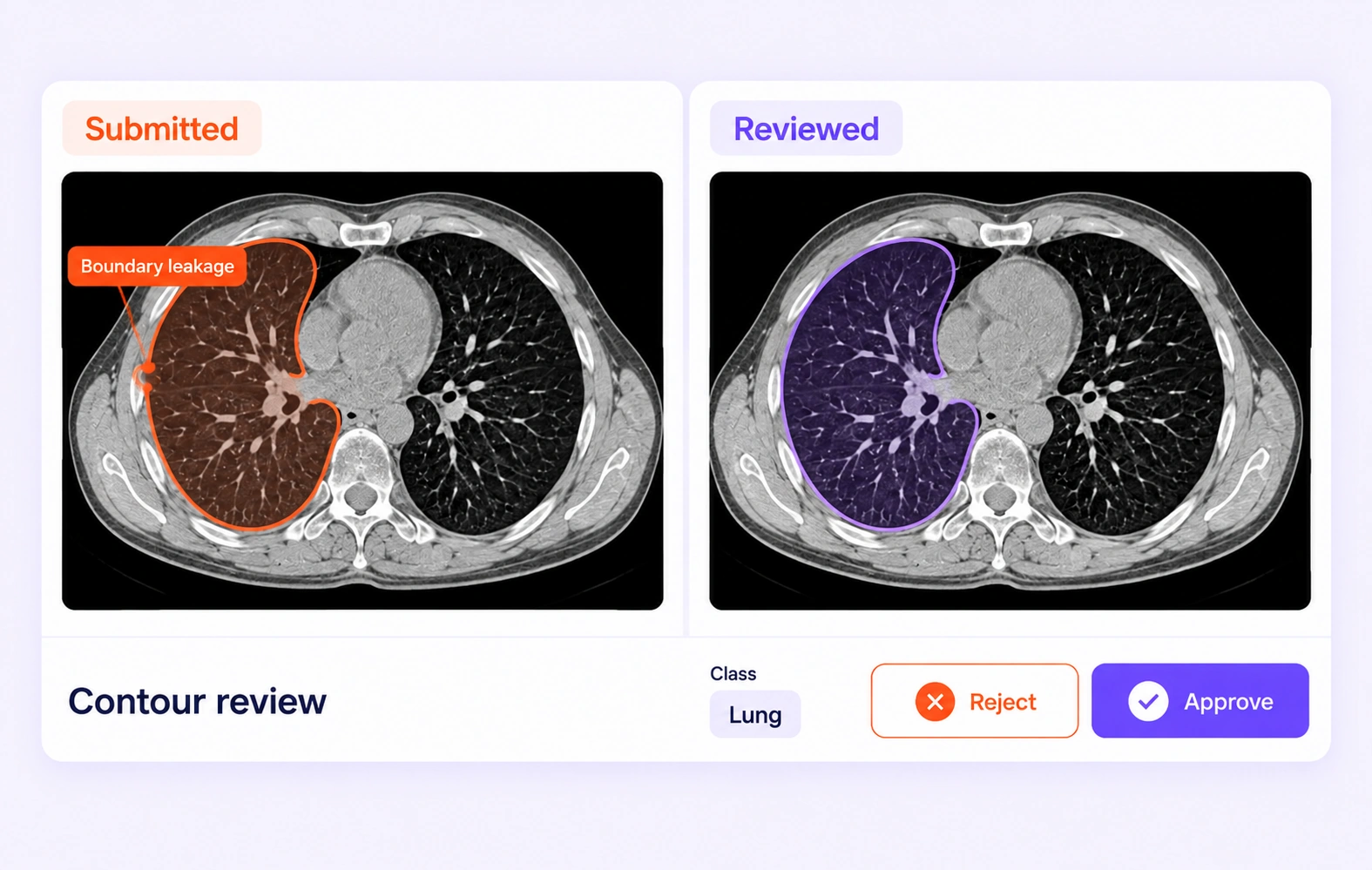
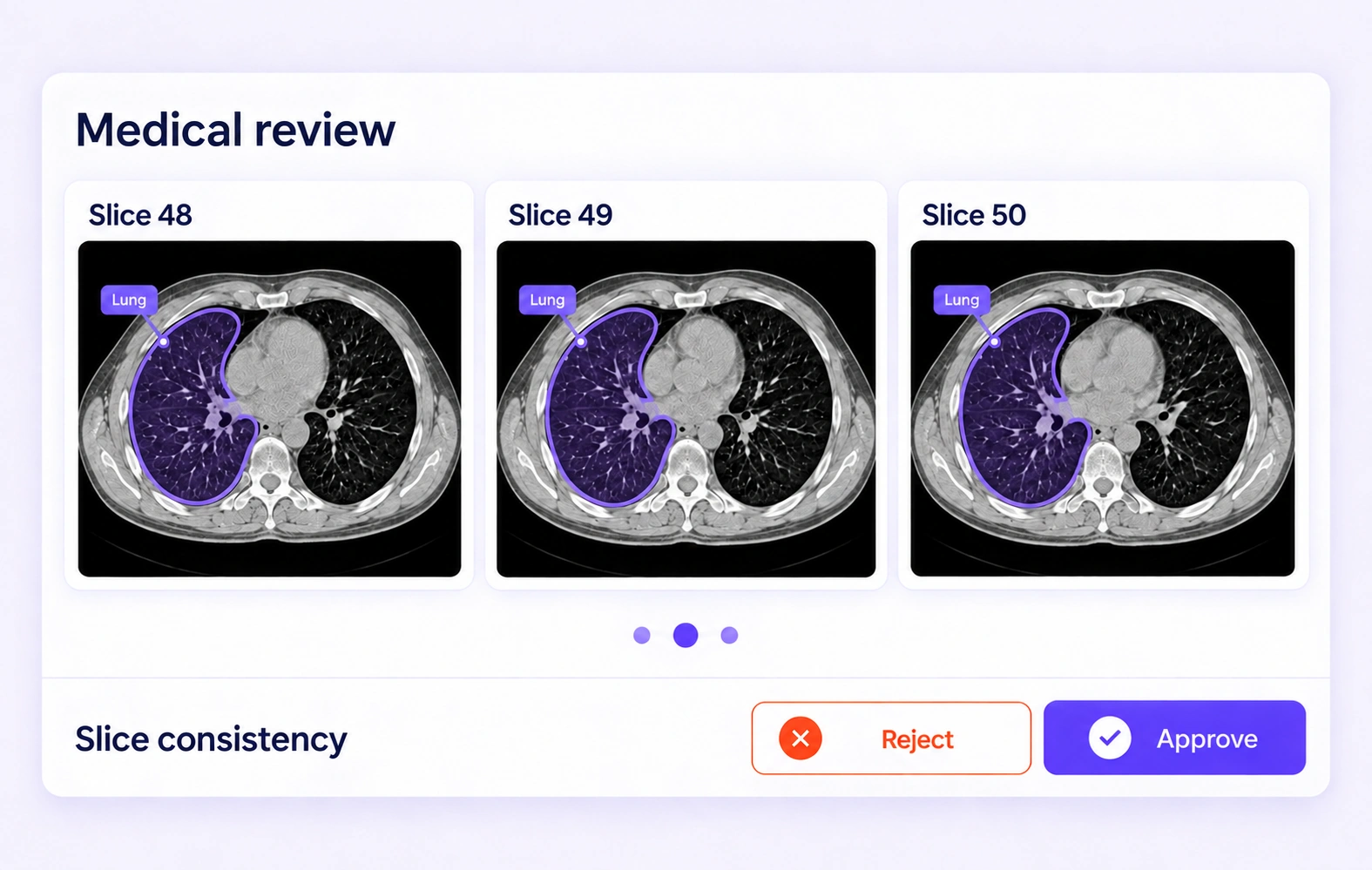
Inspect the scan and its contours together. Reviewers can correct geometry and properties, approve the work, or reject it for another annotation attempt.
Independent annotations can expose uncertain boundaries or labels. Use consensus and reviewer refinement to reach a documented result for the specific item.
It is the review of medical image labels for boundary fidelity, class consistency, and agreement with the project’s annotation protocol. Unitlab supports the workbench and workflow; your organization defines the criteria and supplies qualified reviewers. QA overview
Configure annotation, Consensus, Quality Gate, qualified review, and completion around the study’s labeling protocol. Failed checks or rejected annotations can return to annotation for correction, then pass through the required checks again. Reviewers keep the source scan and the project’s acceptance criteria central to each decision. QA workflows
Consensus compares independent submissions for the same medical item under the configured settings. Reviewers can inspect differences in supported region labels and geometry in scan context, then refine the result using the study protocol. Agreement describes label consistency; qualified judgment determines the appropriate research annotation. Consensus guide
Quality Gate compares eligible submissions with an approved, frozen reference annotation for the same medical item. The answer key stays hidden from annotators. This checks adherence to the chosen reference, rather than clinical validity. Route Pass, Fail, and Not evaluated separately when a comparison cannot be completed. Quality Gate guide
The medical workbench supports volume-based formats including DICOM, NIfTI, and NRRD. Reviewers can inspect supported annotations alongside the scan and its available views. Choose the annotation geometry and review protocol for the study, and confirm that the imported volume provides the context required for the task. Review stages
Yes. Supported volumes can be inspected in axial, sagittal, and coronal views. Reviewers can follow a region through neighboring slices and use another plane to examine uncertain boundaries. These views support protocol-based inspection of the volume rather than relying on a single isolated slice. Review stages
Document which structures to include, how to treat partial visibility, and how to handle uncertain borders before annotation starts. Reviewers can compare the label with the scan in relevant views and apply those conventions consistently. Resolve recurring ambiguities with qualified experts and update the labeling guidance. Review stages
No. Agreement measures consistency between annotation submissions under the chosen settings. Qualified reviewers must assess whether labels follow the study protocol and suit the intended research or model task. Clinical interpretation and validation require the appropriate expertise and process beyond an annotation comparison. Review stages
Create a reviewed dataset release and choose an export supported by the medical input and annotation geometry. Confirm that the released labels follow the study’s class definitions, boundary rules, and acceptance criteria. Keep the associated protocol and review documentation available to the team using the dataset. Review stages


We use cookies to improve your experience. See our Privacy Policy and Cookie Policy.