
Training data for transportation AI
Build image and video datasets for road perception and traffic understanding. Review object tracks, boundaries, and visible interactions across varied conditions.

Annotation use cases for transportation
Turn source data into clear, task-specific training examples.
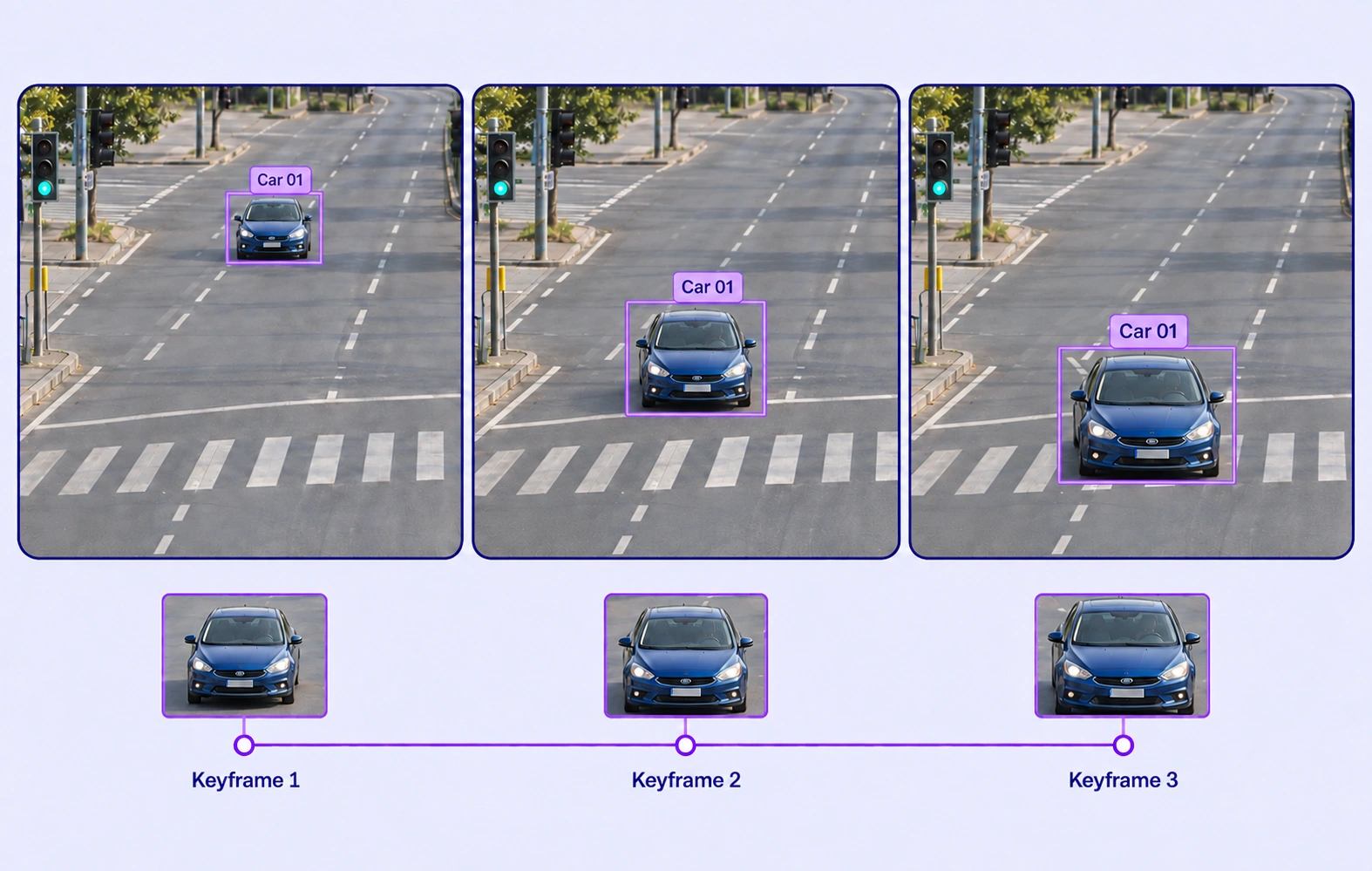
Vehicle trajectories
Maintain stable track identities as vehicles move through recorded road scenes.
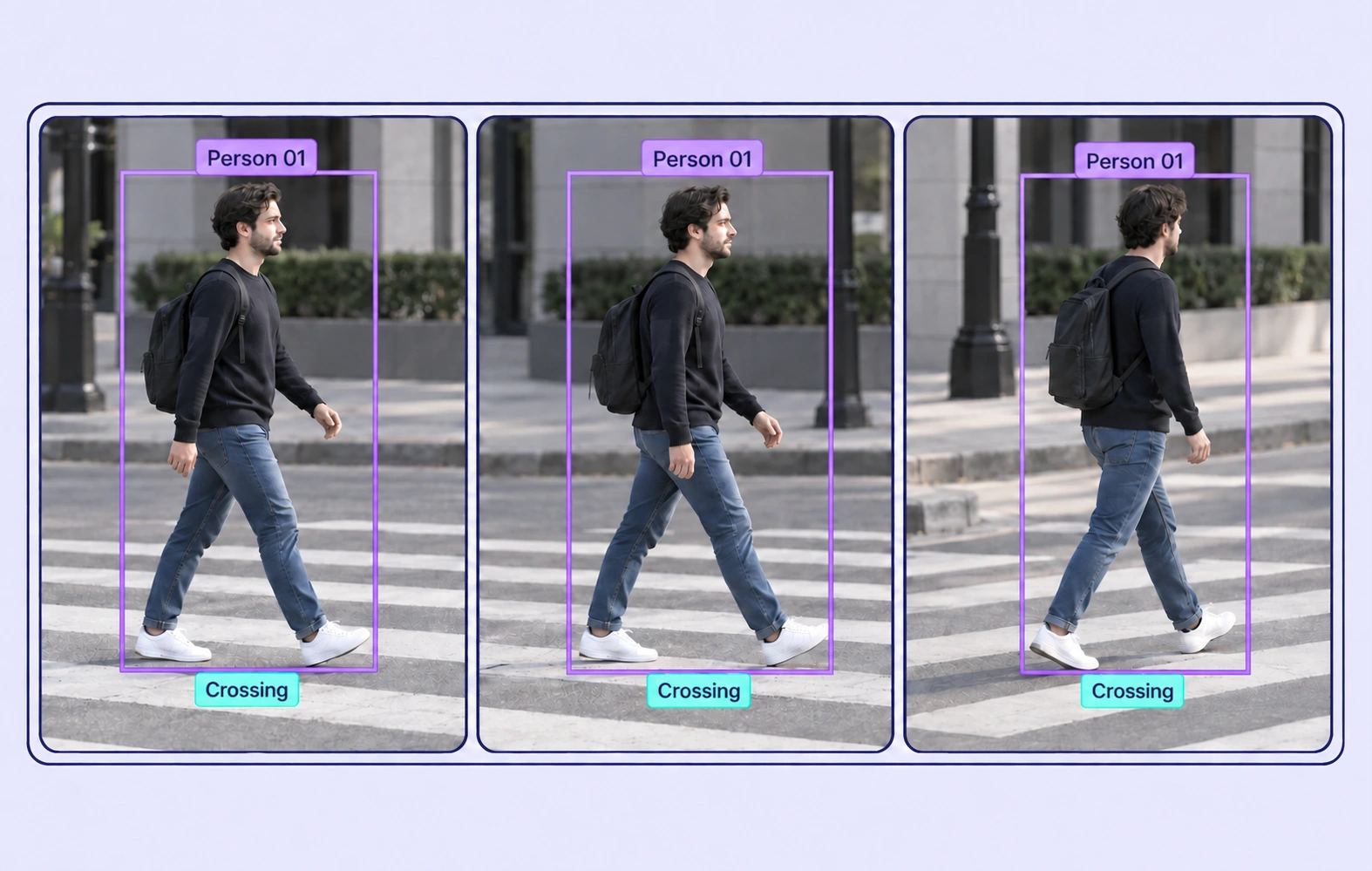
Pedestrian crossings
Annotate pedestrian boundaries and observable crossing states in context.
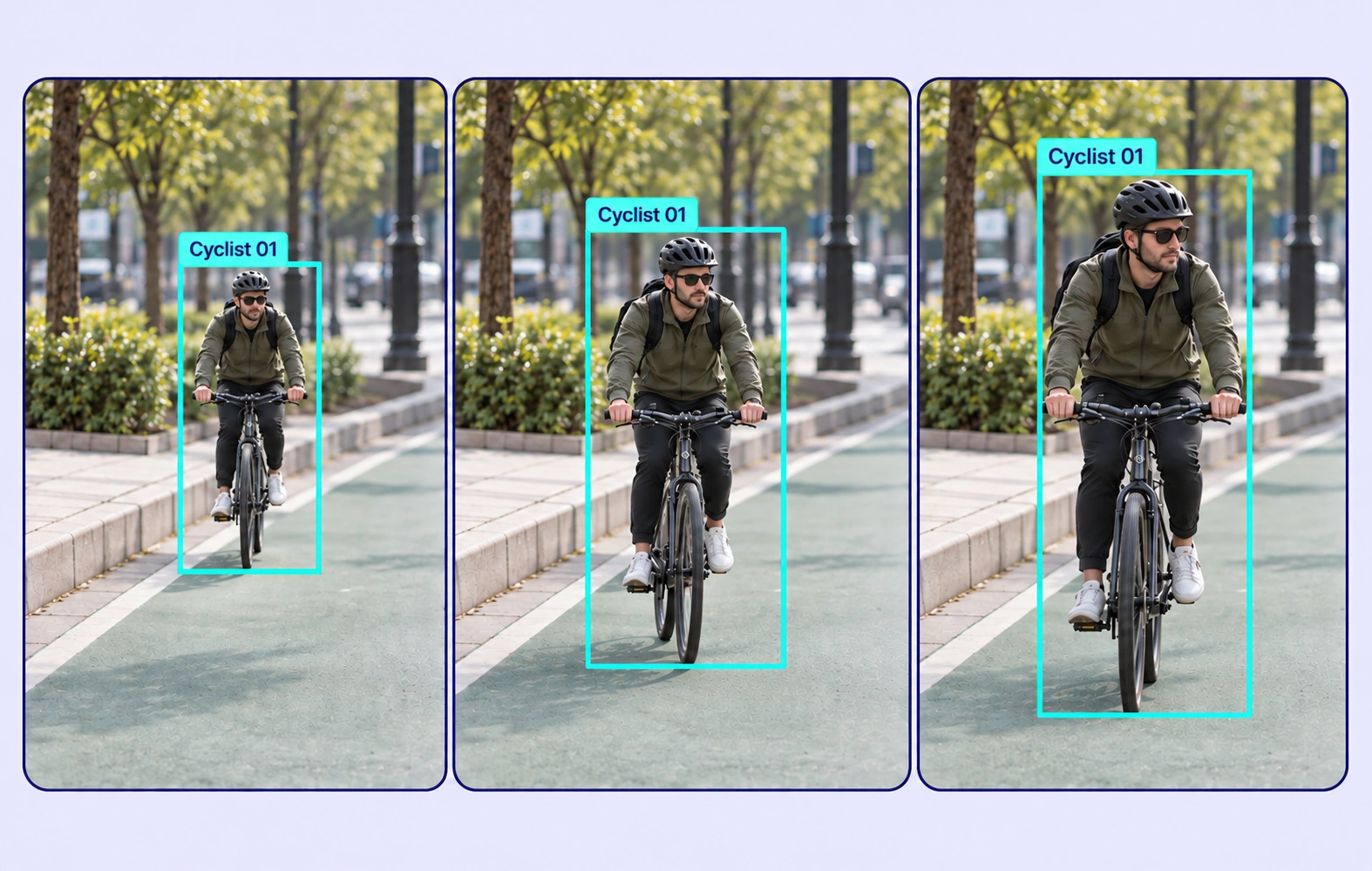
Cyclists and road users
Capture complete rider-and-bicycle geometry consistently across frames.
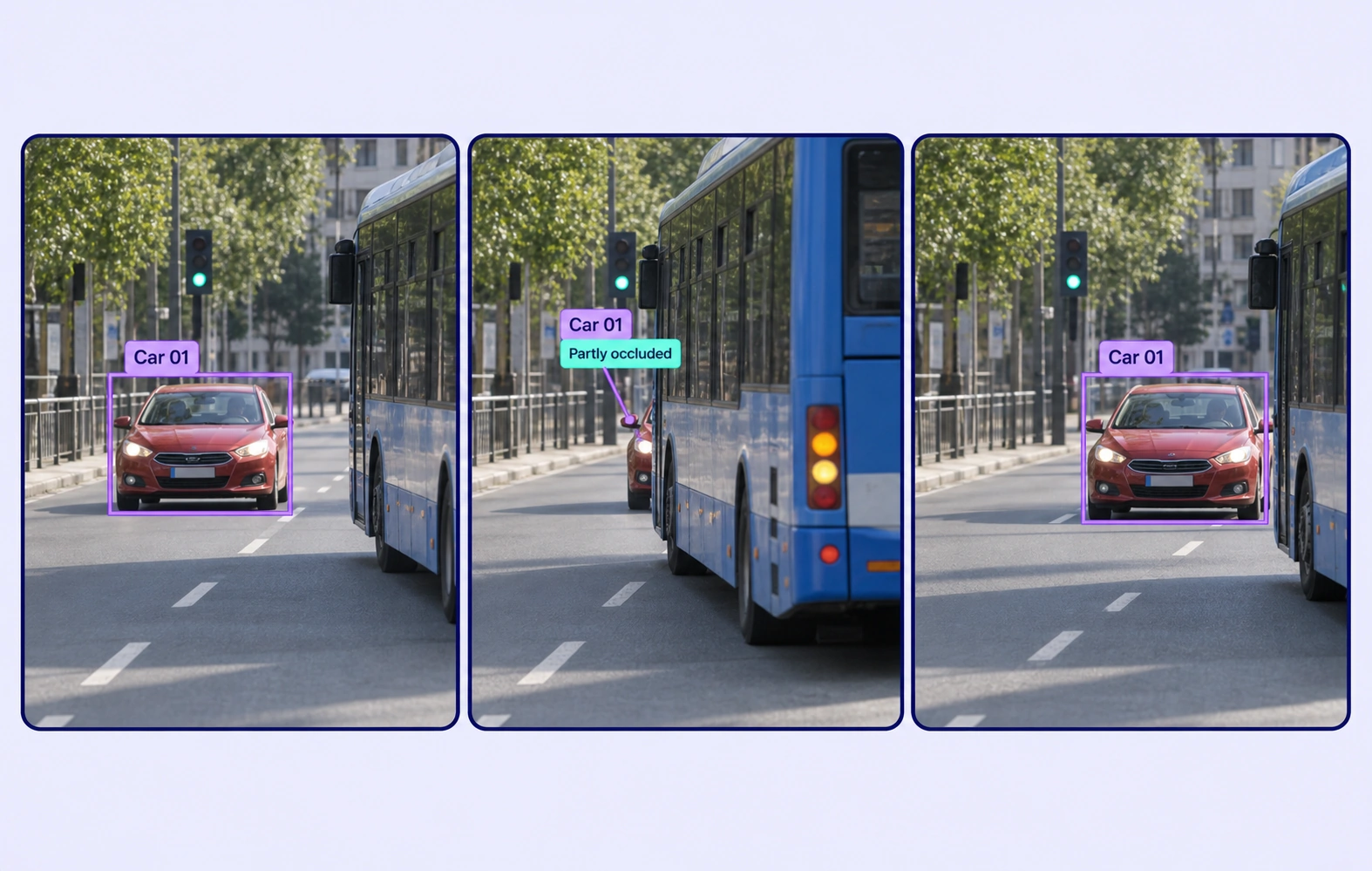
Difficult traffic scenes
Review occlusions and reappearances before exporting track annotations.
Built for AI Data at Scale
Connect data curation, shared label definitions, review, and dataset versions in one workflow.
15X
Faster transport data annotation
Label road users, routes, and traffic events with unified review workflows.
60%
Less time on data operations
Automate curation, management, and versioning of transport datasets.
5X
Lower Training Data Costs
Reusable ontologies and governed quality control reduce labeling and review rework.
Labels that preserve source context
Match the annotation geometry and properties to your model’s task.
Vehicle tracking
Assign stable identities to vehicles across a sequence. Inspect boxes around small or distant road users and record visibility consistently.
Complex scene boundaries
Specify how to label partially visible objects at crossings and occlusions. Review reappearance frames to avoid unintended track switches.
Transportation FAQs
What is data annotation for transportation?
Data annotation adds defined labels to source data so models can learn a specific task. For transportation, examples include vehicle trajectories and pedestrian crossings. Unitlab connects this work in its data annotation platform.
Which data types can teams annotate?
Choose the tools that match the source data: video annotation, image annotation, sensor annotation. Keep linked sources together when the task requires shared context. Confirm input formats and annotation requirements before starting a project.
Which transportation use cases can I explore?
Explore traffic video annotation and vehicle telemetry for focused labeling examples. These solution pages explain the training-data task; the linked modality pages describe the annotation tools.
How do I keep annotation rules consistent?
Define classes, required properties, and boundary rules before labeling. Use examples such as vehicle trajectories to resolve ambiguous cases. See the classes and annotation types guide.
How do I select representative training data?
Use data curation to inspect examples and filter available metadata. Plan coverage across road types, weather, camera viewpoints, and road users, then check for missing or overrepresented conditions before annotation.
How are annotations reviewed before training?
Use annotation quality assurance to inspect labels against the task guidelines. Consensus helps compare annotator agreement; Quality Gate stages apply configured checks before work advances. Route uncertain examples to the appropriate reviewer.
What is the difference between a dataset version and an annotation release?
A dataset version records a source-data selection; an annotation release packages the annotation outputs for downstream use. Use dataset management to inspect and organize data, and consult the guide to annotation releases before preparing training exports.
Can I export data and connect my training pipeline?
Choose an output format supported for your annotation task and validate the result with your training code. Read the export formats guide and the API, SDK, and CLI documentation for automation and integration options.
How do I get started?
Start with a representative sample, a clear label specification, and an agreed review process. Read the video annotation documentation or discuss your workflow with the Unitlab team.
Related resources:video annotation · traffic video annotation· Autonomous driving LiDAR annotation · Data curation · Quality assurance
Need help defining your annotation workflow?
Talk to UnitlabBuild your transportation dataset
Bring data selection, annotation, and reviewed dataset delivery into one workflow.
Talk to sales


