
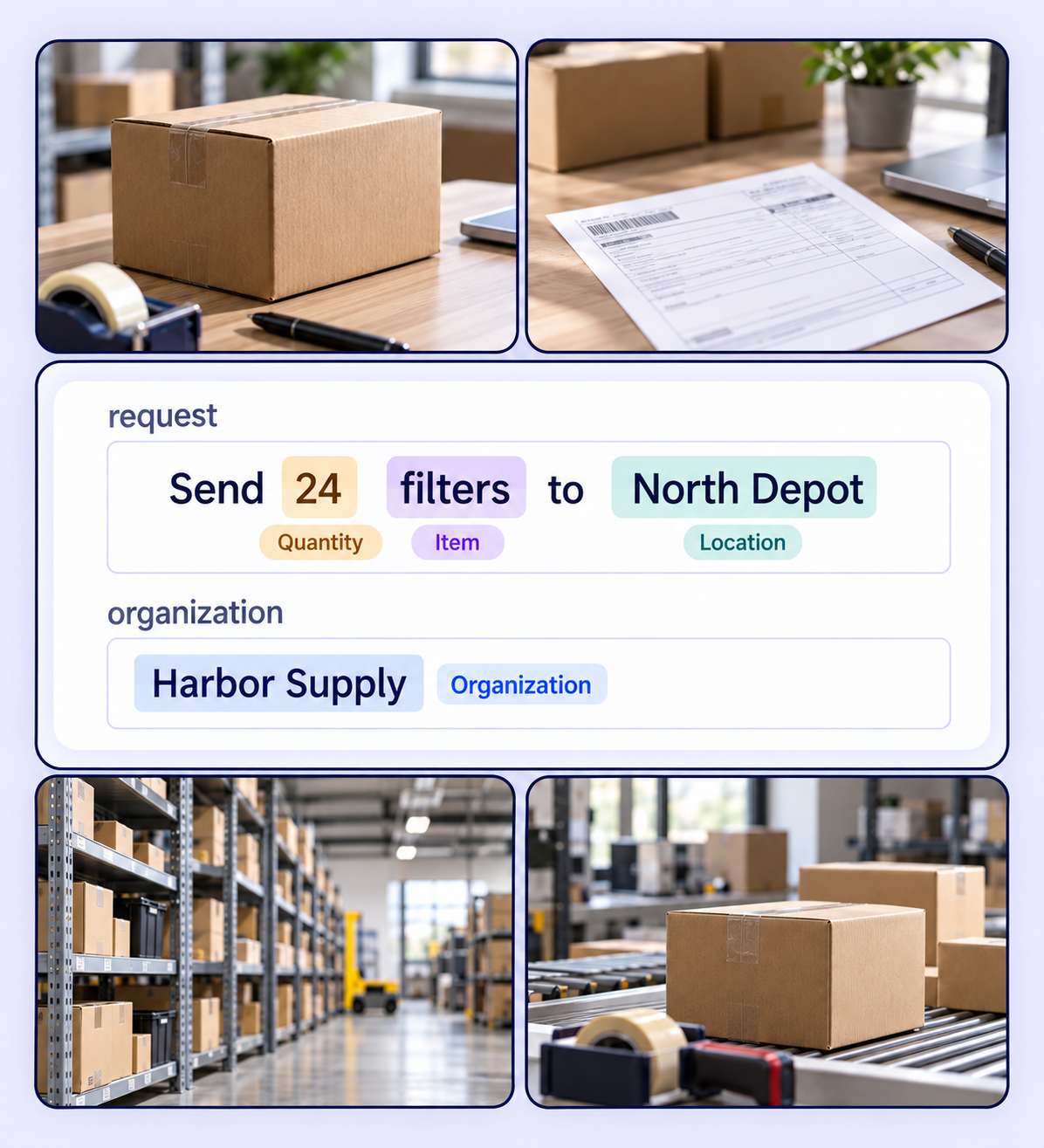
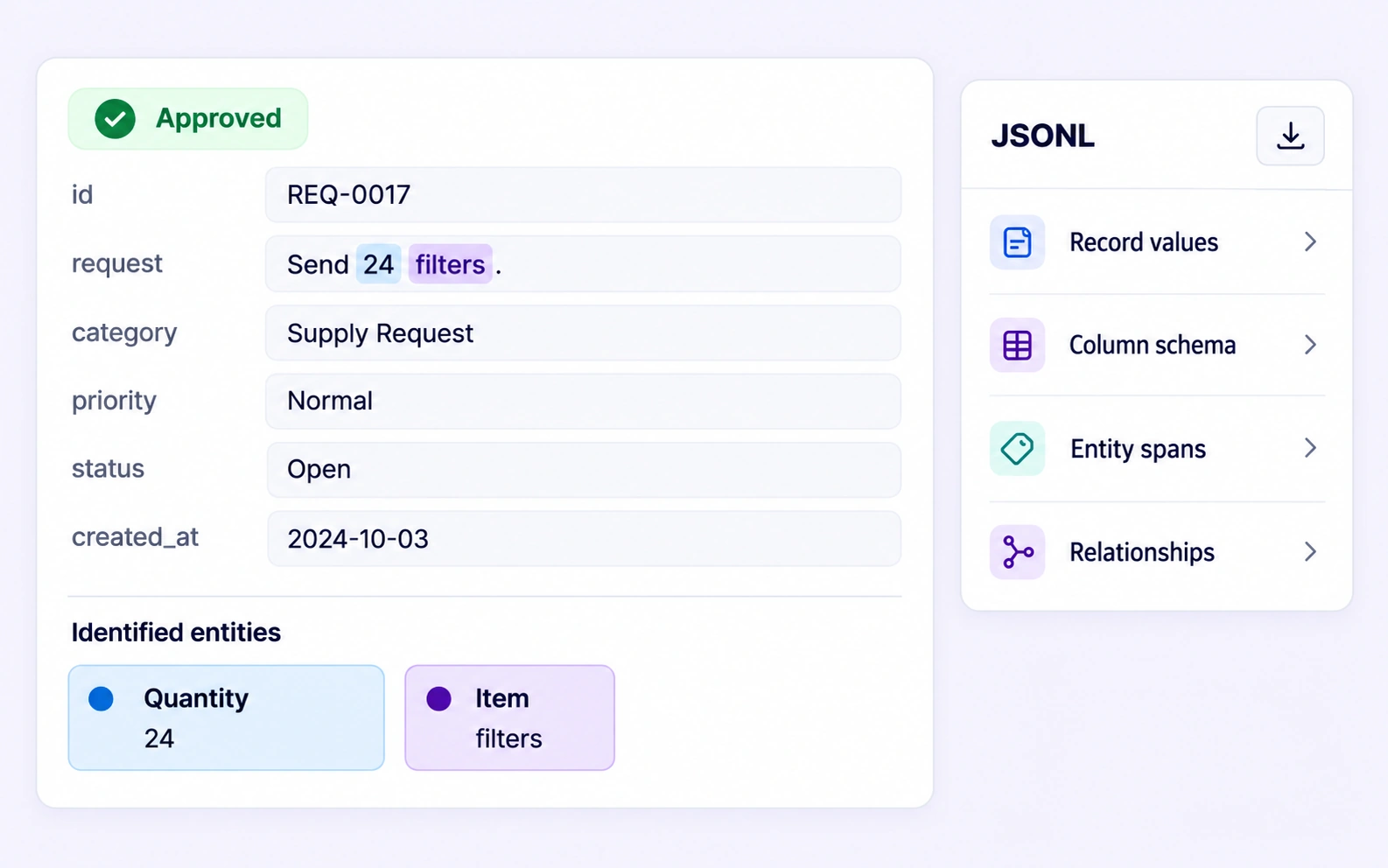
Label structured fields with reusable schemas and shared review workflows.
Automate curation, management, and versioning of structured datasets.
Reusable ontologies and governed quality control reduce labeling and review rework.
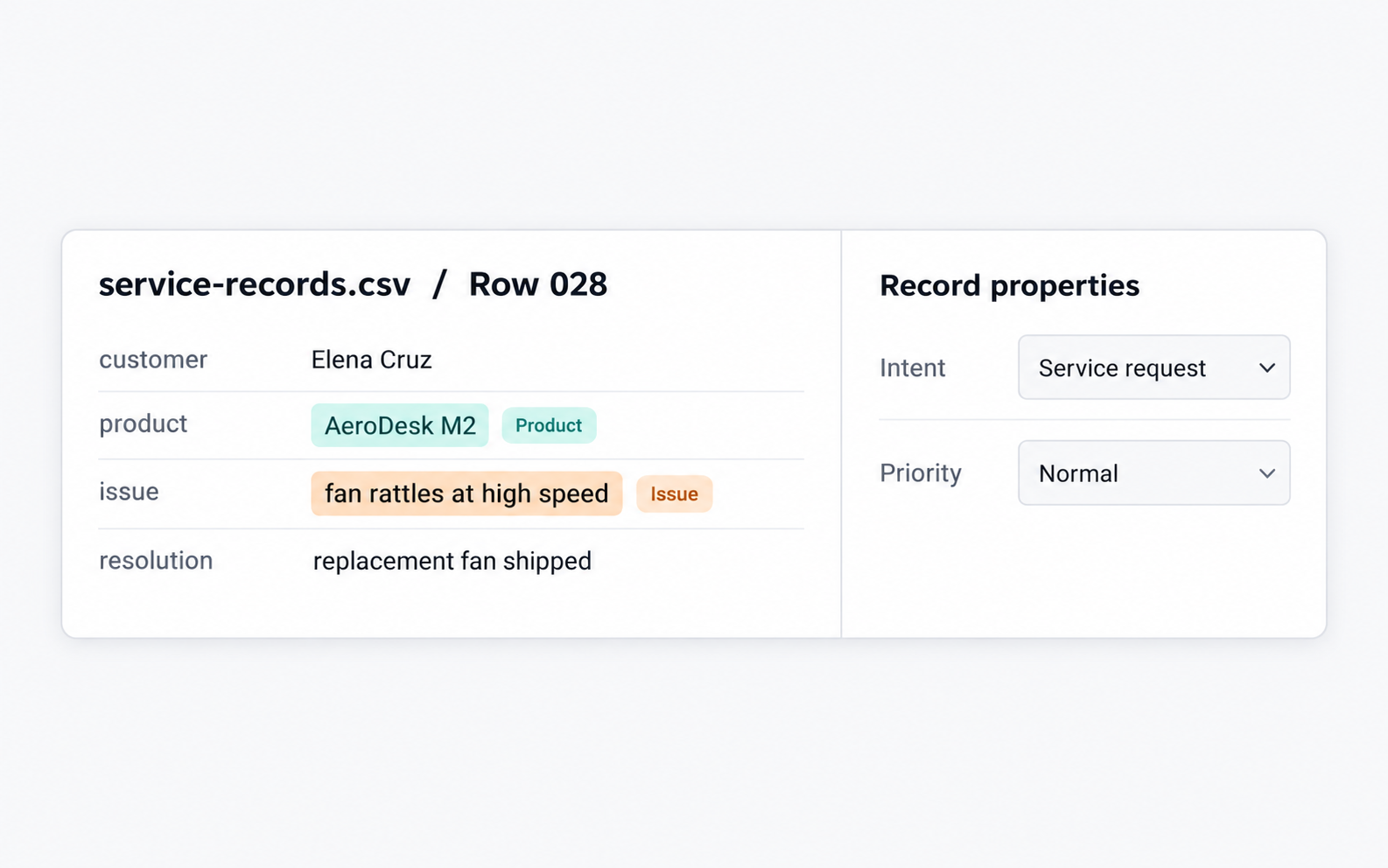
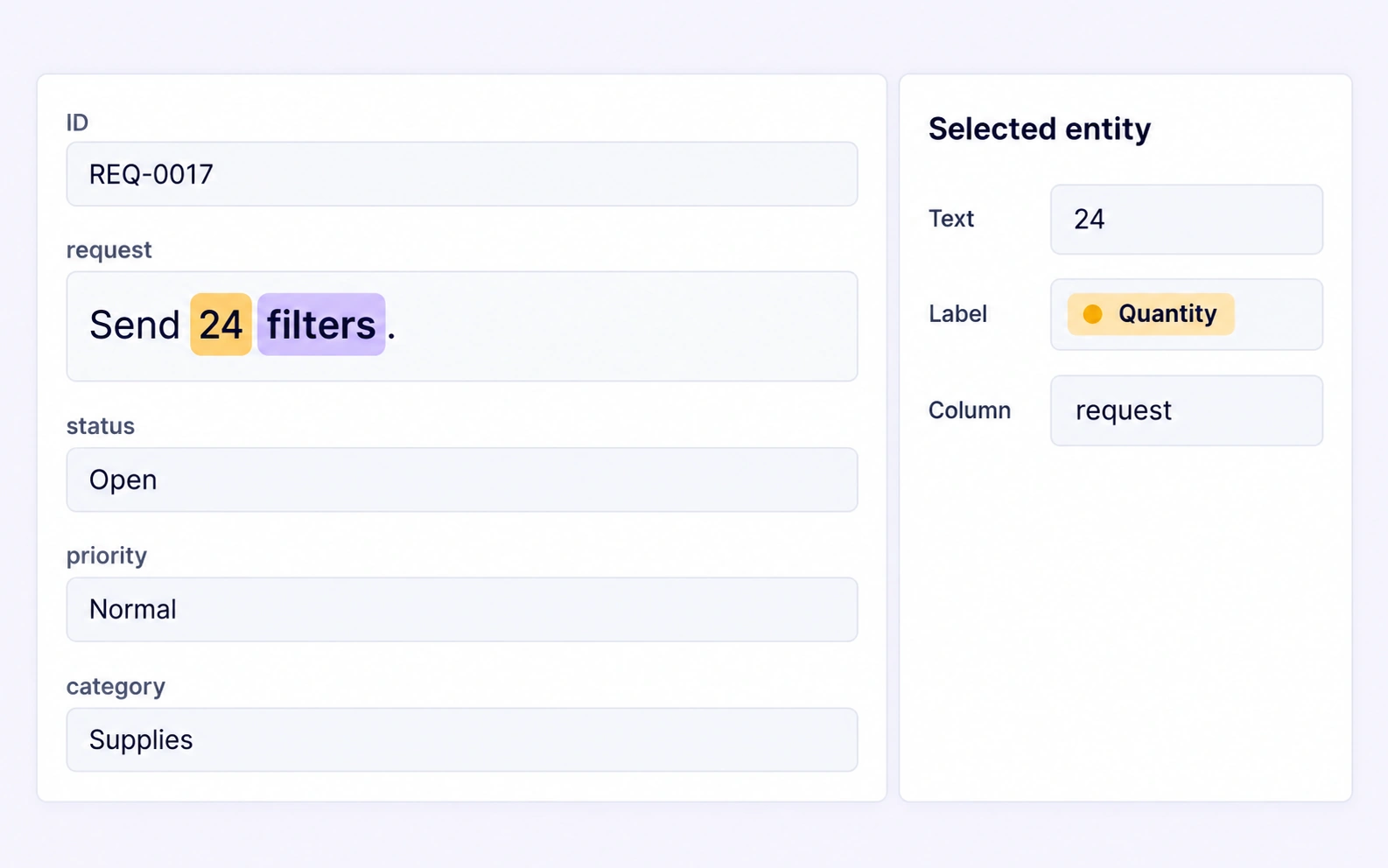
Highlight exact text inside CSV fields and classify the complete record with shared properties. Keep every label attached to its source field and record context.
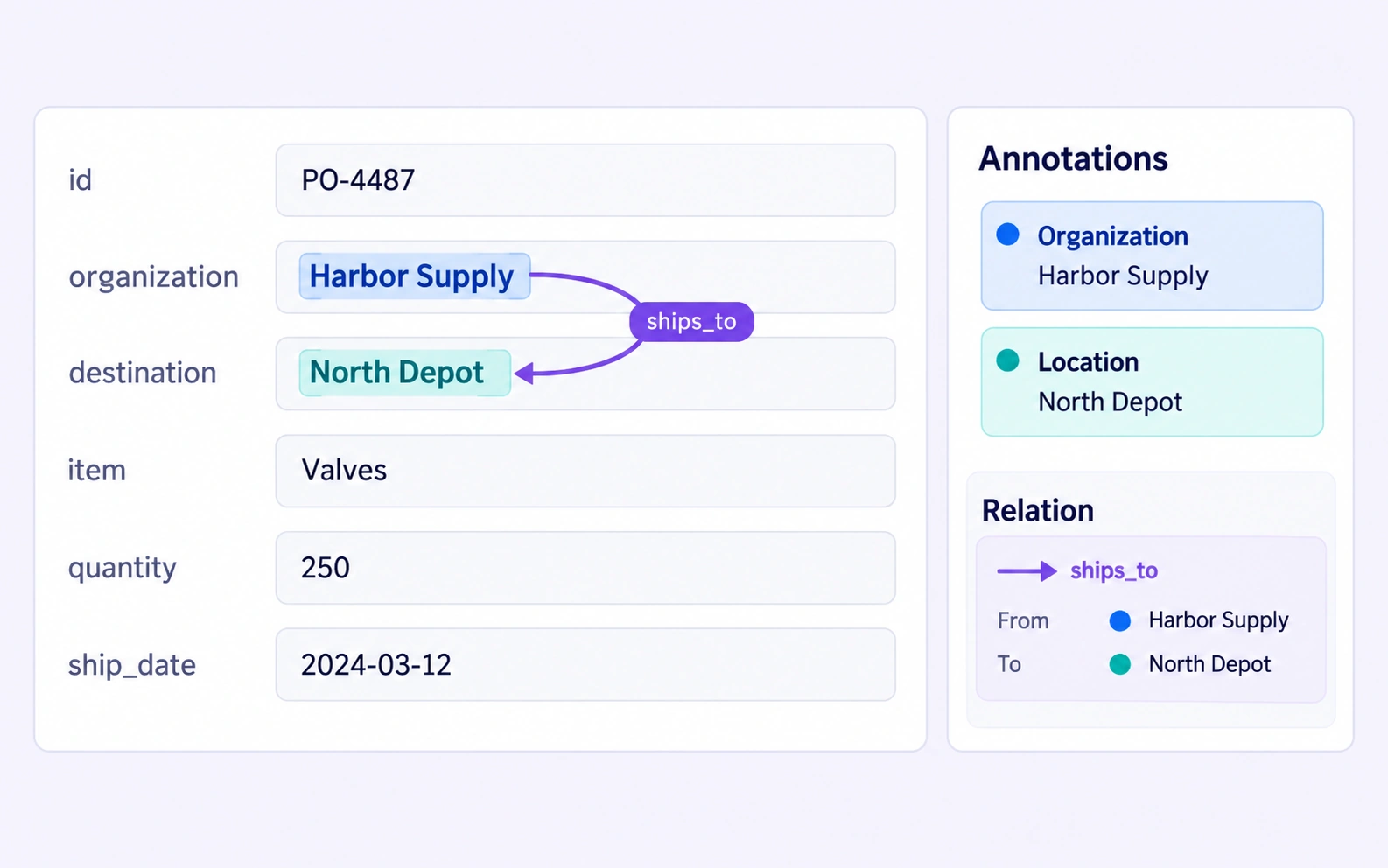
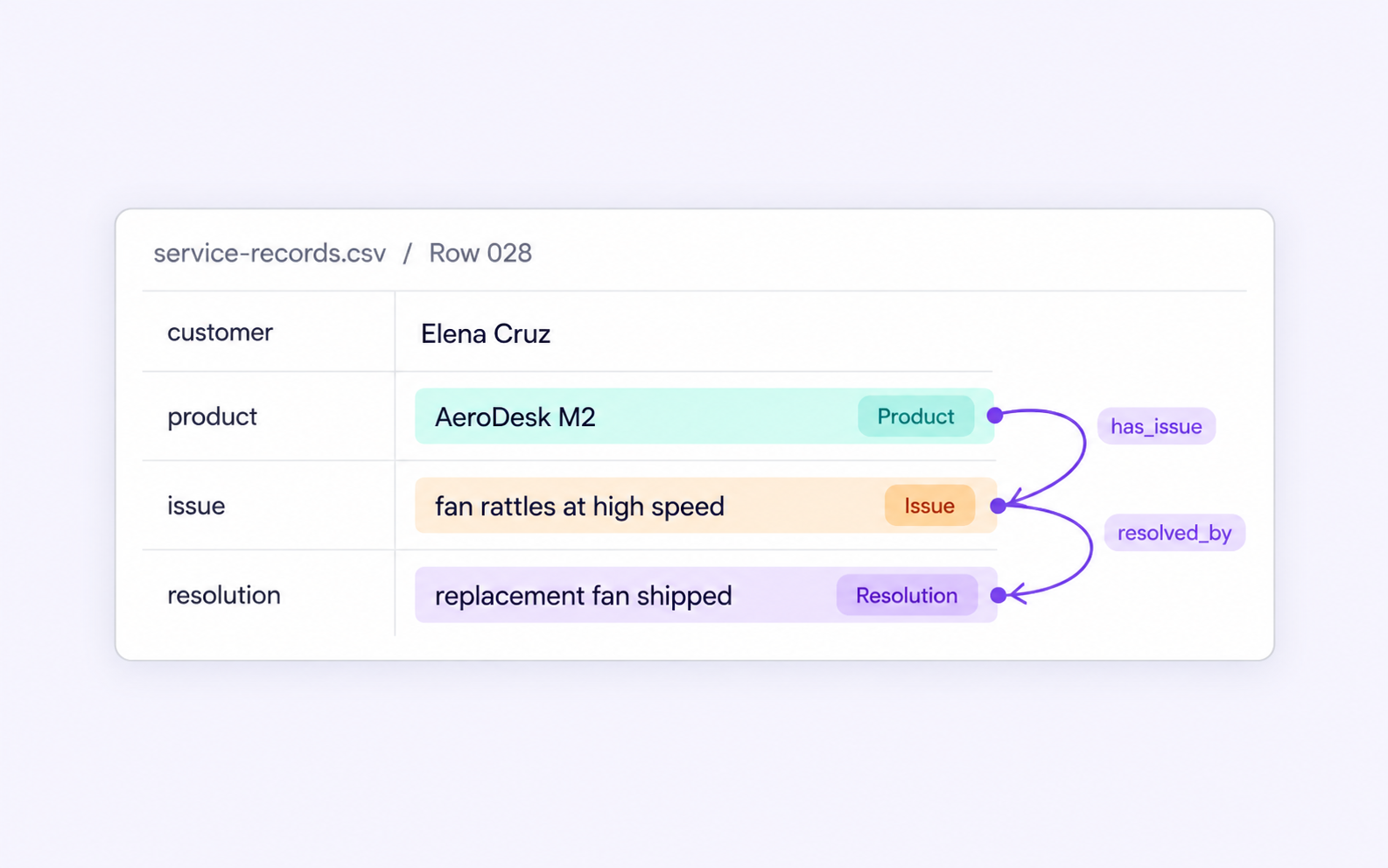
Connect labeled entities and header marks across fields within the same record. Use typed relationships to express the association and review it with the original evidence.
It is a collection of source records with explicit labels showing which text should be extracted, what the fields mean, and how entities relate. These reviewed examples support downstream information-extraction models.
Use CSV files in tabular row mode. Each row is presented as an independent record with its column names and values, ready for labeling and review.
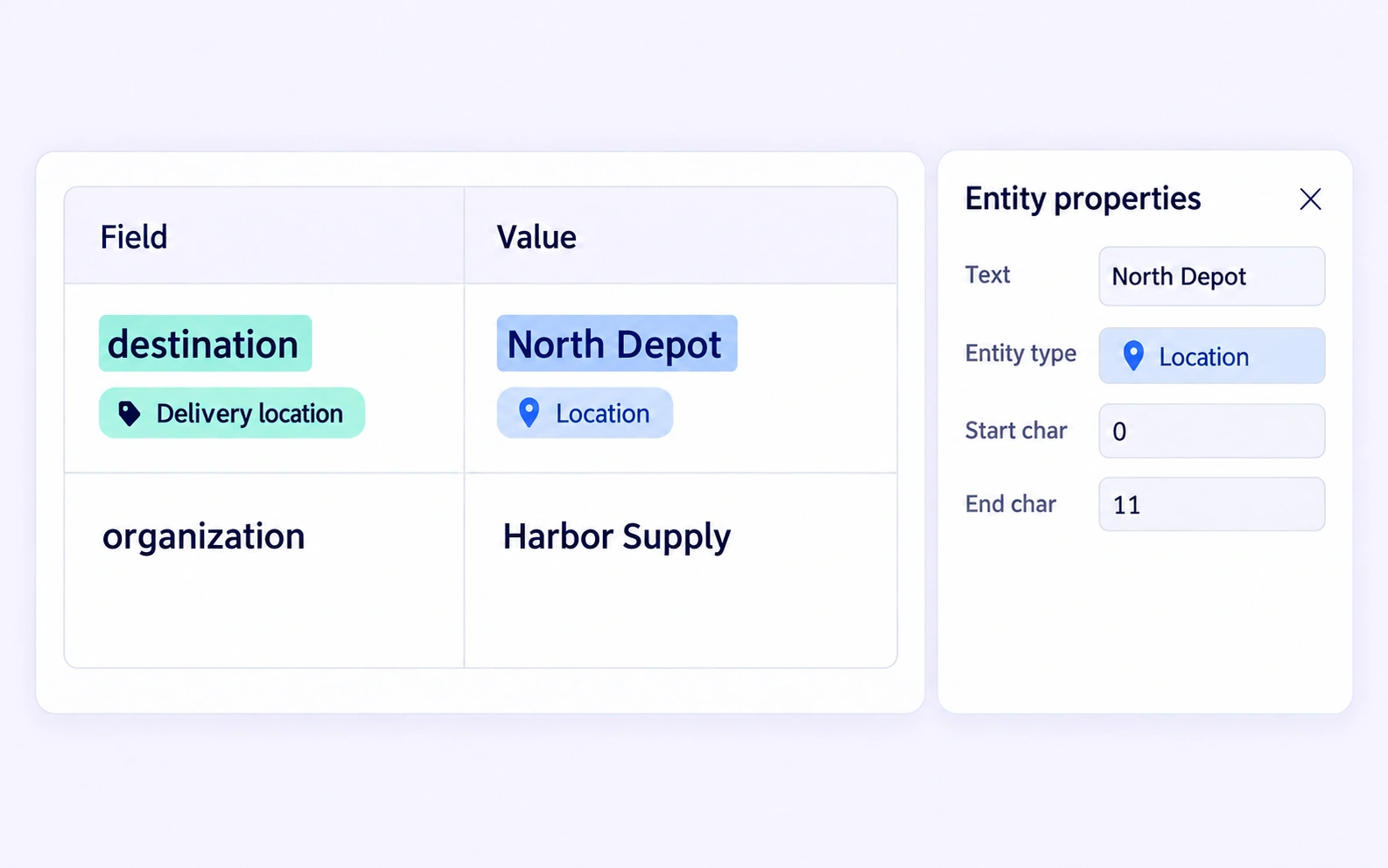
Yes. Entity annotations can mark exact character spans inside text fields. The export retains the column identity and start and end positions for each supported entity span.
Yes. You can label a column name or select a span within its header in the current record. These labels are saved with that record’s annotation history.
Header annotations are scoped to each record’s annotation history. They do not automatically propagate the same label across every row in the source CSV.
Yes. Relationships can connect labeled cell entities, column labels, and header spans across fields within the same record, according to your ontology’s relation definitions.
Reviewers inspect the source values, entity spans, field labels, and properties together. Contextual comments and configured rework paths let them resolve mistakes before approval.
This workflow labels text already present in CSV records. Unitlab’s separate document annotation workflow supports document-oriented tasks when the source is a PDF or other document asset.
JSONL exports include the row values and column schema, labeled entities, supported relationships, and record properties. The exported annotations retain their original field context and character spans.


We use cookies to improve your experience. See our Privacy Policy and Cookie Policy.