
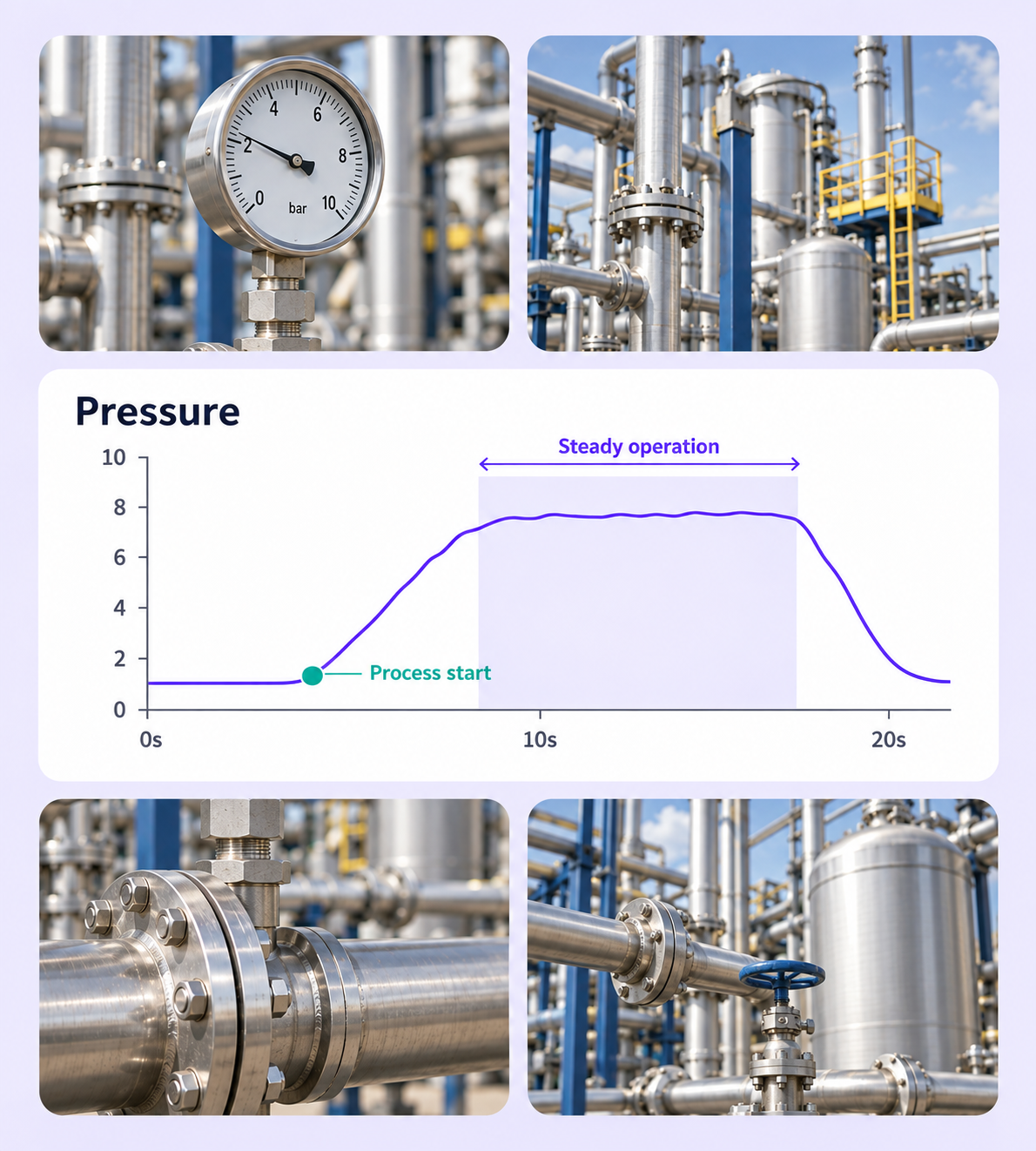
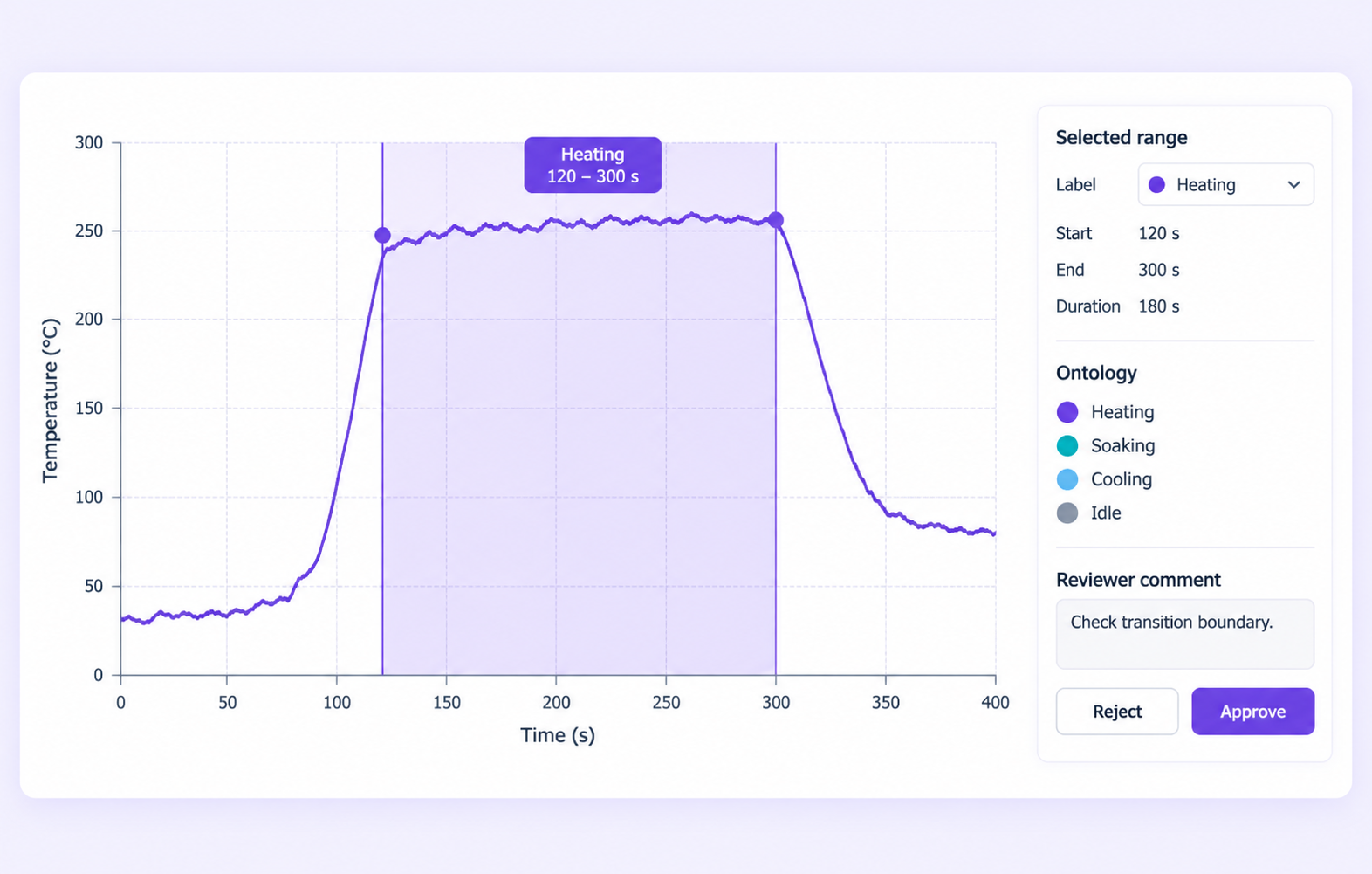
Label process states and sensor events with shared timelines and review.
Automate curation, management, and versioning of process datasets.
Reusable ontologies and governed quality control reduce labeling and review rework.
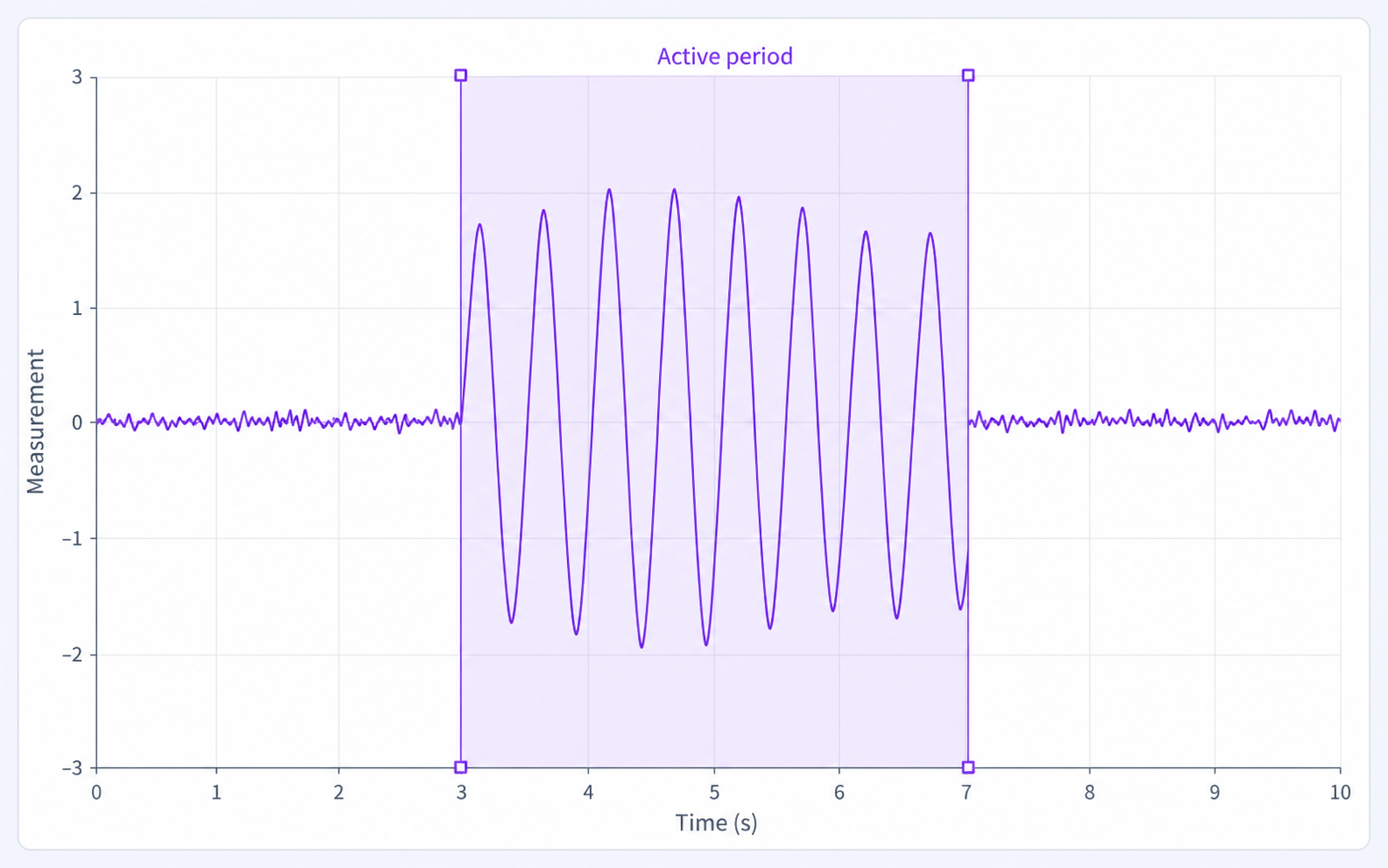
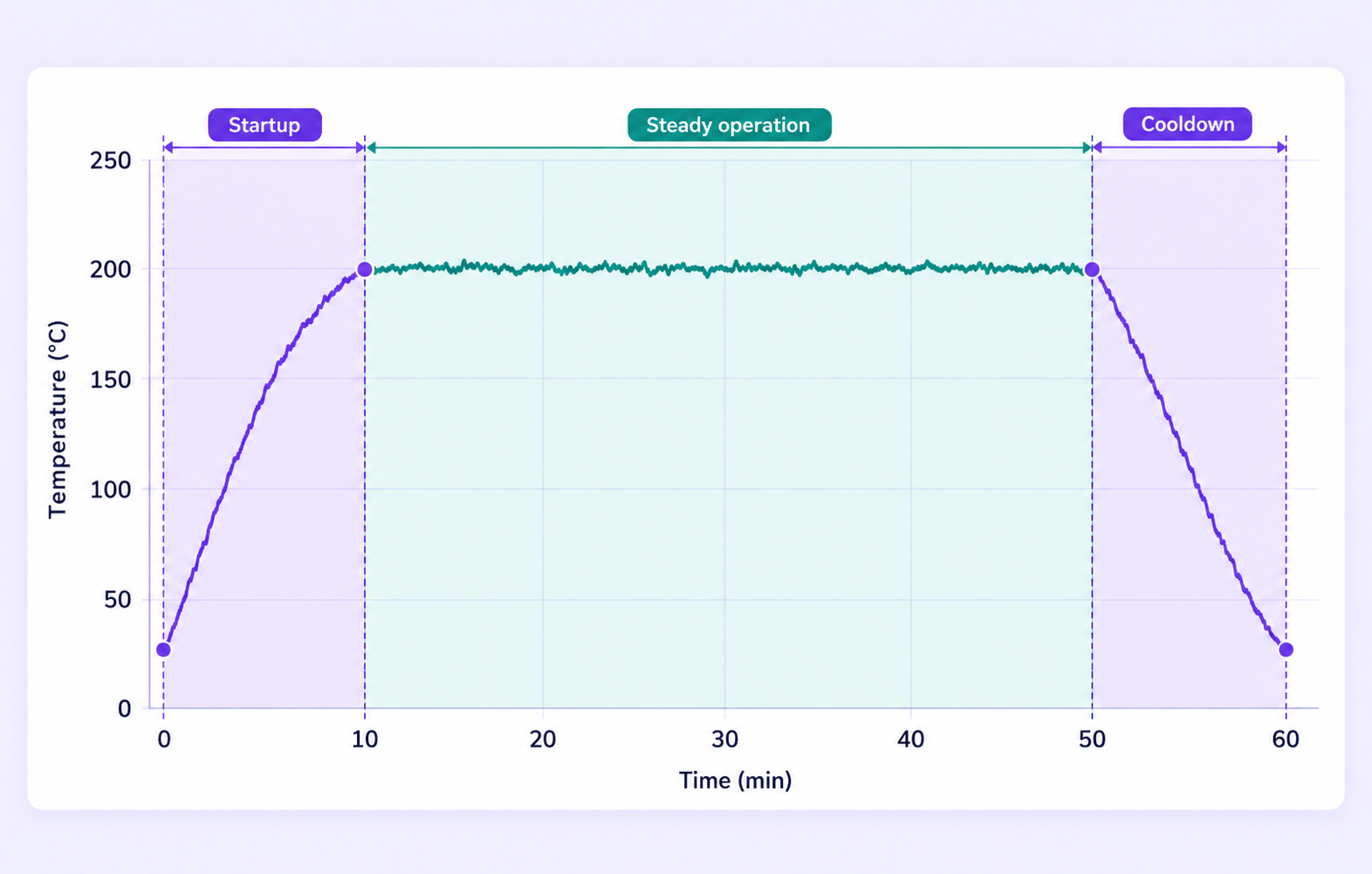
Mark a start and end for a phase, sustained condition, or meaningful window. Associate the range with one measurement channel or the complete recording.
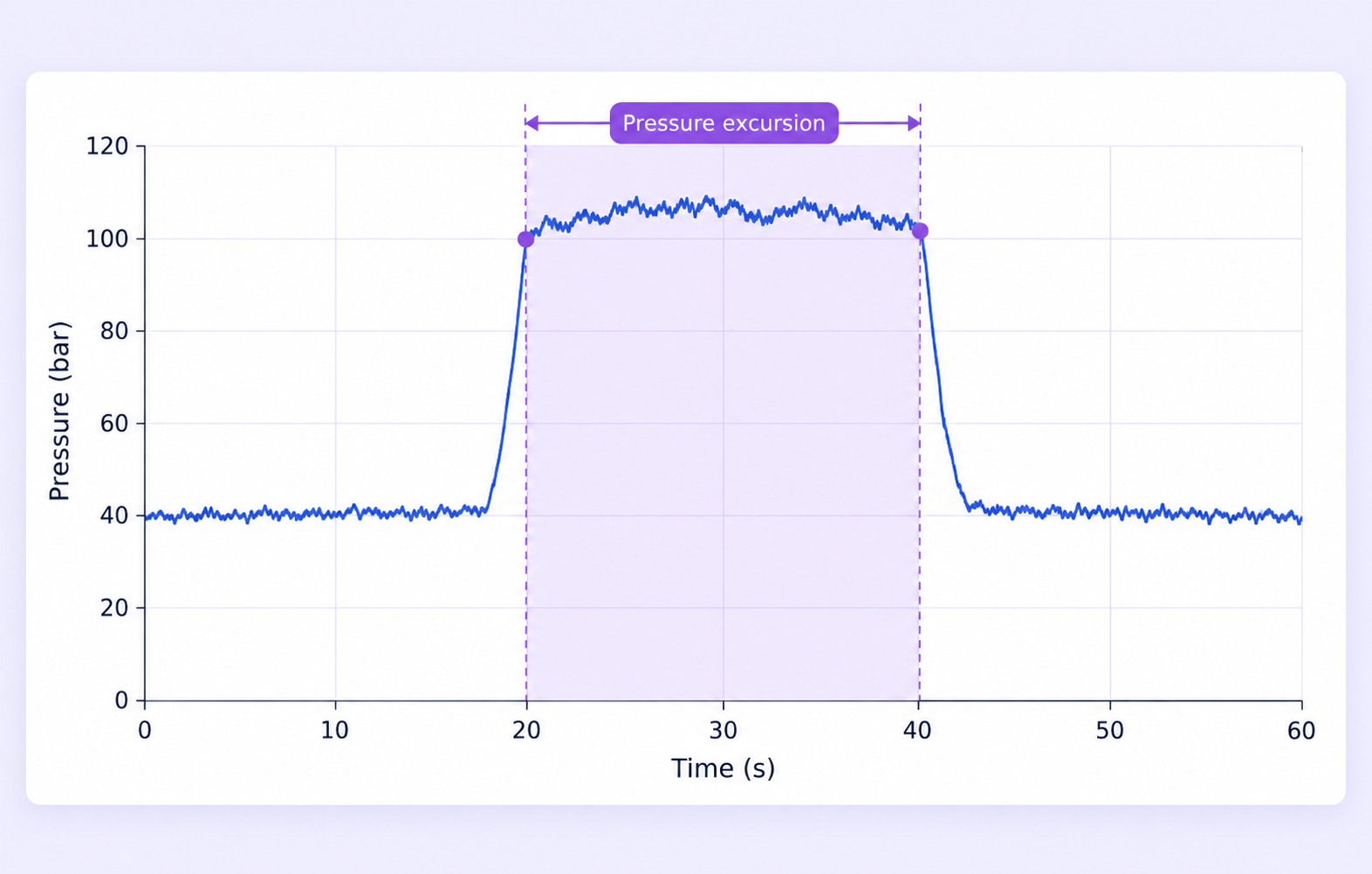
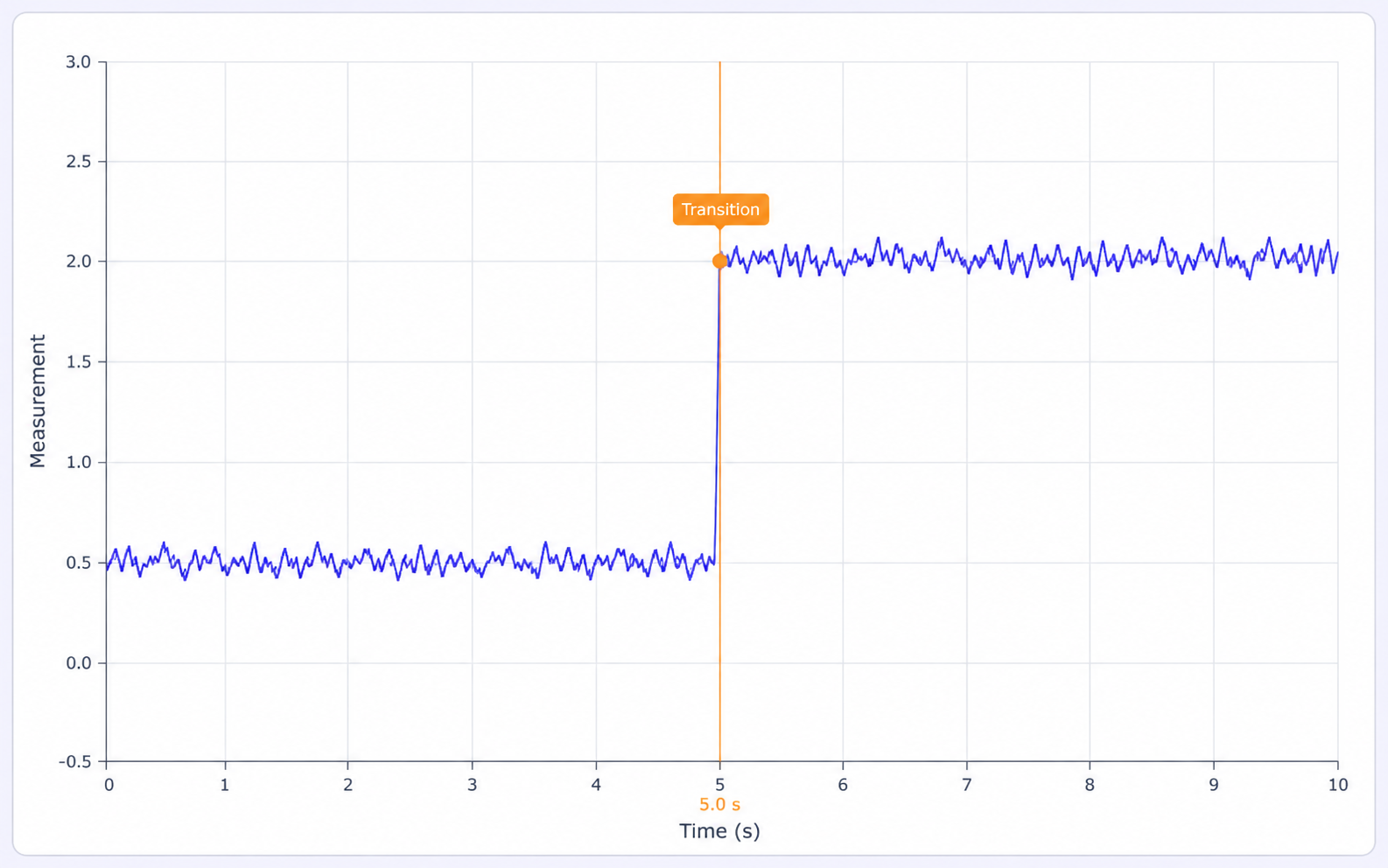
Mark the sample where a transition or brief event occurs. Preserve its X-axis value and channel context for review and structured export.
It adds consistent labels to machine and process measurements so industrial AI models can learn from meaningful phases and events. Unitlab supports native time-series charts, ranges, points, shared ontologies, and review workflows.
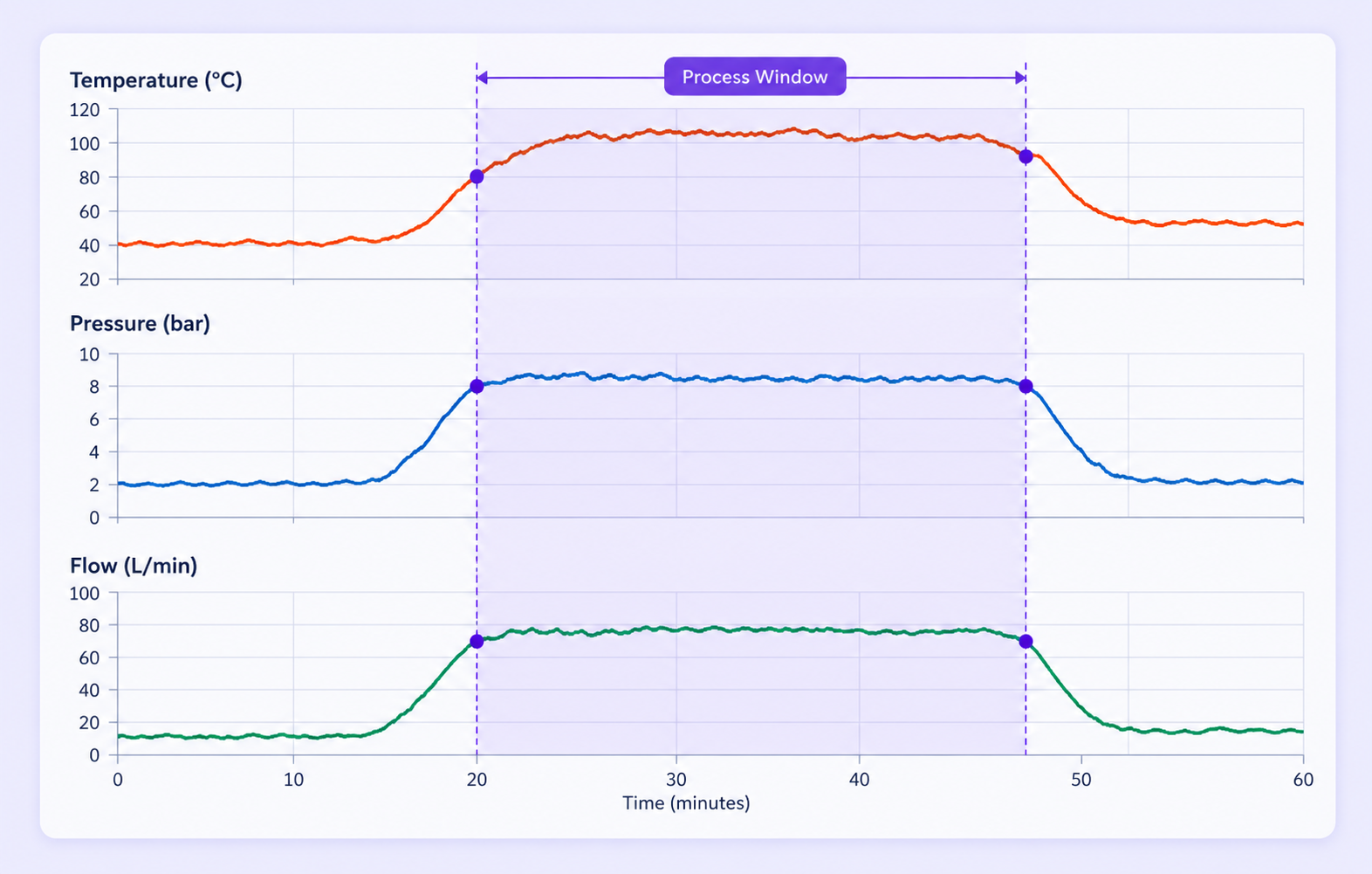
Use CSV time-series recordings with a numeric or supported timezone-aware timestamp X-axis and numeric measurement channels. Examples include pressure, temperature, flow, current, and other recorded process measurements.
Yes. Range annotations define the start and end of a meaningful period. They can describe one channel or a condition that applies to the recording as a whole.
Yes. Point annotations capture individual samples and their X-axis values. Use them for precise transitions or short events that do not require a time interval.
Channels can be inspected separately with a shared X-axis window or combined into one view. This helps annotators compare related measurements while preserving channel identity.
A shared ontology defines classes, properties, recording-level context, and relationships. Structured choices and required-property checks help teams apply a consistent labeling scheme.
Use annotation, review, and rework stages with comments anchored to the chart. Consensus and approved benchmark checks are available where configured in the workflow.
Yes. Search, metadata, tags, and filters support focused asset selection. Dataset versions and reviewed releases help keep changes traceable as more recordings are added.
Export structured JSONL containing ranges, points, X-axis values, channel context, and supported properties. The resulting labels can be used in your downstream training and evaluation workflows.


We use cookies to improve your experience. See our Privacy Policy and Cookie Policy.