Training Data for Product and Issue Understanding

Connect product references with the issues people describe. Label entities, relationships, and record context in CSV feedback and service records to prepare reliable examples for product-understanding models.
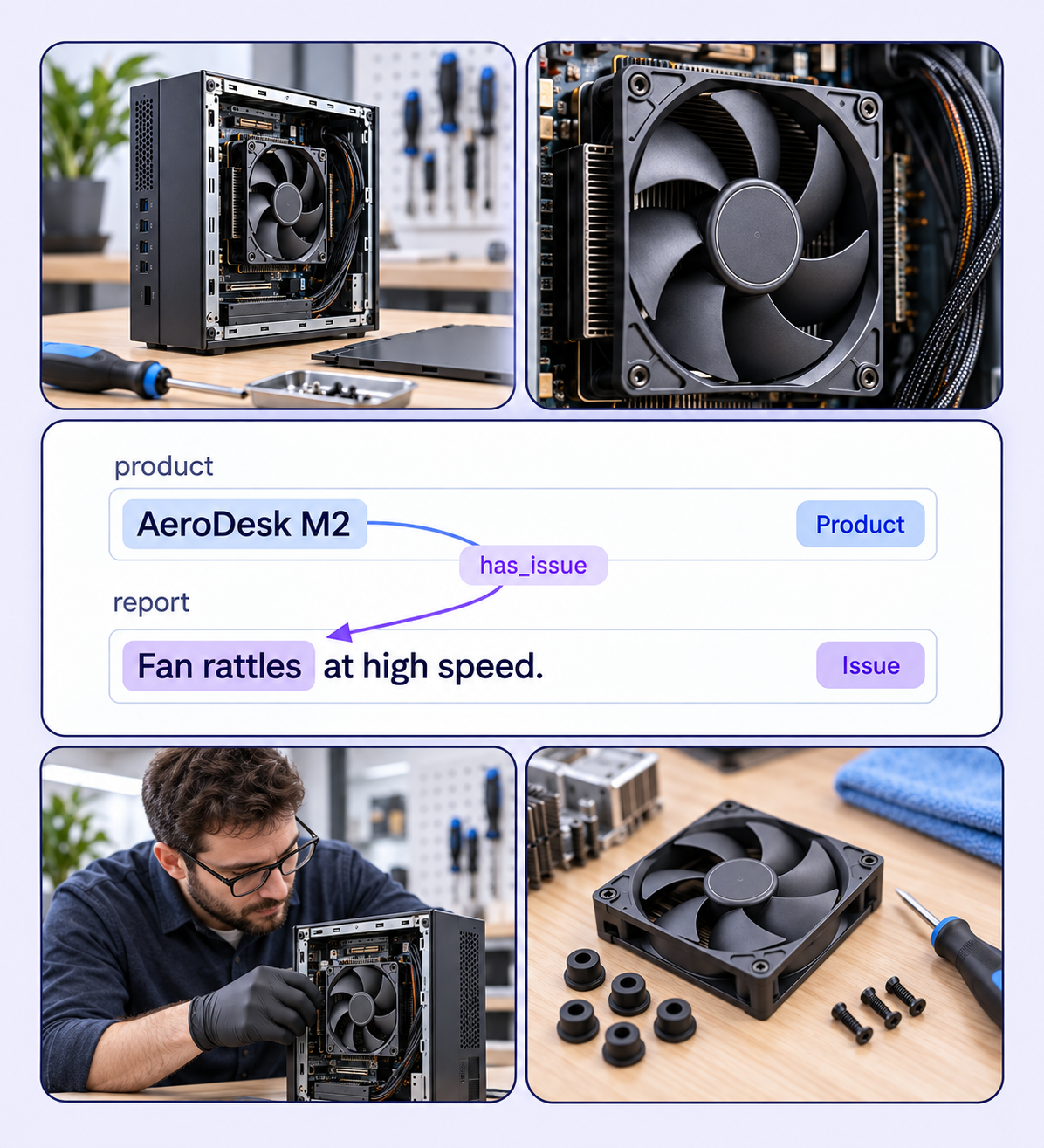
Product service collage with a labeled product linked to a fan issue.

Data Curation and Annotation for Product Understanding

Turn structured feedback, service notes, and support exports into labeled product evidence. Capture what was mentioned, what happened, and how those details relate within each record.
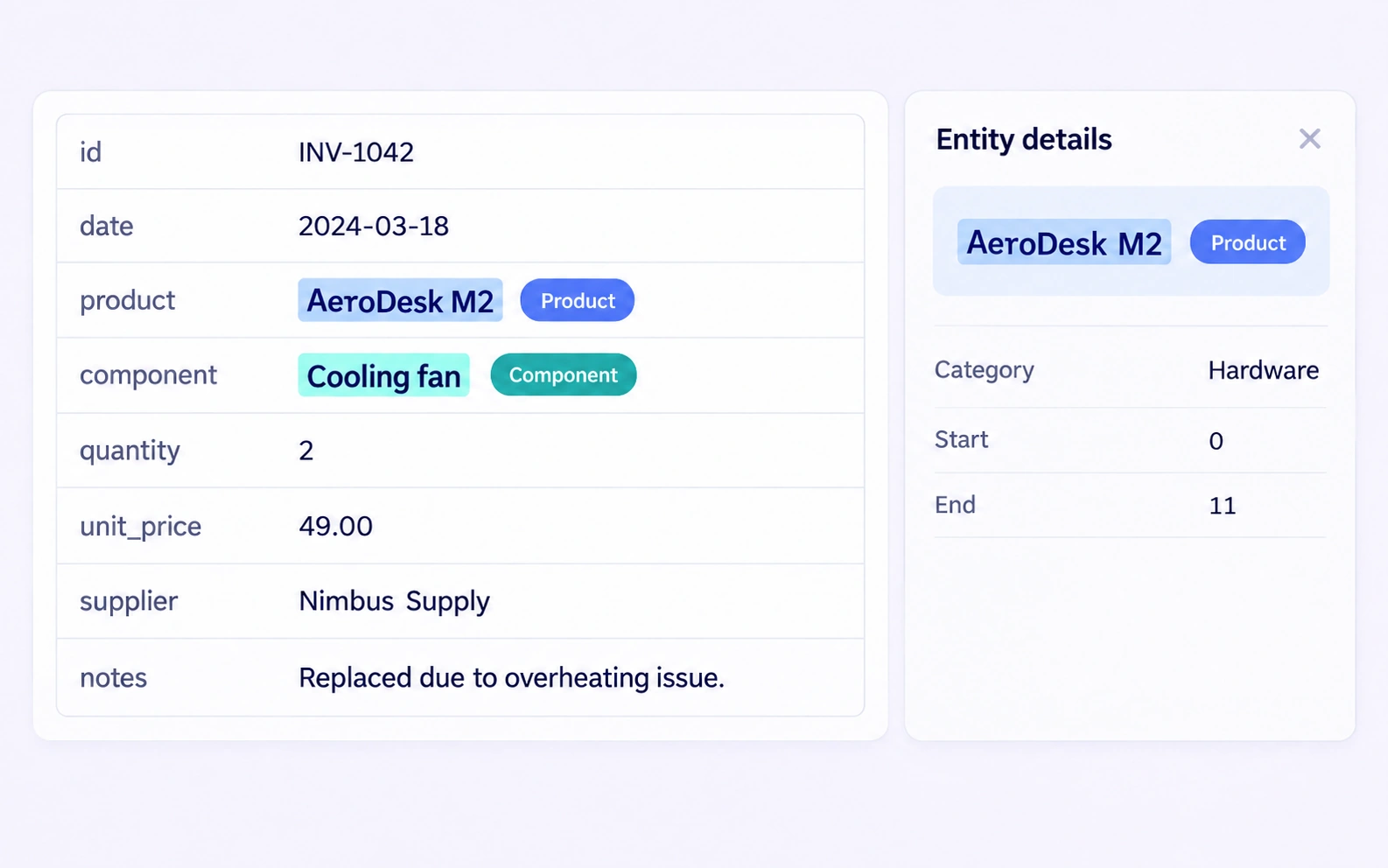
Product and Component Entities in a native CSV record annotation example

Product and Component Entities

Label product names, models, components, and versions in CSV feedback records. Preserve the exact references that product models need to recognize.
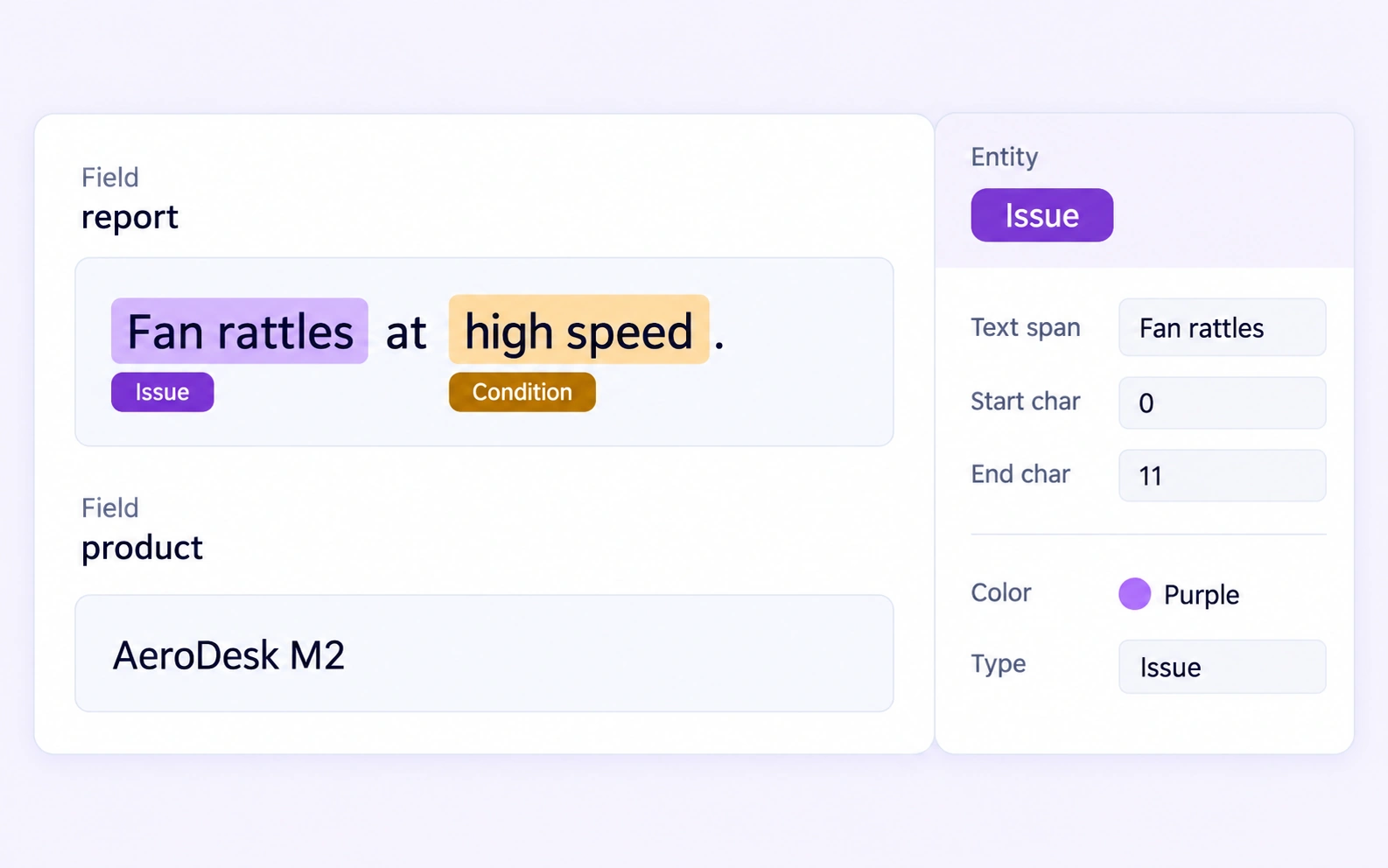
Issue and Symptom Labels in a native CSV record annotation example

Issue and Symptom Labels

Highlight the text that describes a reported issue or symptom. Keep the evidence attached to its original field and record context.
Product-Issue Relationships in a native CSV record annotation example

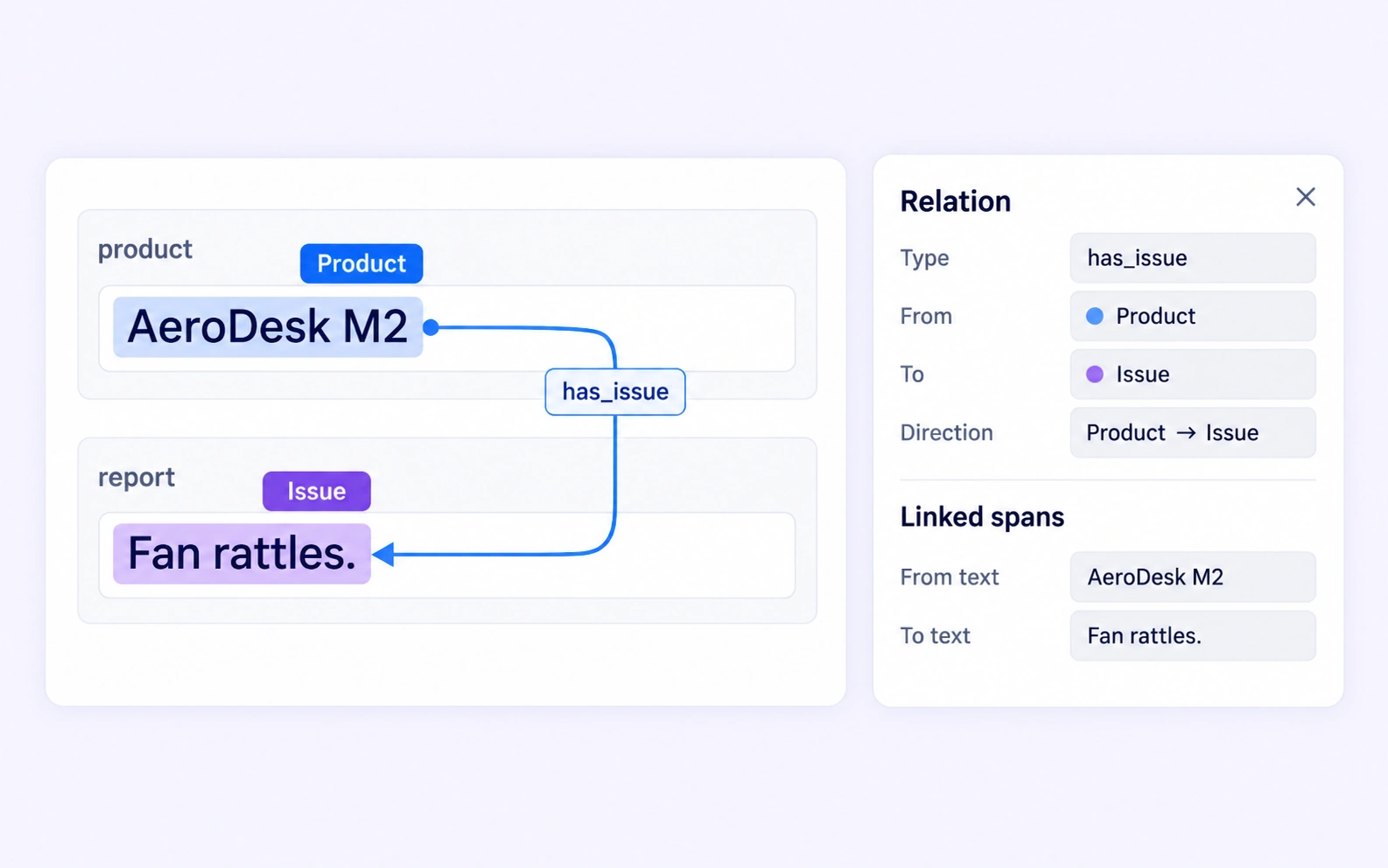
Product-Issue Relationships

Connect a product entity to its reported issue across fields in the same record. Typed, directional relations make the association explicit.
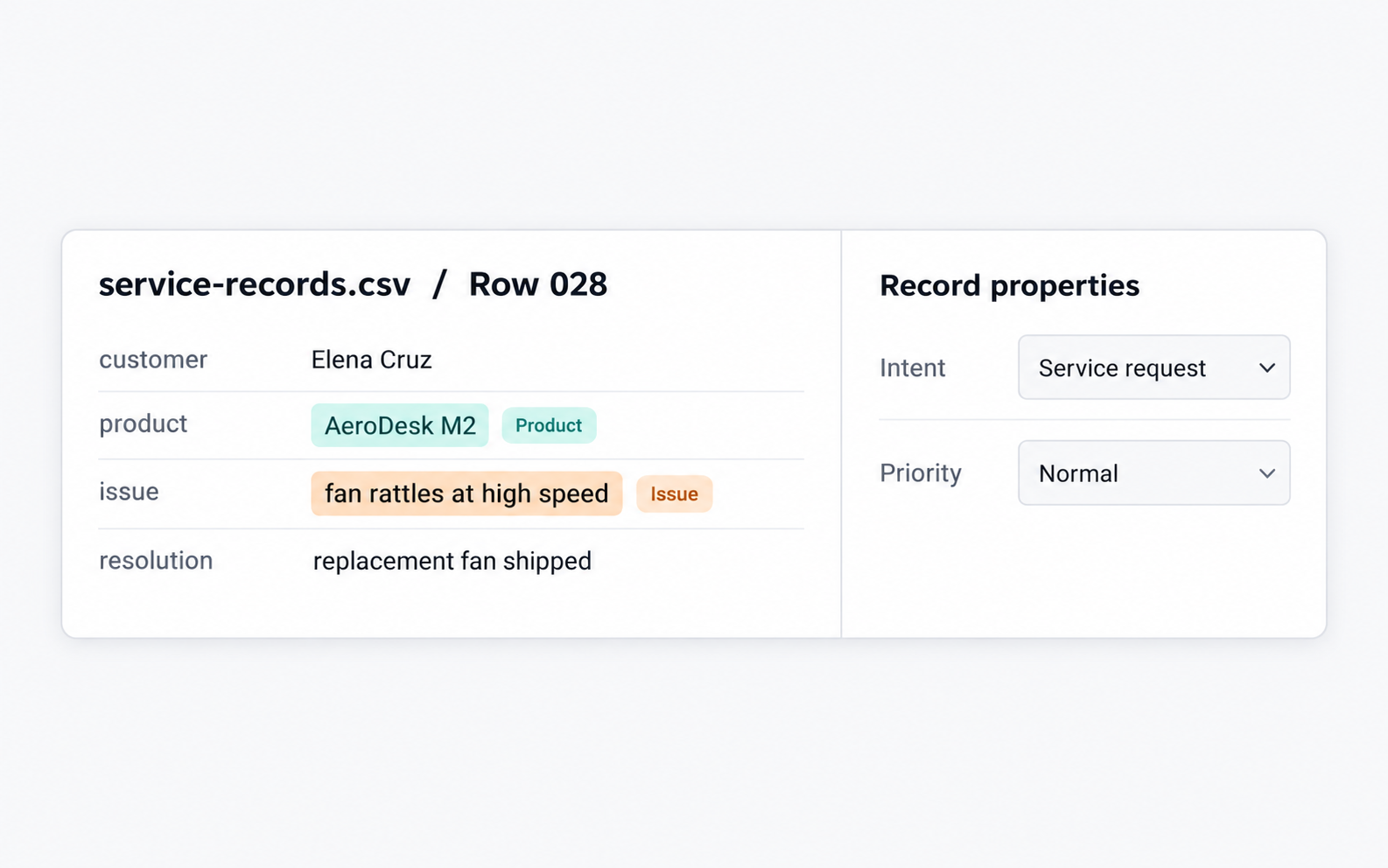
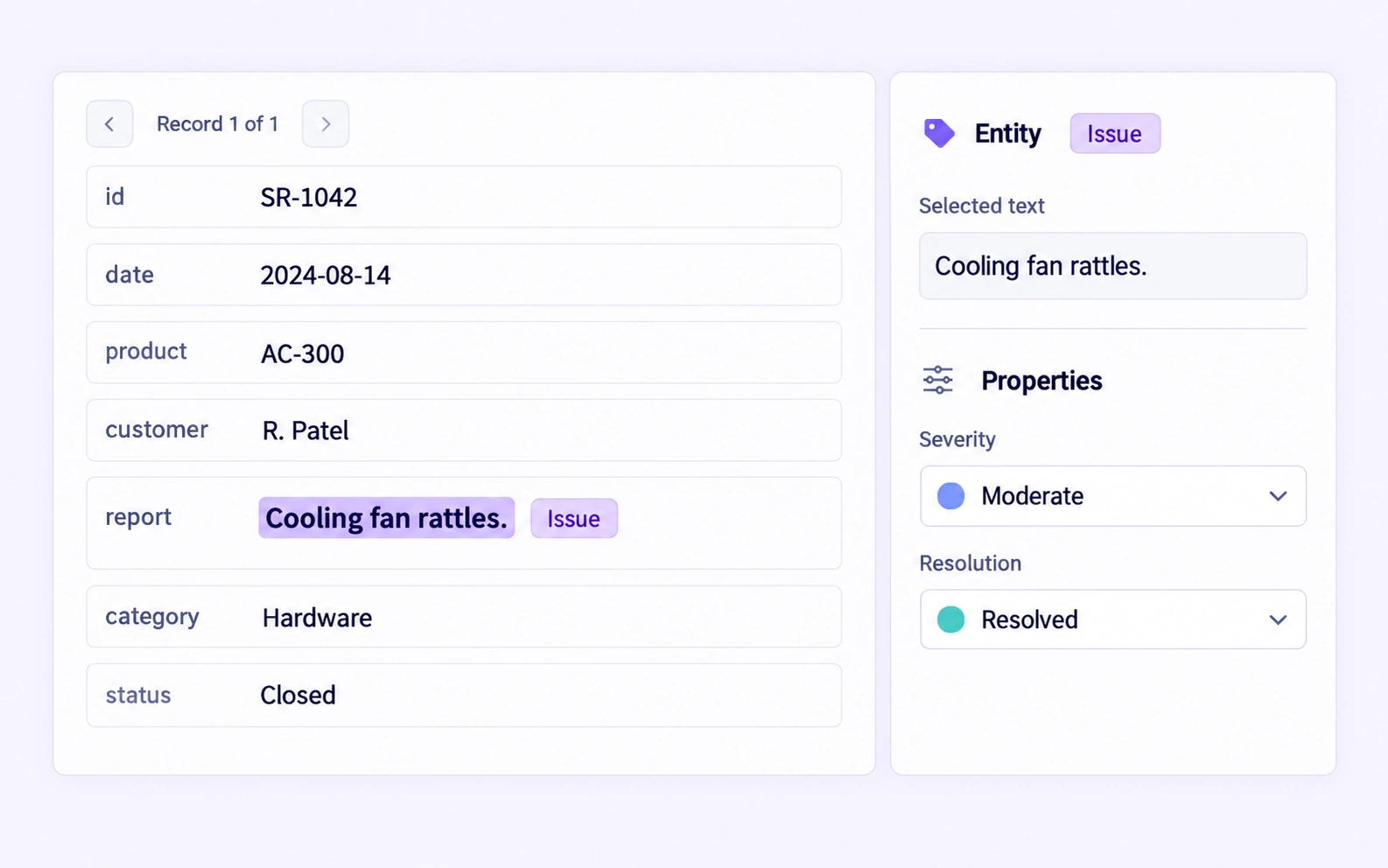
Severity and Resolution Classes in a native CSV record annotation example

Severity and Resolution Classes

Capture severity, issue category, and resolution state with structured record properties. Apply a shared domain vocabulary alongside the entity evidence.

Why Product AI Teams Choose Unitlab

Build product datasets that preserve the original evidence, express relationships clearly, and carry a reviewed interpretation.
15X
Faster Product Data Annotation
60%
Free Up AI Engineers’ Time
5X
Lower AI Development Costs

Annotation Types for Product and Issue Records

Use entity spans for product and issue mentions, record properties for structured context, header labels for field roles, and relationships to connect the evidence.
Service record with Product and Issue entity labels and record-level intent and priority properties.

Cell Entities and Record Properties

Highlight exact text inside CSV fields and classify the complete record with shared properties. Keep every label attached to its source field and record context.

Relationships Across Record Fields

Connect labeled entities and header marks across fields within the same record. Use typed relationships to express the association and review it with the original evidence.
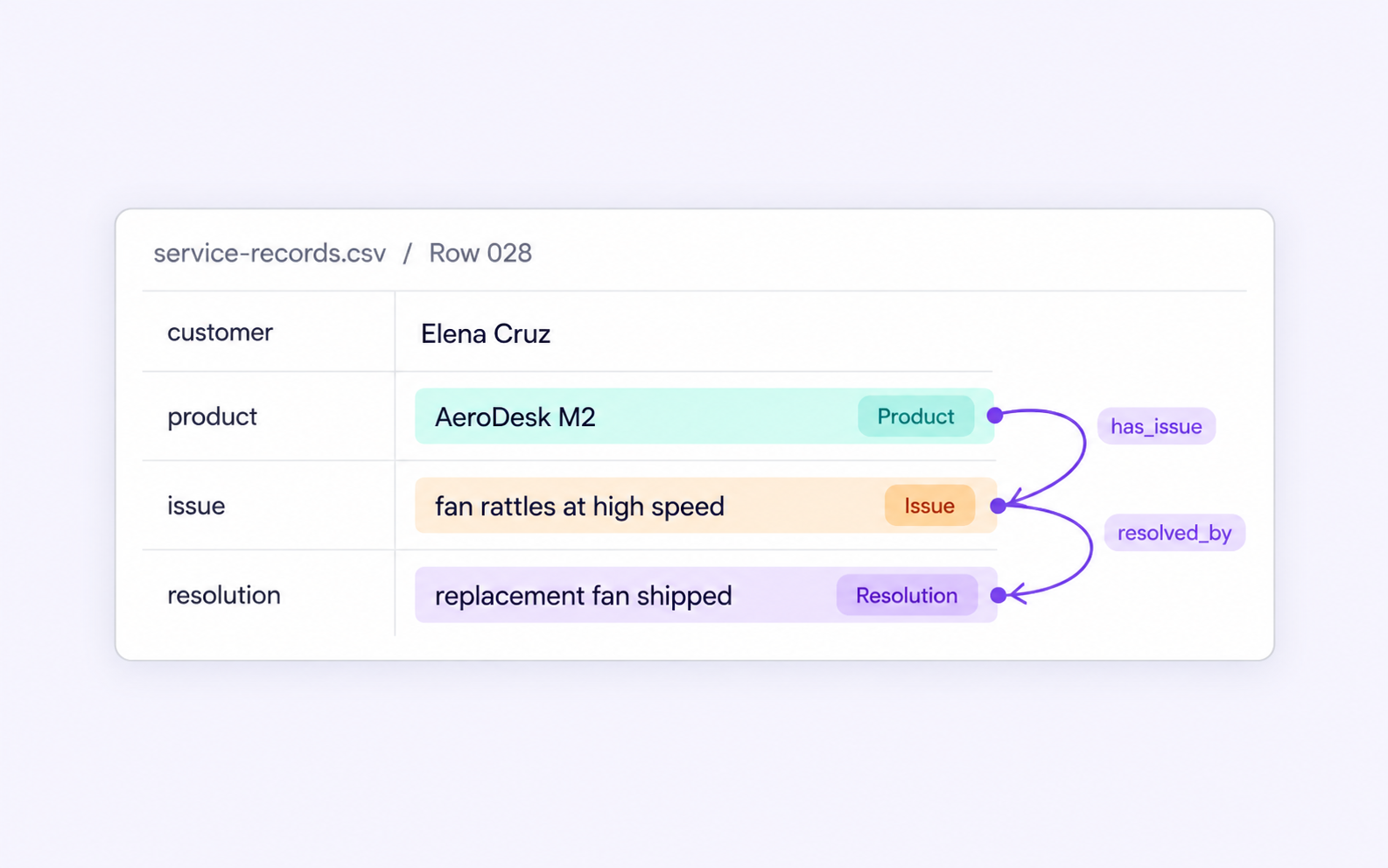
Service record linking a product to its issue and the issue to a shipped replacement resolution.

Product and Issue Annotation FAQs

What is product and issue data annotation?

It is the process of labeling product references, reported problems, and their relationships in source records. The resulting examples support downstream models for product entity recognition, issue classification, and relationship understanding.

What source data can this solution use?

Use CSV records containing product feedback, service notes, support tickets, or other relevant text fields. In row mode, each record becomes a separate annotation task with its original fields preserved.

Can I label products and symptoms in separate columns?

Yes. Entity labels can be created inside any text column. Each span retains its source column and exact character offsets, including when product and issue mentions occur in different fields.

How do I express which product has a reported issue?

Create the product and issue entities, then connect them with a relation defined in your ontology. For example, a has_issue relation can point from the product mention to the reported issue in the same record.

Can relationships connect different records?

The tabular relation overlay connects labeled content across fields within one record. This workflow does not create joins or entity relationships between arbitrary CSV rows.

Can I capture severity and resolution as structured labels?

Yes. Shared record properties can capture context such as severity, issue category, and resolution state using the property types and choices defined for your project.

How can we standardize a product issue taxonomy?

Define shared entity classes, property choices, and relation types in an ontology. Instructions, required-property checks, and review help annotators use those definitions consistently.

How are uncertain or incorrect relationships reviewed?

Reviewers inspect labels and relationships in the original record. They can correct the work, add contextual comments, or reject it through a configured rework path before approval.

Can I export product-issue labels for model training?

Yes. JSONL exports retain record values, column schema, entity spans, relations, and supported record properties, so the annotated evidence remains connected for downstream model development.

Need help designing a product & issue understanding data workflow?Talk to Unitlab