
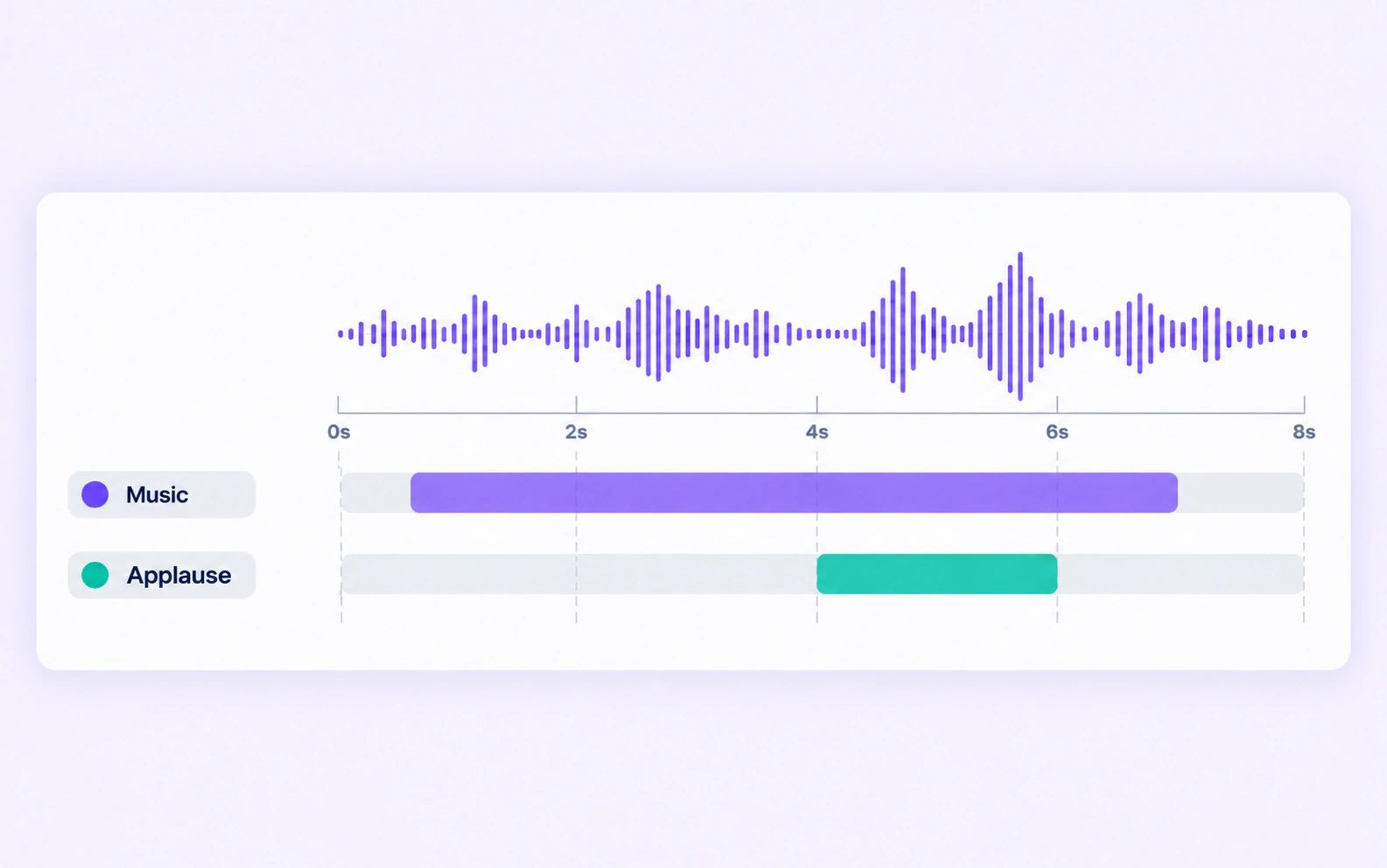
Label sound events and time boundaries with reusable classes and review.
Automate curation, management, and versioning of sound-event datasets.
Reusable ontologies and governed quality control reduce labeling and review rework.
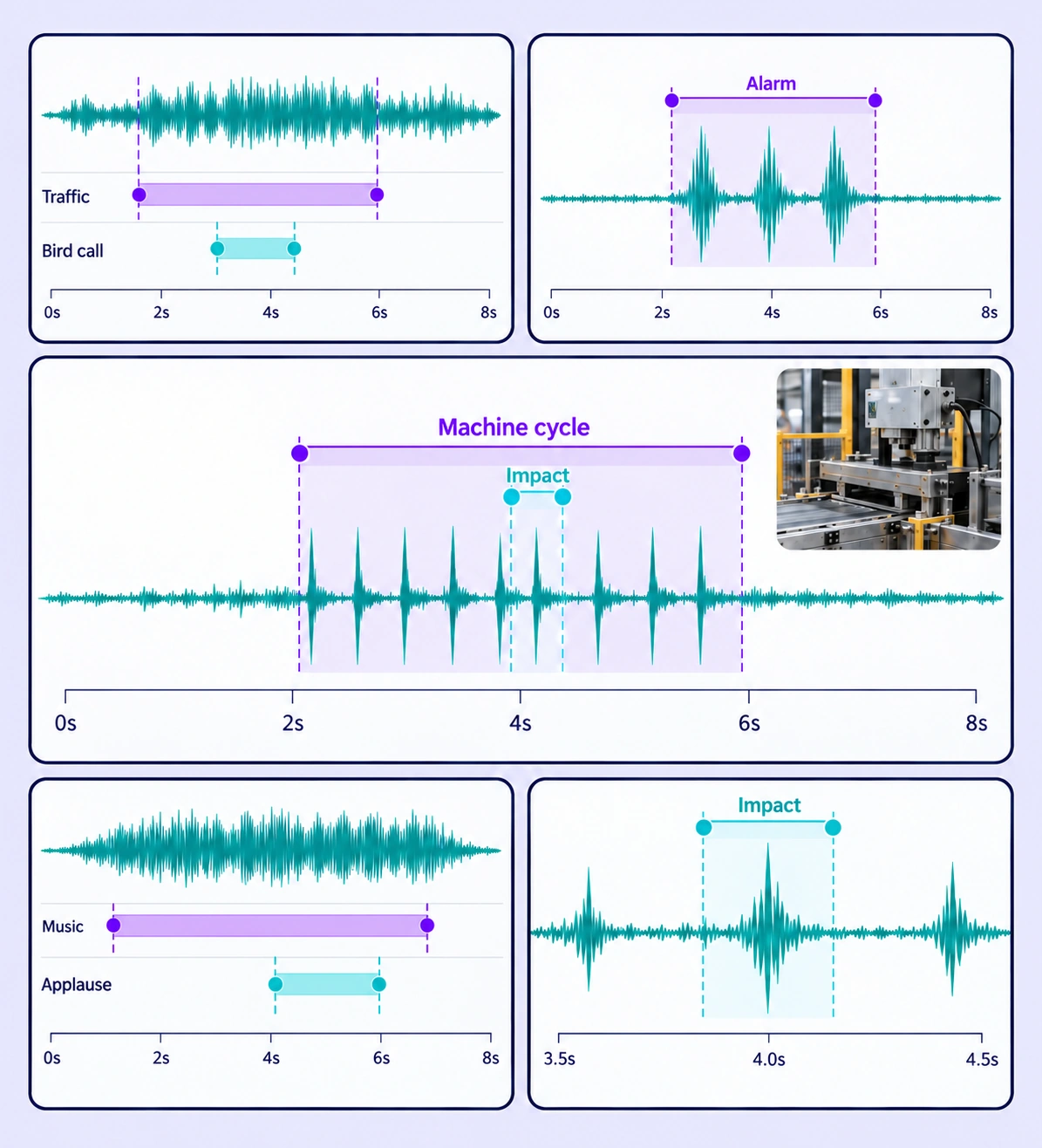
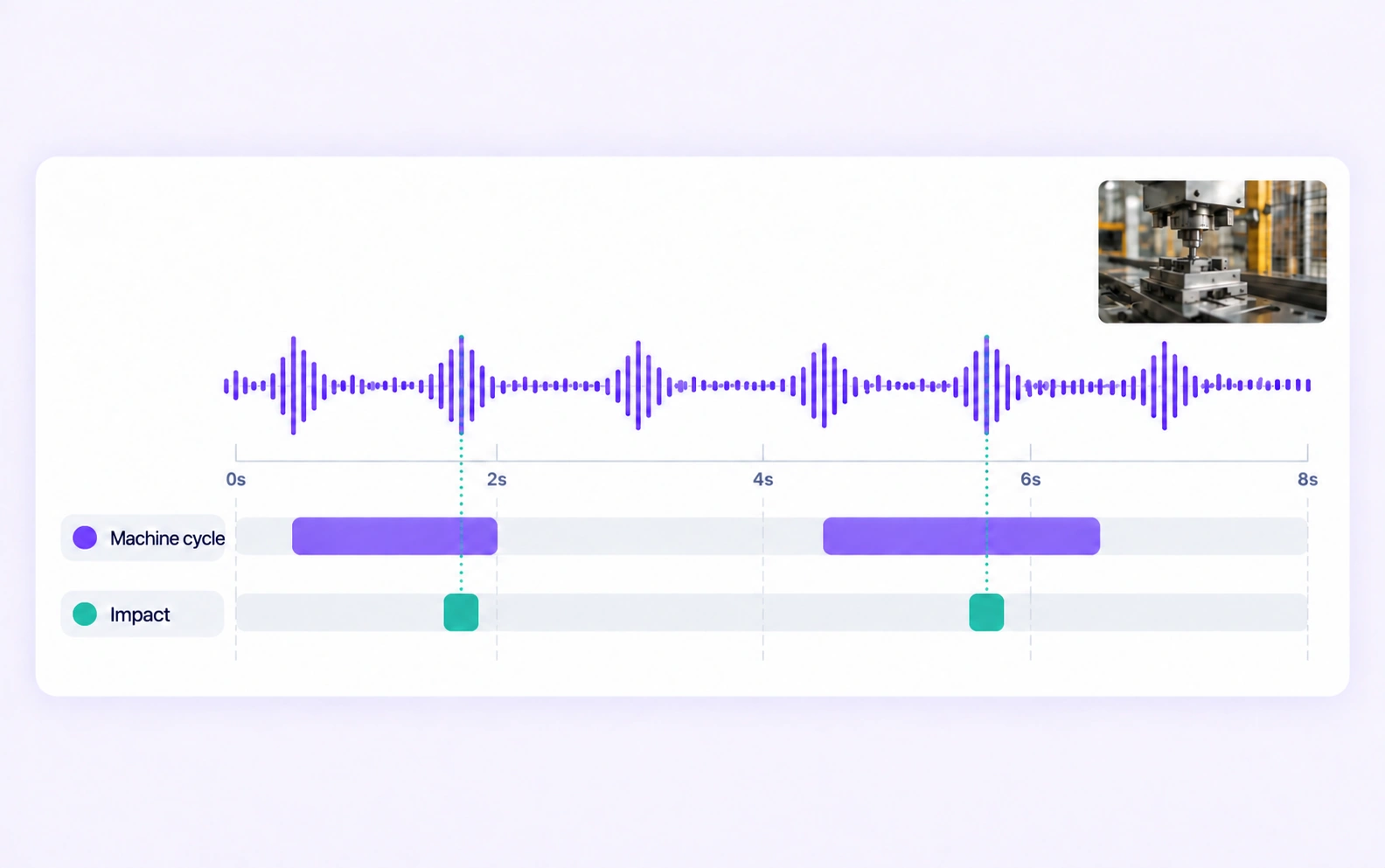
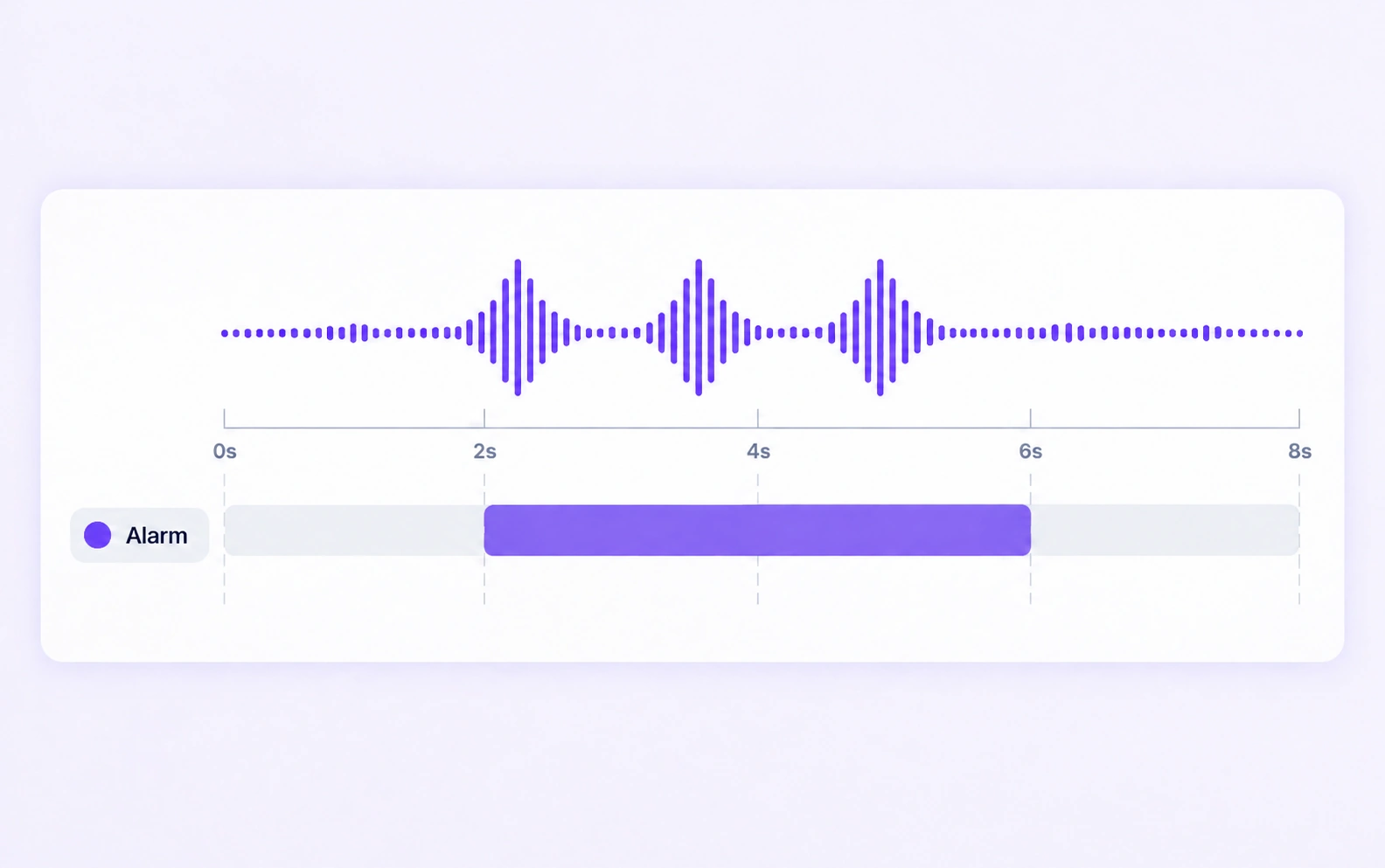
Mark the audible start and end of the target event on the waveform. Use shared classes to distinguish the specific sound categories.
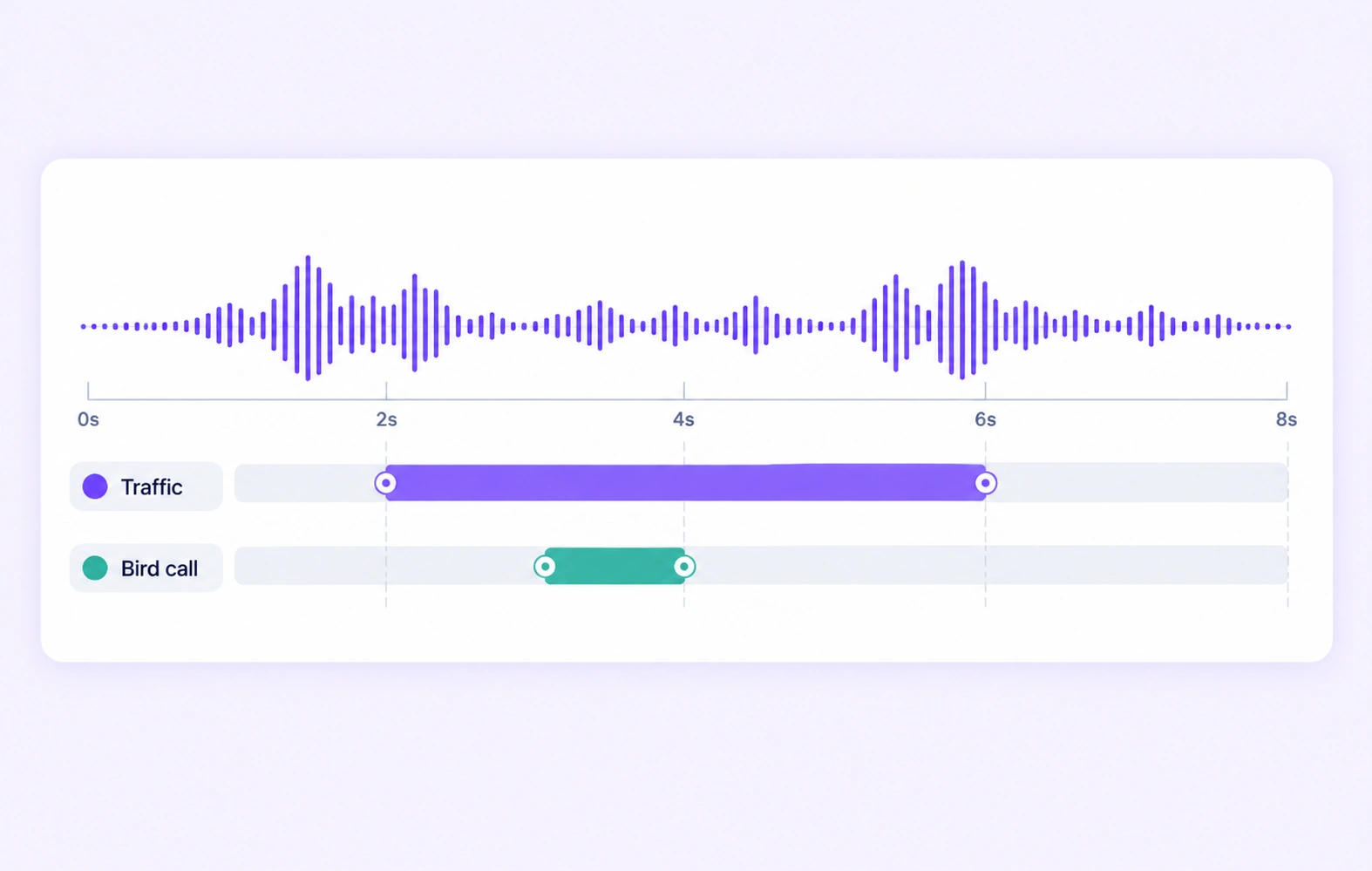
Annotate the relevant events when several sounds overlap. Keep each class and interval tied to audible evidence in the recording.
It is the labeling of recognizable sounds and their timing in audio recordings. These labels provide training or evaluation data for models that detect industrial, environmental, alarm, or media sound events.
Yes. Create the relevant time-based event annotations and use a shared policy for overlap. Reviewers can inspect each interval against the original audio.
Choose a timing convention that matches the downstream task and the audible onset and offset. Annotators can refine ranges on the waveform, then reviewers check difficult transitions.
Yes. Define the sound classes and recording properties needed for the task. The labels describe what can be heard or is established by the provided context; the trained model performs downstream detection.
The waveform helps place timing, while the recording provides the audible evidence. Annotators and reviewers should listen to the relevant interval before assigning the event class.
Define shared classes, structured properties, and clear labeling instructions before work starts. Use representative examples and contextual review to resolve disagreements in the sound event detection dataset.
Yes. Route audio annotation through Review and Rework stages. Reviewers can inspect the source data, correct labels, and send an item back when more work is needed.
Yes. Use dataset search, metadata, tags, and available filters to select relevant audio assets. Keep representative conditions and difficult examples visible in the preparation workflow.
Export reviewed audio labels in supported Audio JSON, RTTM, or UUEF formats according to the annotation task. Dataset versions help teams identify which prepared examples belong to a release.


We use cookies to improve your experience. See our Privacy Policy and Cookie Policy.