

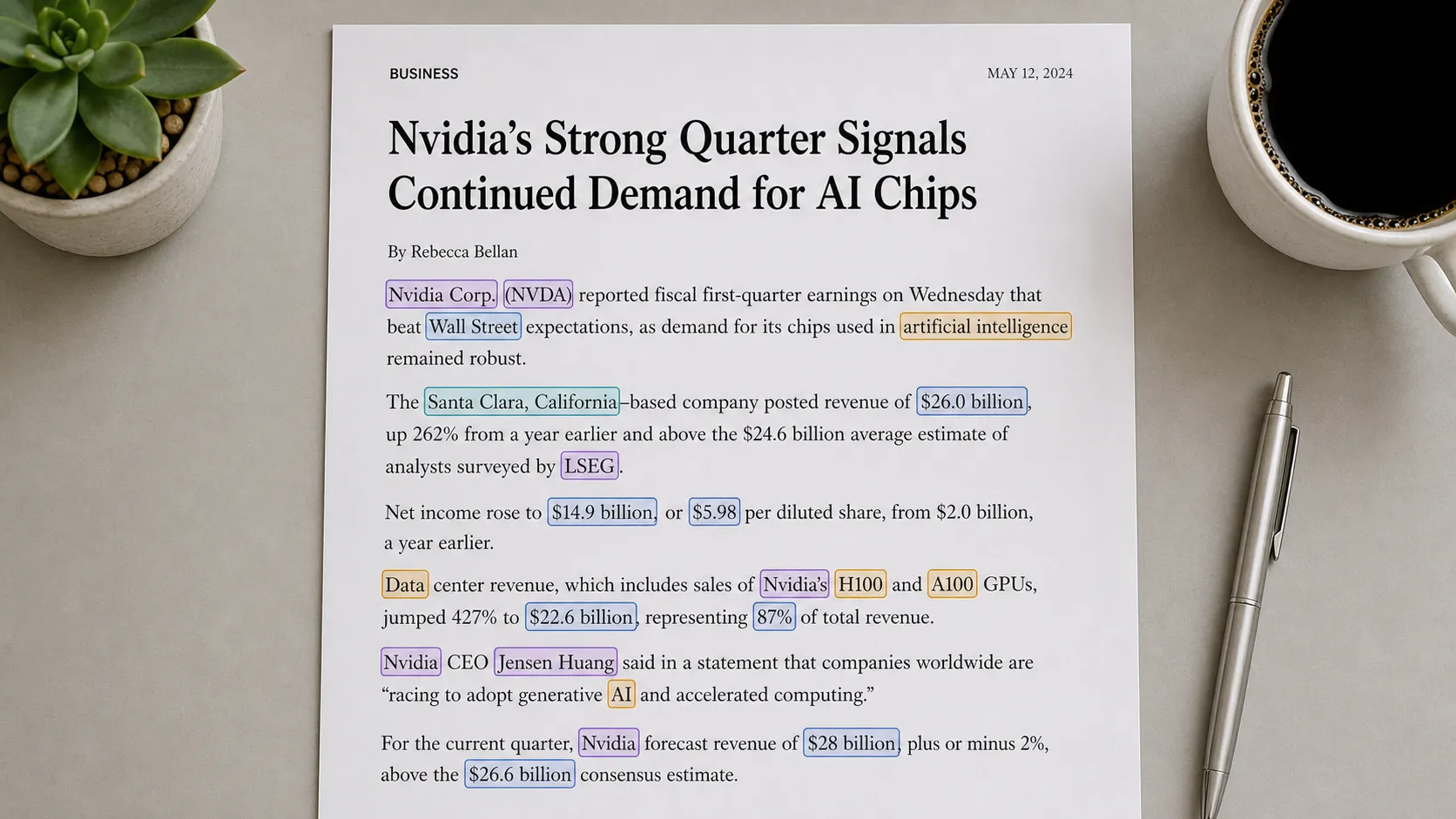
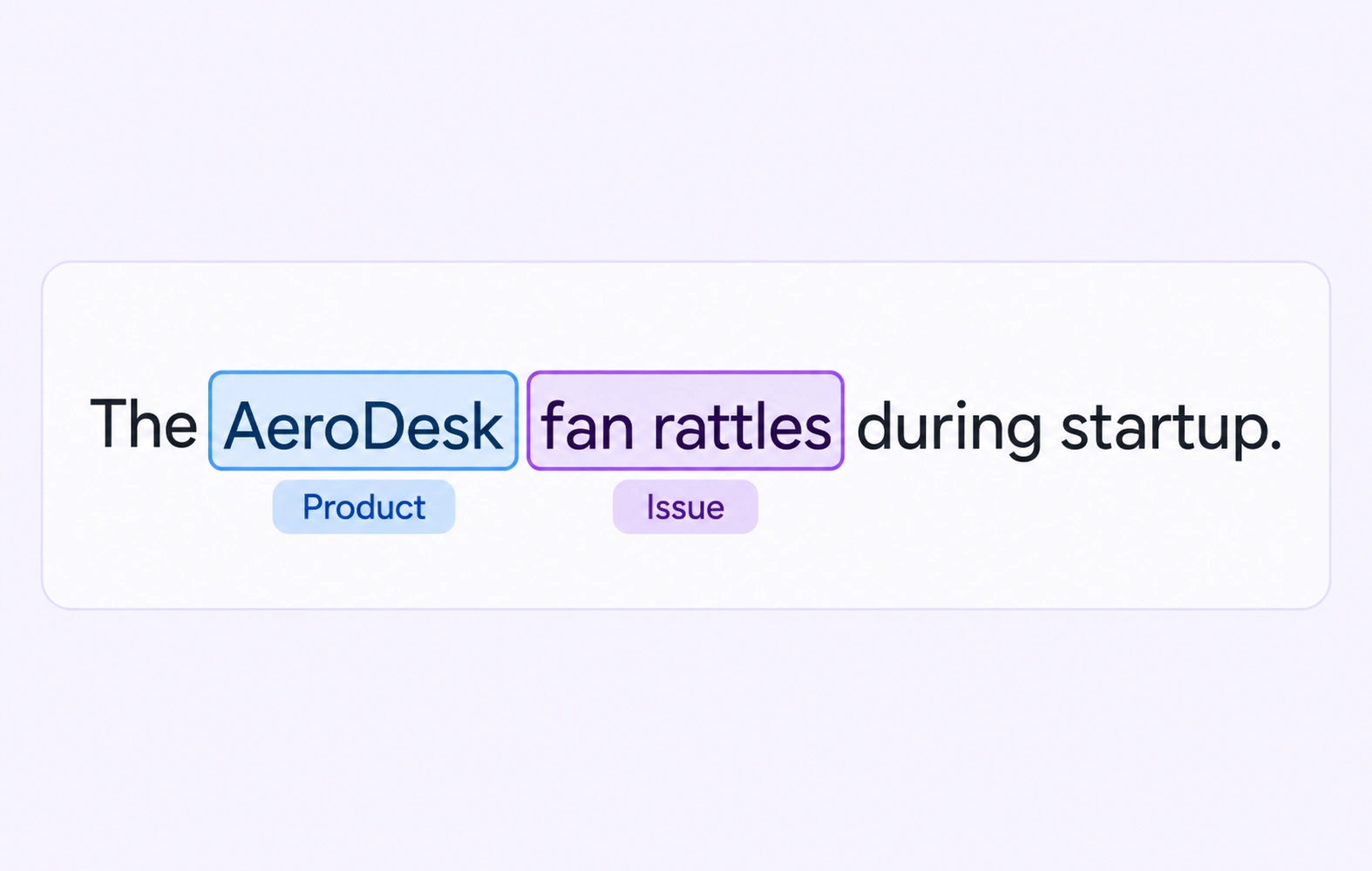
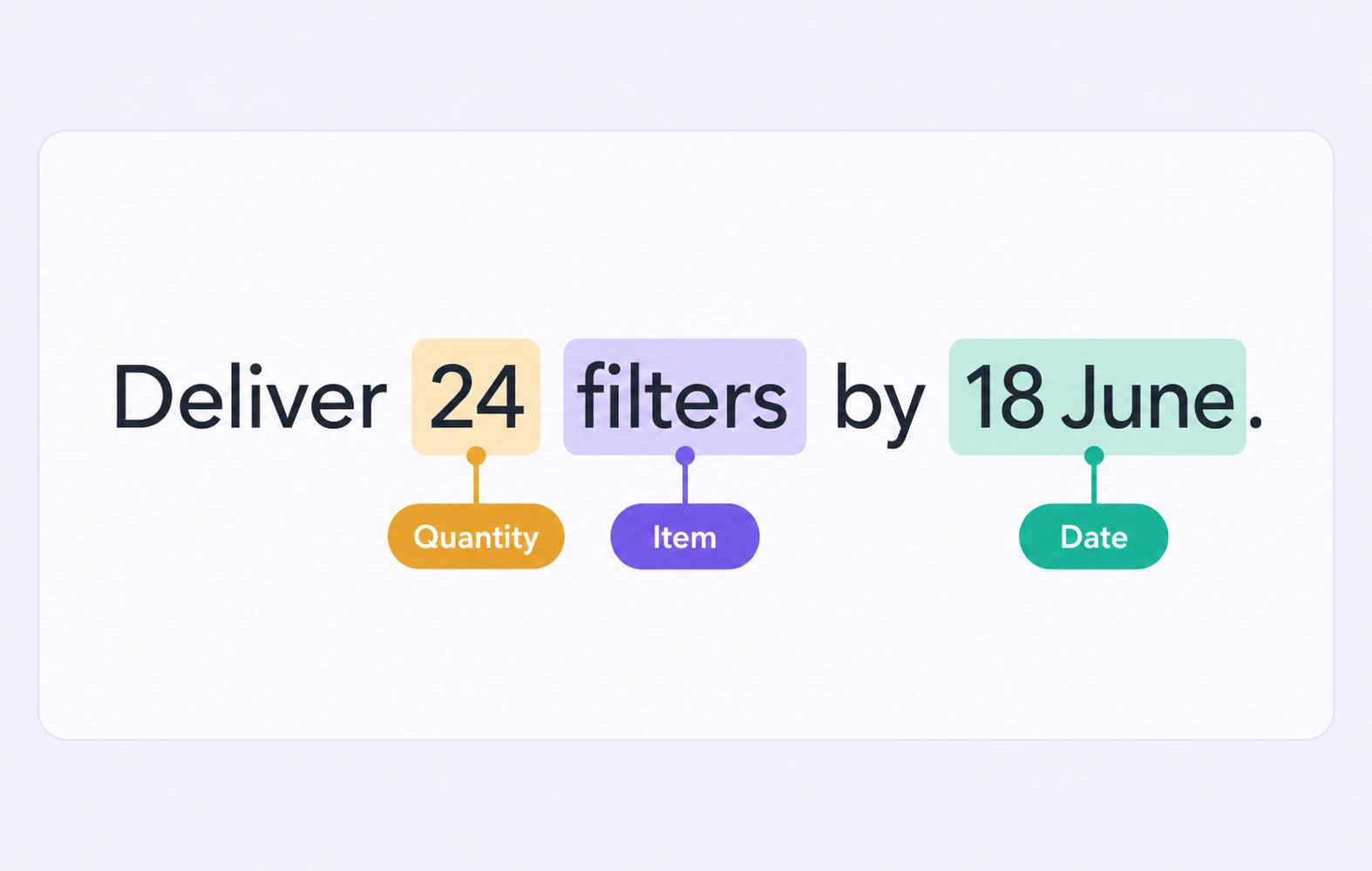
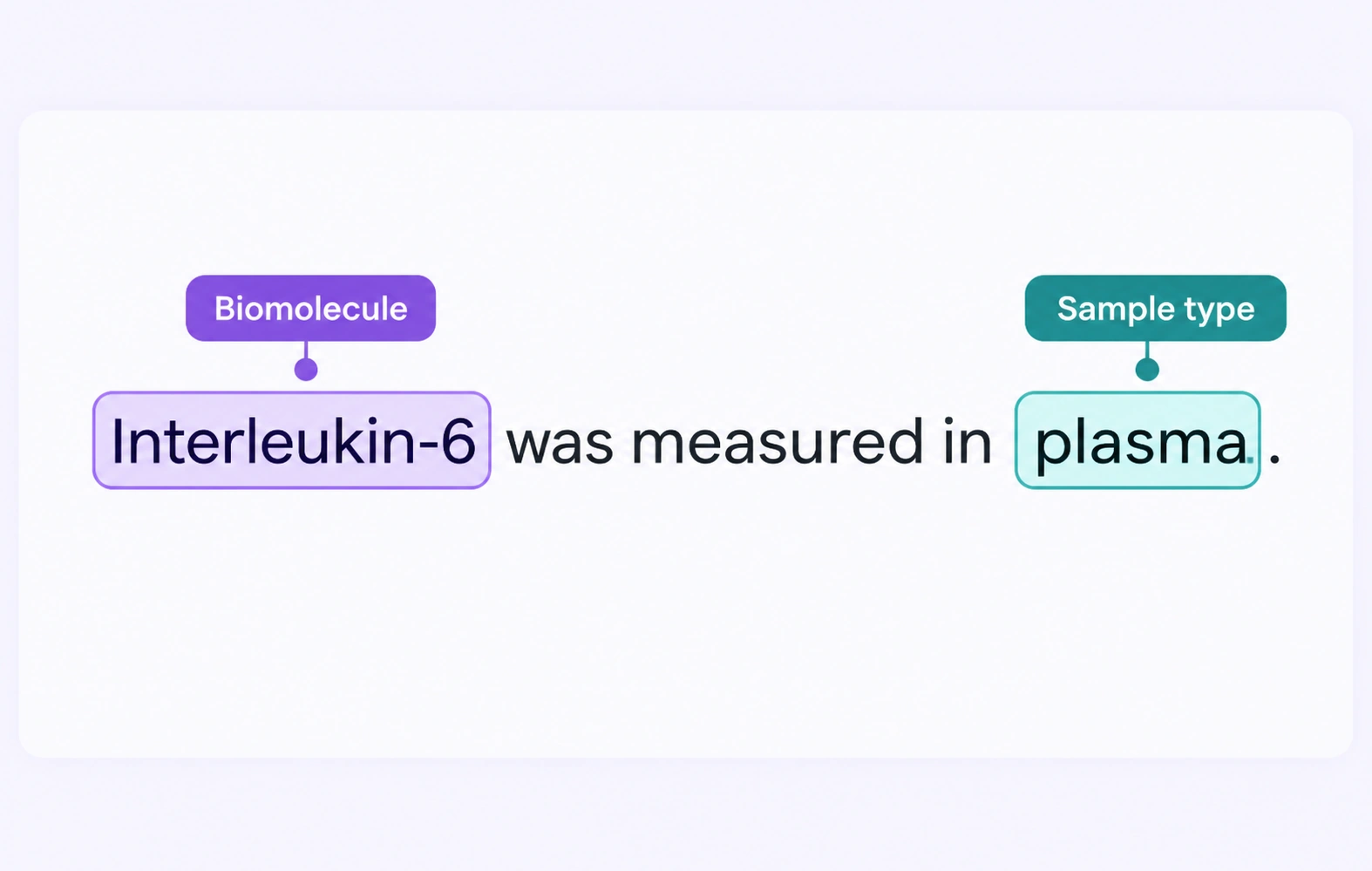
Label entities with reusable ontologies and model-assisted review workflows.
Automate curation, management, and versioning of entity datasets.
Reusable ontologies and governed quality control reduce labeling and review rework.
Select the exact characters that make up an entity and assign its class, preserving the original text context.
Add structured attributes such as entity subtype or annotation certainty using the choices defined in your ontology.
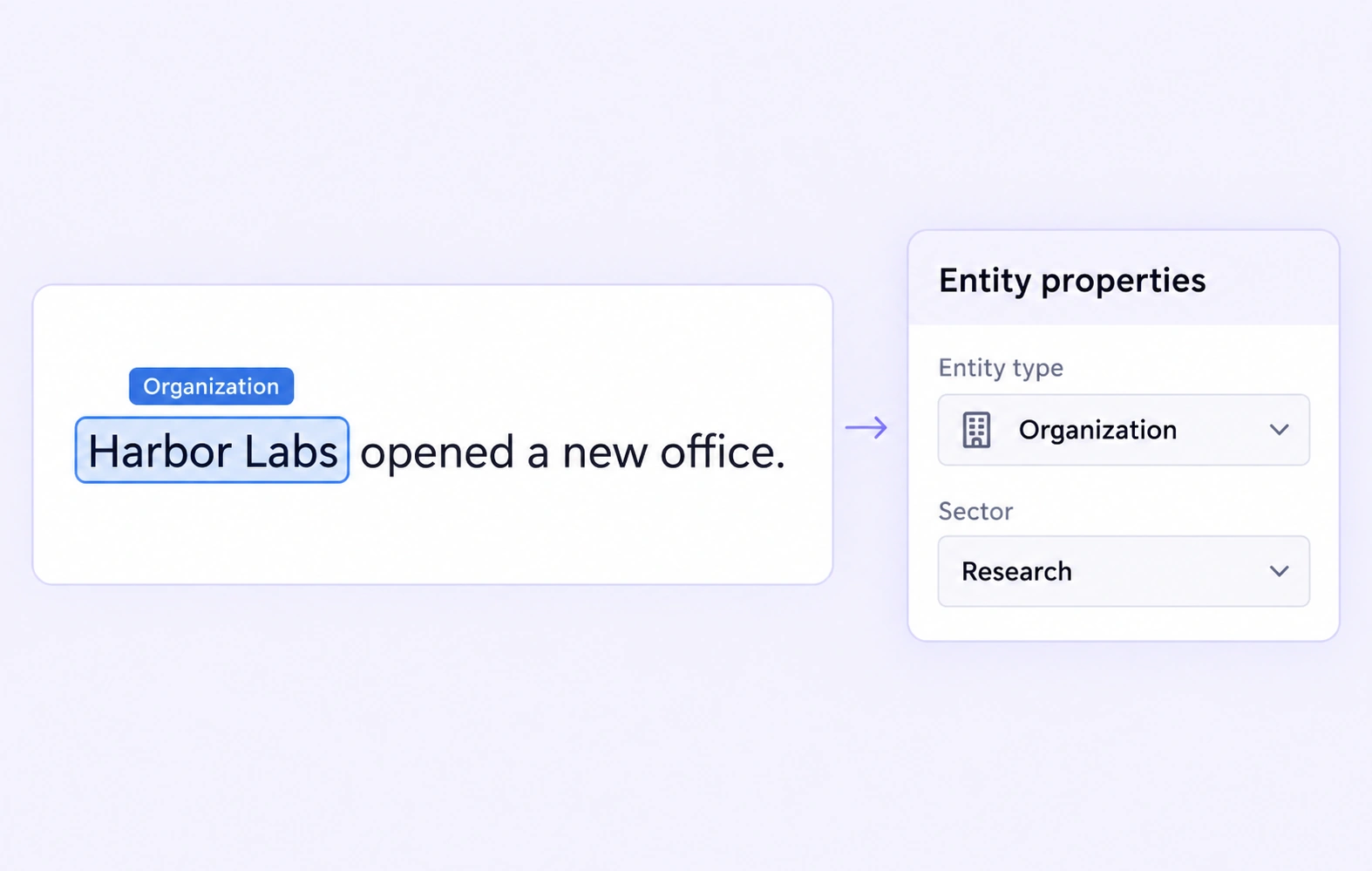
NER annotation marks named or domain-specific entities within text so a model can learn which characters refer to a person, organization, place, product, or another defined concept.
Yes. Create classes for the entities that matter to your task, including specialized product, scientific, or business terminology. Use properties to capture further context.
Annotators select text spans rather than labeling only the sentence. The selected characters and entity class are saved with the annotation.
Yes. Your ontology and guidelines define how context determines the class. Reviewers can inspect the surrounding sentence when an entity mention is ambiguous.
Yes. Supported entity relationships can connect labeled mentions within the text, extending entity recognition datasets with the links required by an information extraction task.
Define examples in the labeling guidelines, discuss difficult cases during review, and apply the same boundary rule across the dataset before creating a release.
Use plain-text files for native language annotation. Define entity classes, relationships, and item properties around the text and task your team is labeling.
Route annotated text through review, resolve comments and corrections in context, and use configured consensus or approved benchmarks to check consistency before releasing a dataset.
Yes. Text supports JSONL and Unitlab Unified Export Format. Choose the export that preserves the entities, relations, and properties needed by your training pipeline.


We use cookies to improve your experience. See our Privacy Policy and Cookie Policy.