

Connect labeled entities with reusable relation types and review workflows.
Automate curation, management, and versioning of relation datasets.
Reusable ontologies and governed quality control reduce labeling and review rework.
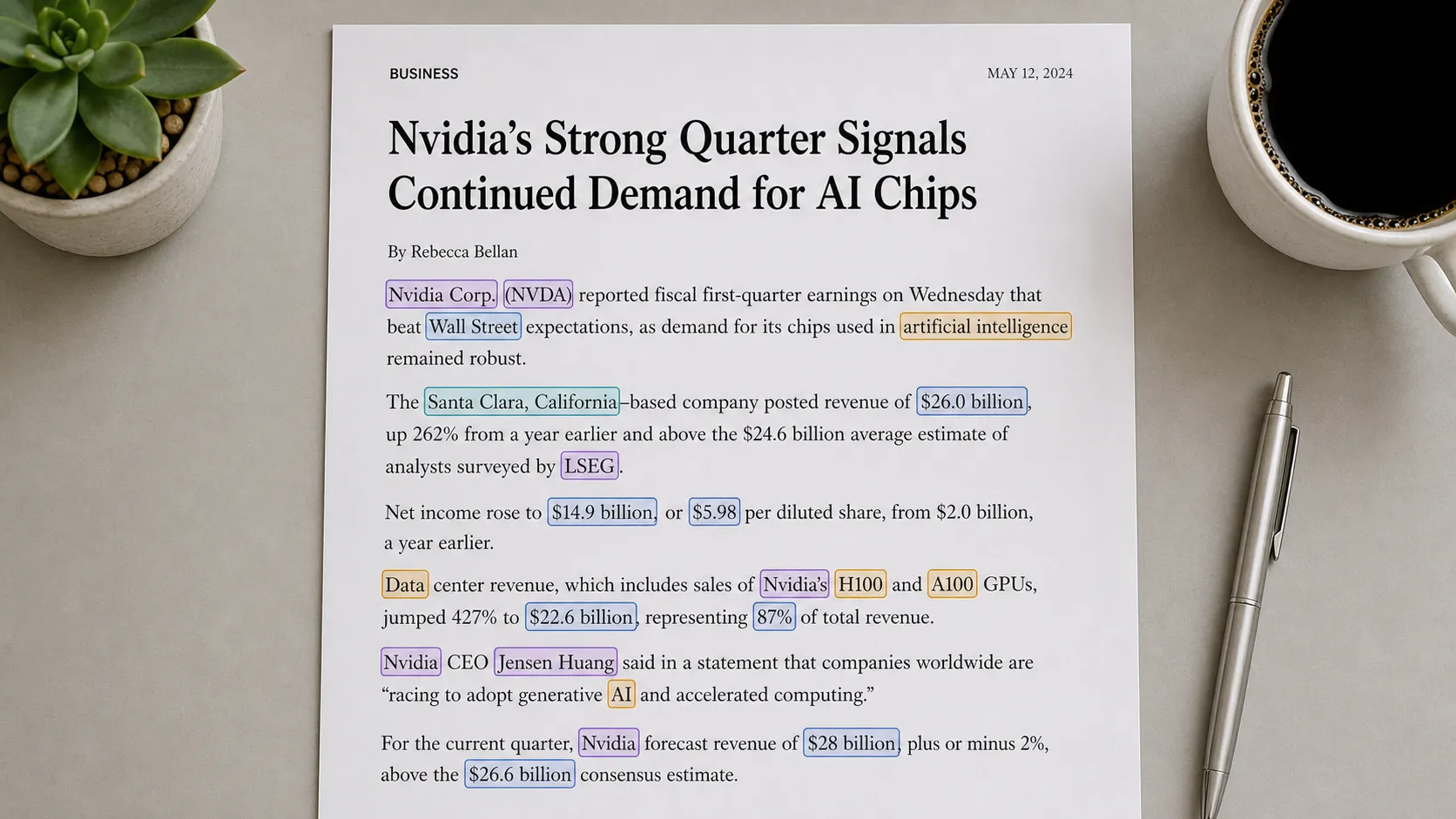
Label the exact entity spans that serve as the source and target of each relationship.
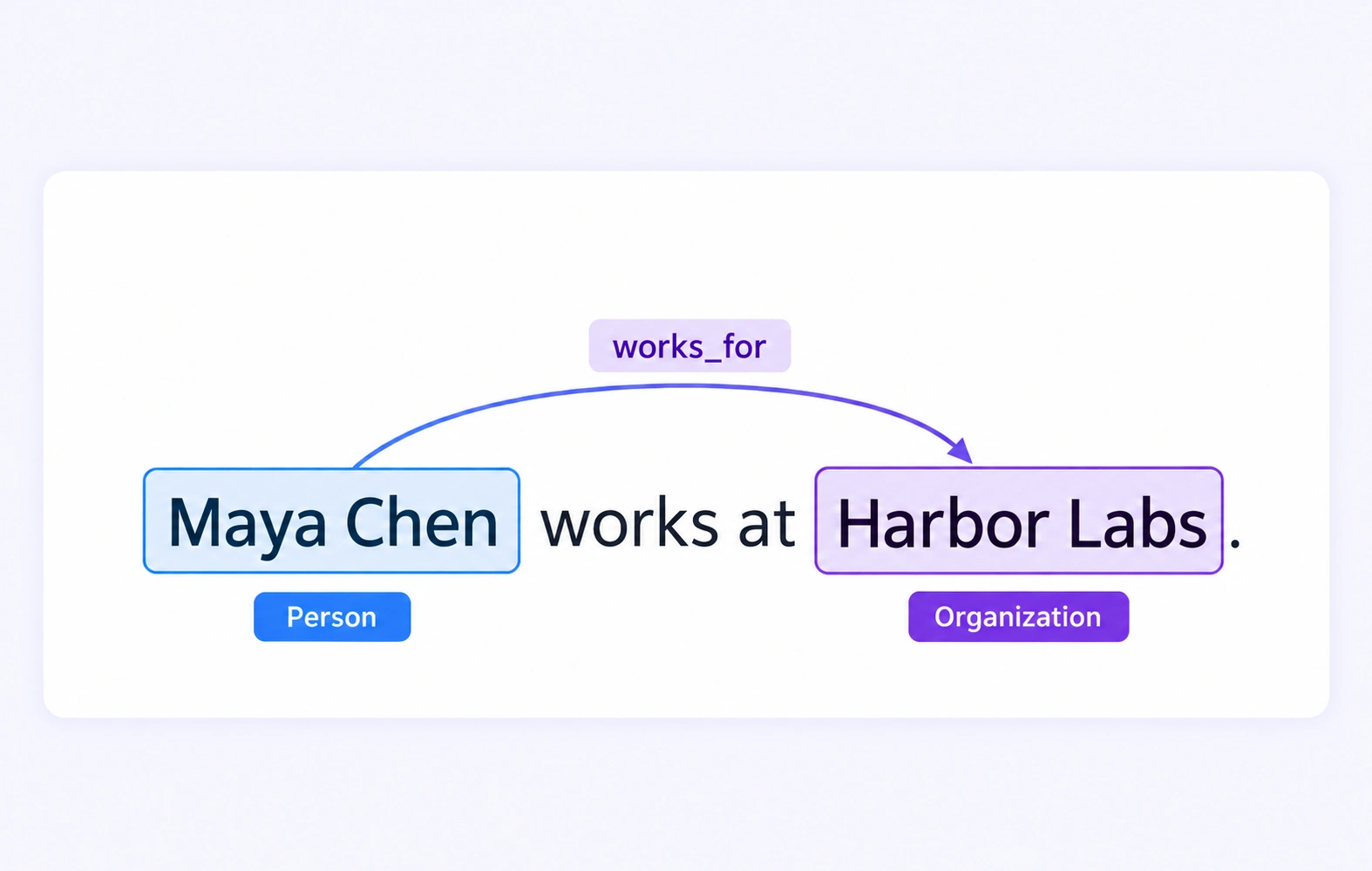
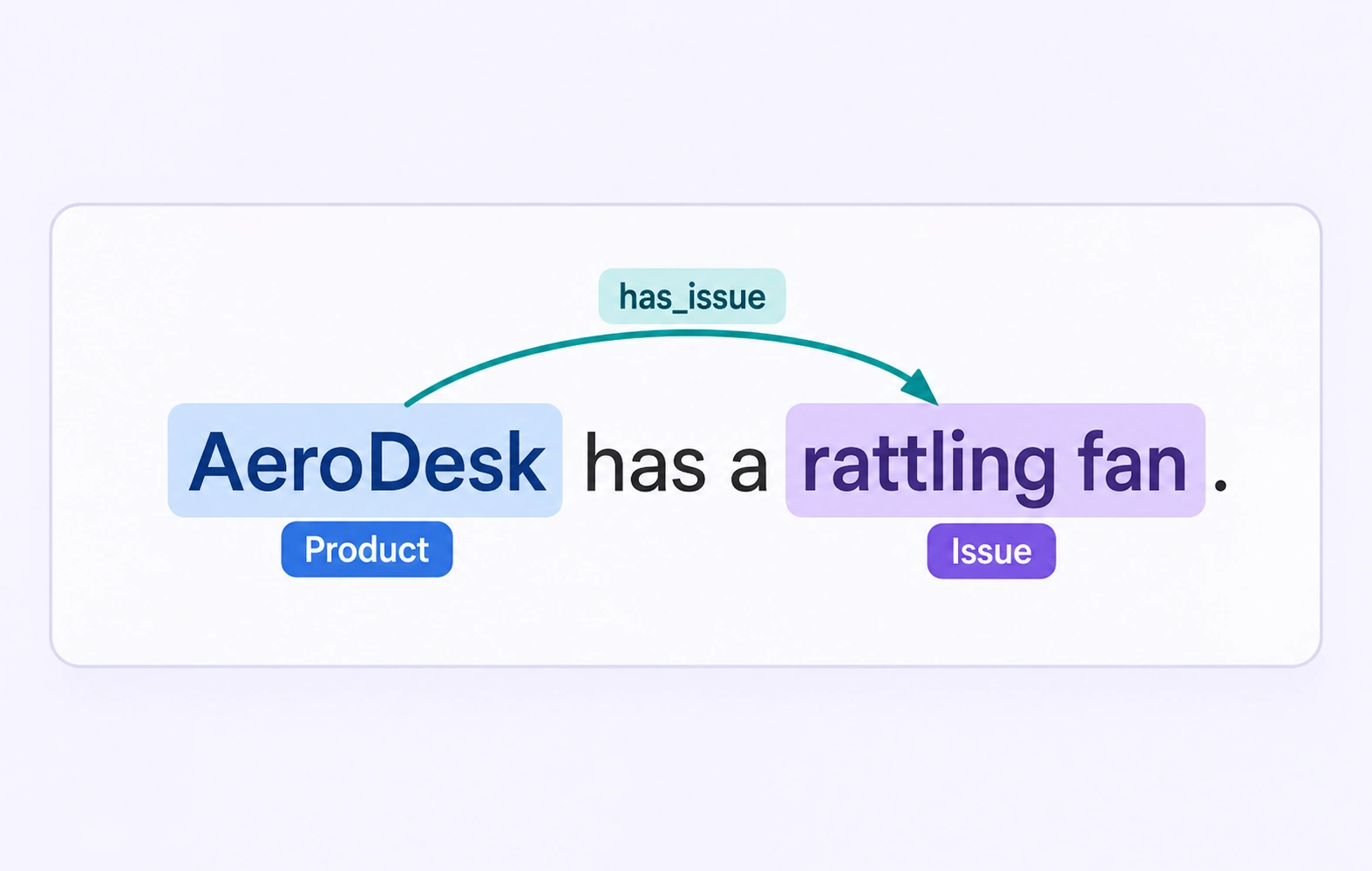
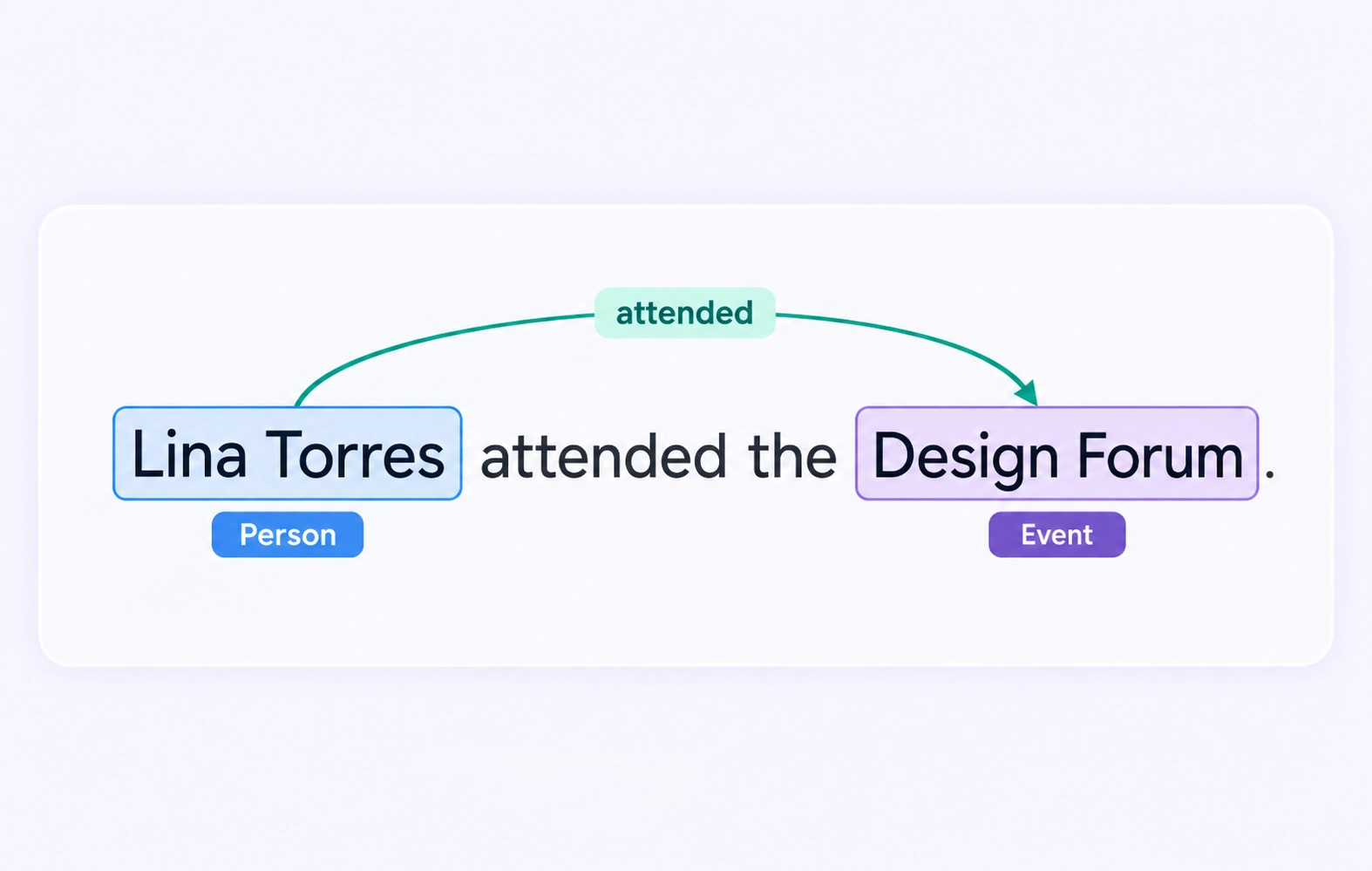
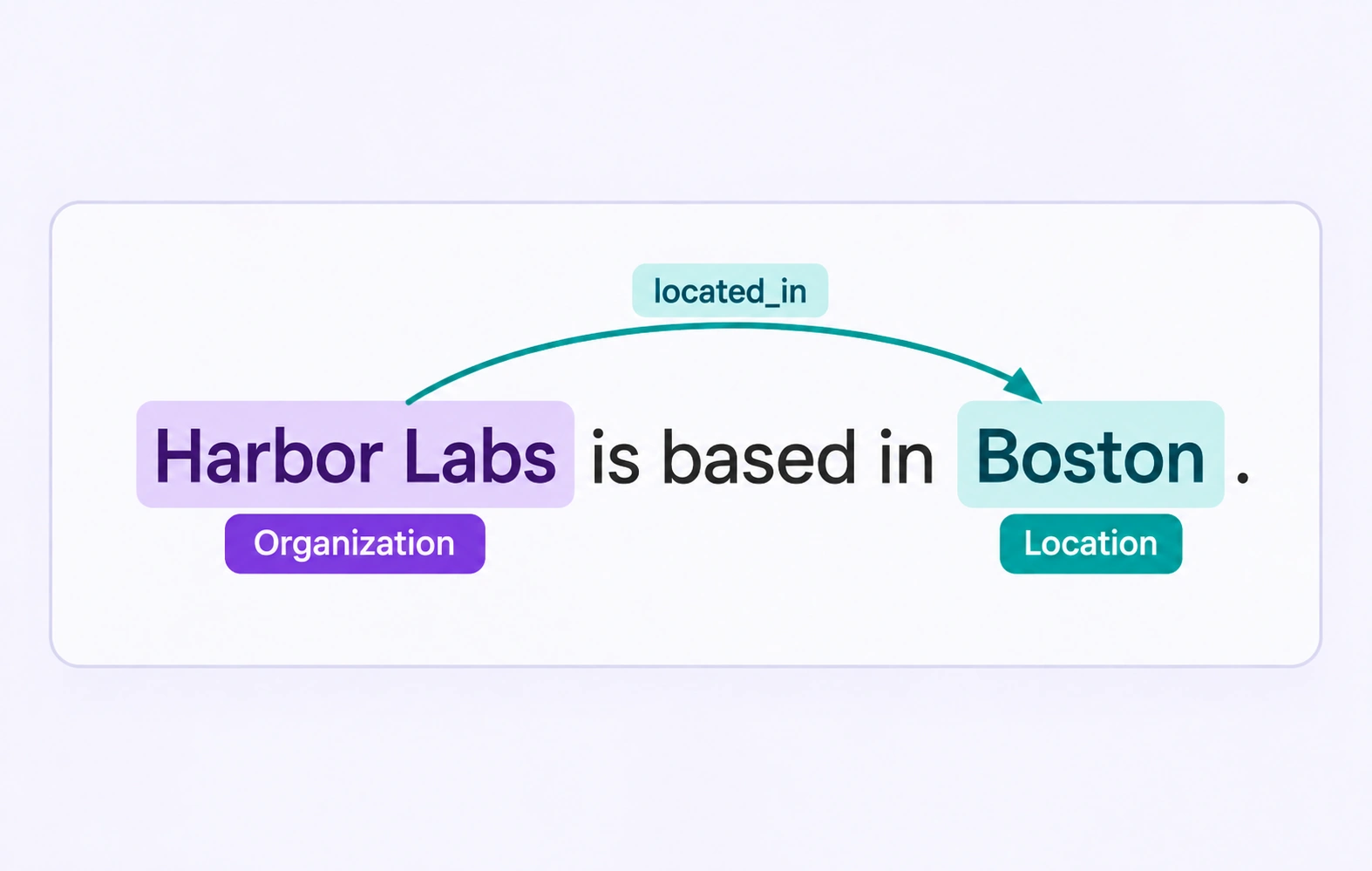
Connect labeled mentions with a defined relation and inspect its endpoints alongside the original wording.
Relation extraction annotation connects entities in text with named relationships. These labels help train models to recover structured facts from language.
NER identifies the entity mentions. Relation labeling adds the meaningful links between those mentions, such as a person working for an organization.
Yes. Define relationship types around your domain and describe their intended source and target roles in your annotation guidelines.
Direction changes meaning. A works_for relation should lead from the person to the organization, so reviewers should check both endpoints as well as the relation label.
Yes. Entity properties can carry extra context while relationships capture the connections between entities. Use the ontology to keep those two kinds of information consistent.
Reviewed entity spans and typed relationships provide structured examples for your downstream information-extraction or knowledge-graph pipeline. Keep the source, target, and relation meanings explicit.
Use plain-text files for native language annotation. Define entity classes, relationships, and item properties around the text and task your team is labeling.
Route annotated text through review, resolve comments and corrections in context, and use configured consensus or approved benchmarks to check consistency before releasing a dataset.
Yes. Text supports JSONL and Unitlab Unified Export Format. Choose the export that preserves the entities, relations, and properties needed by your training pipeline.


We use cookies to improve your experience. See our Privacy Policy and Cookie Policy.