
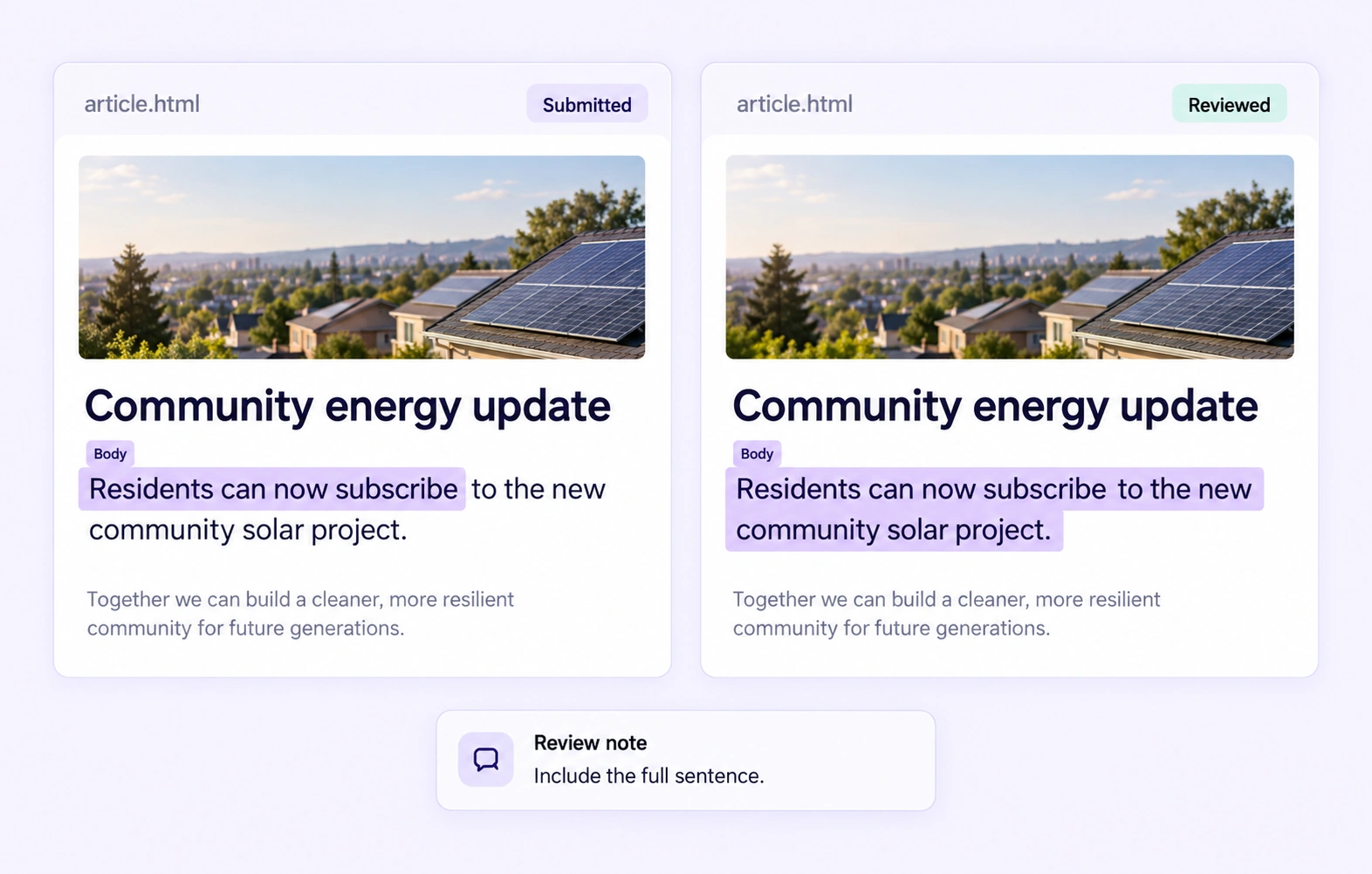
Label page elements and content regions with shared schemas and review workflows.
Automate curation, management, and versioning of web datasets.
Reusable ontologies and governed quality control reduce labeling and review rework.
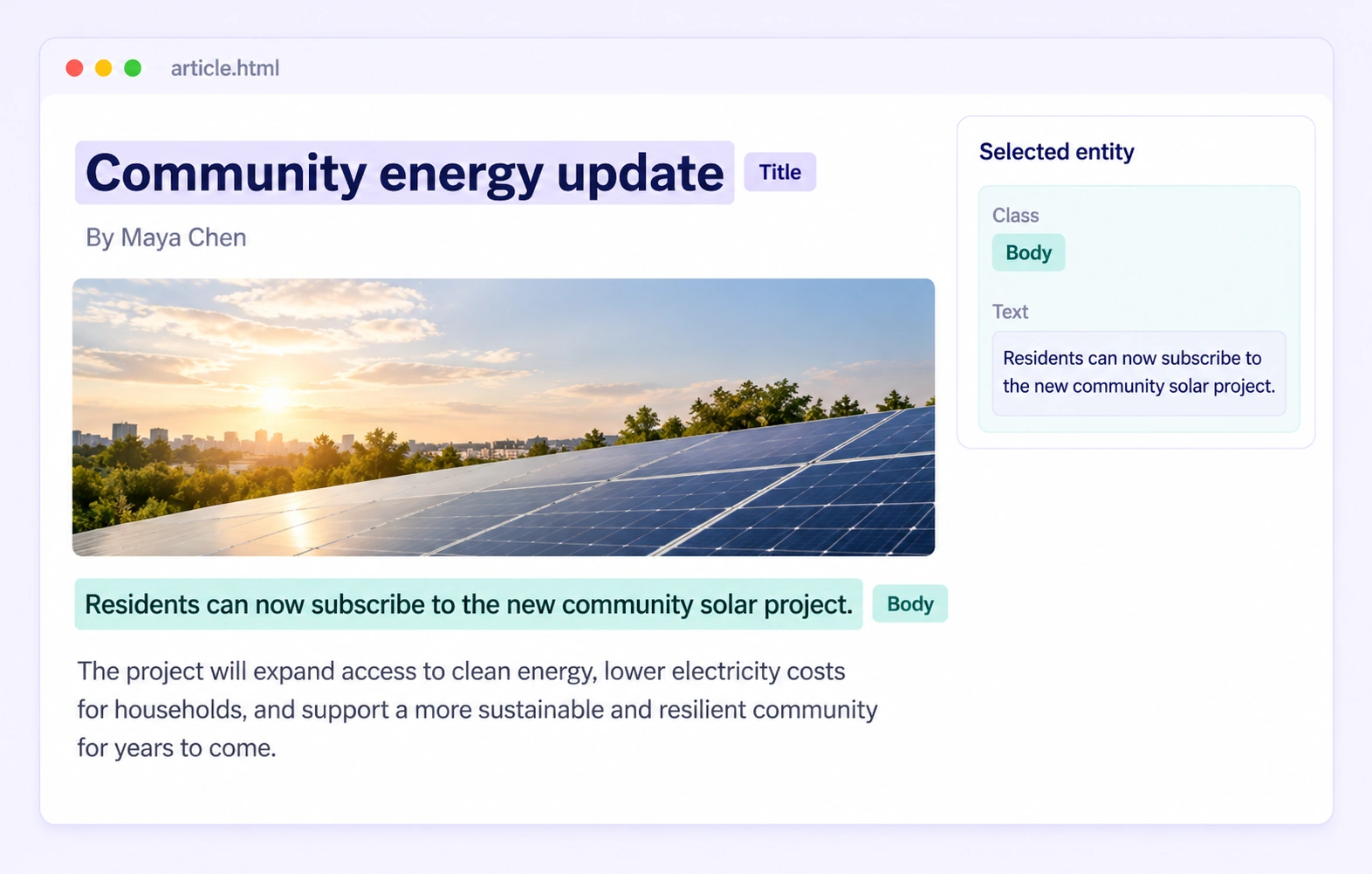
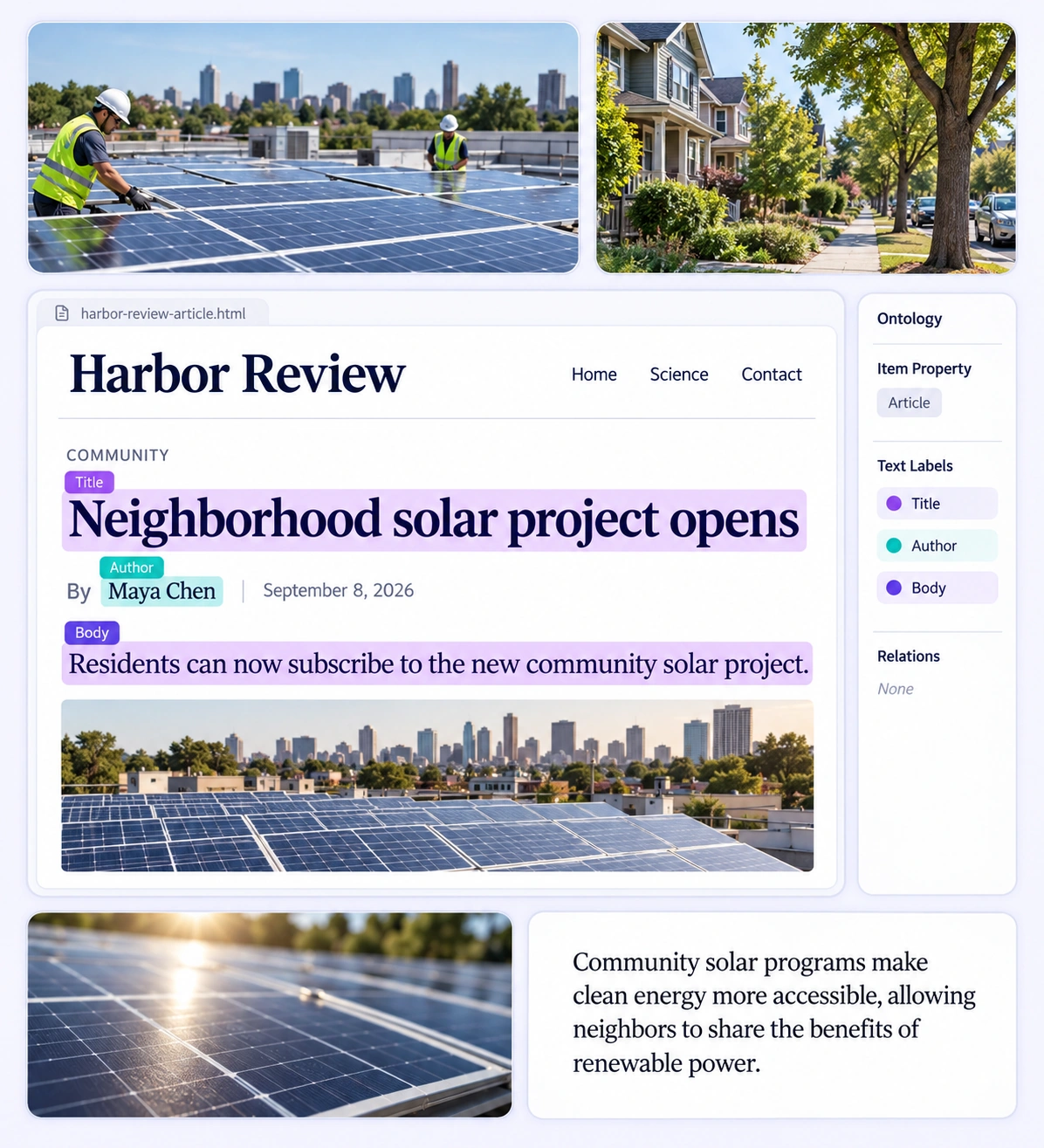
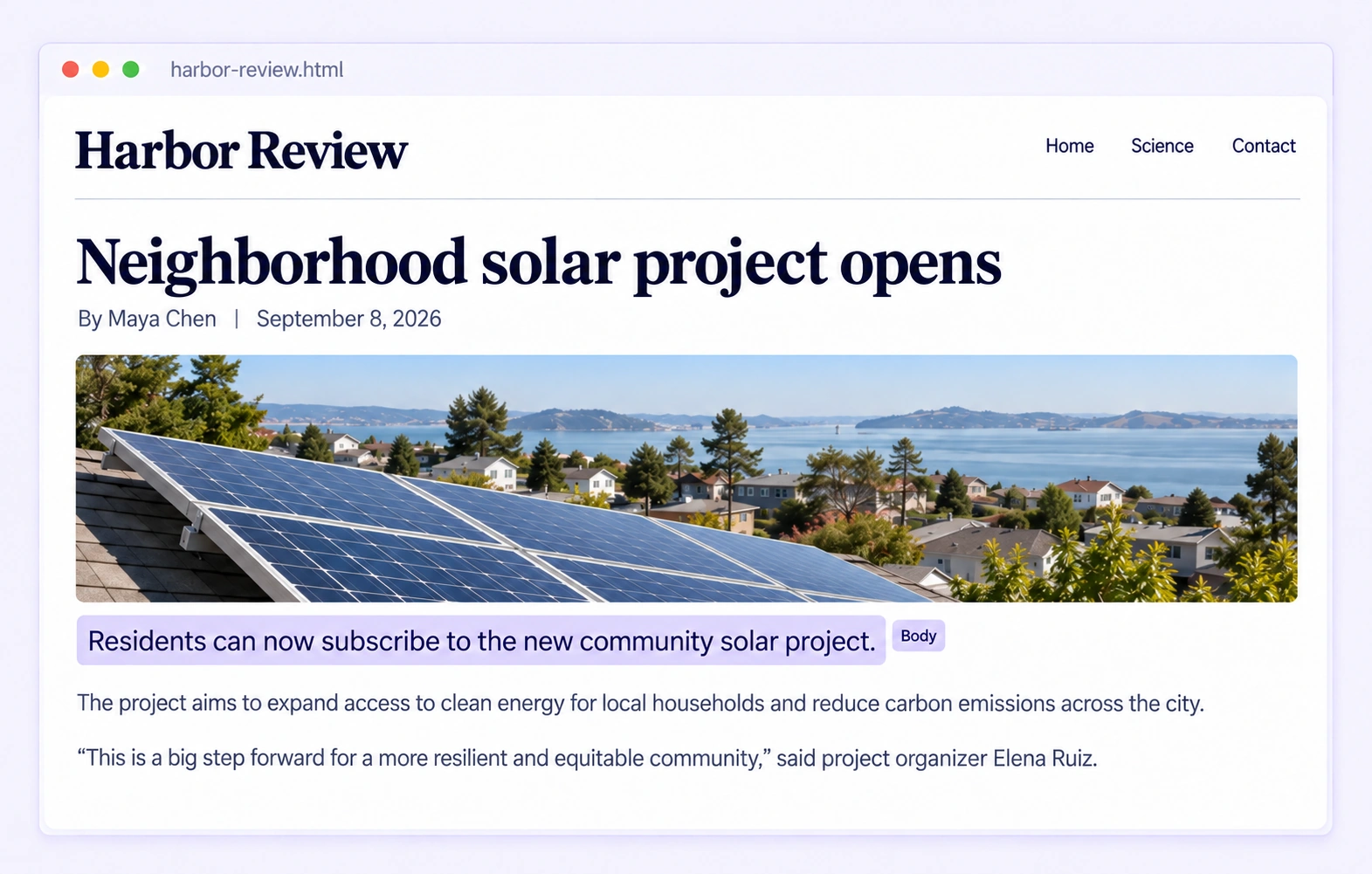
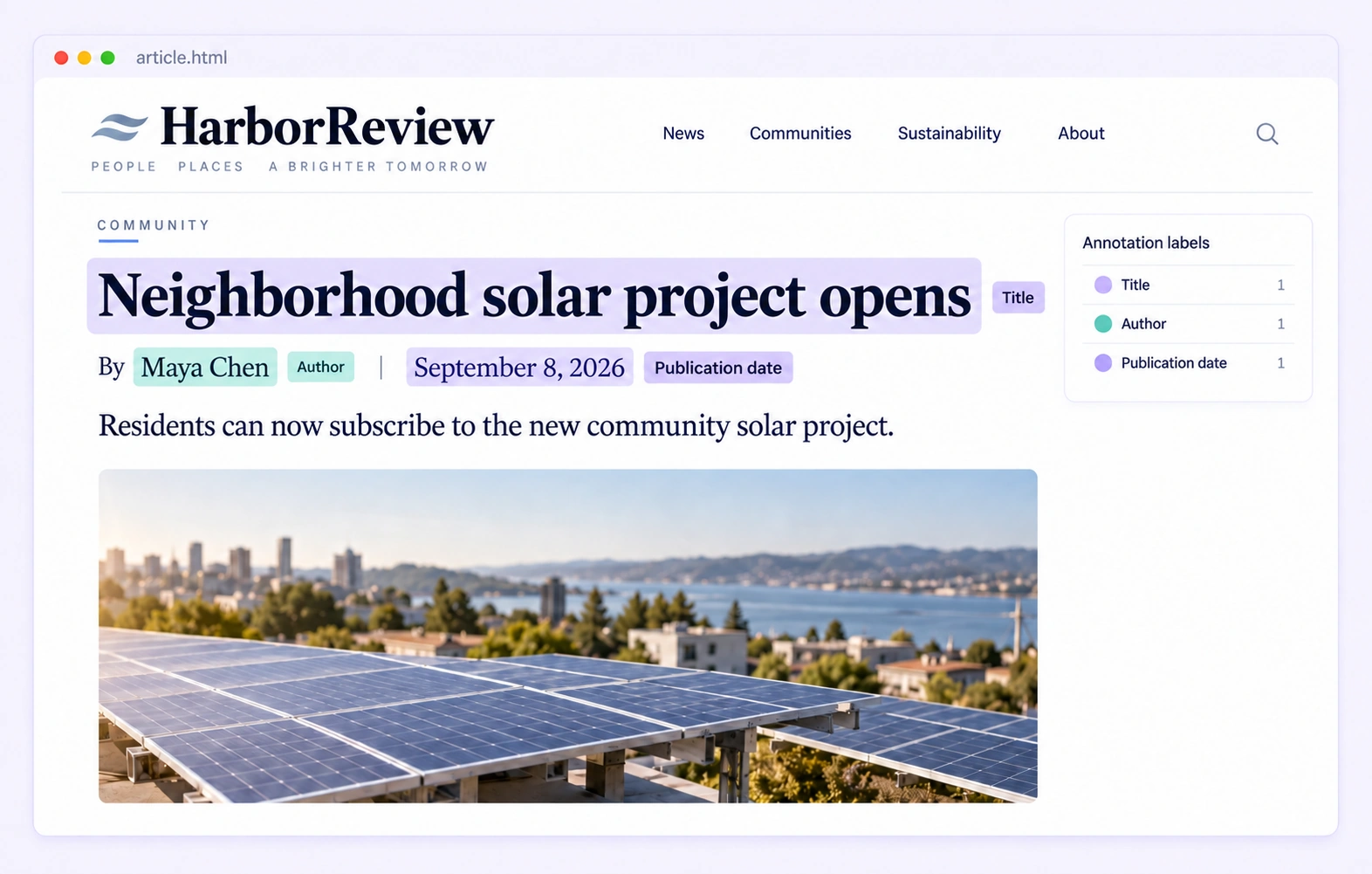
Label one contiguous visible-text range at a time for body content or metadata. Keep labels non-overlapping, using the project's boundary rules to separate adjacent text roles.
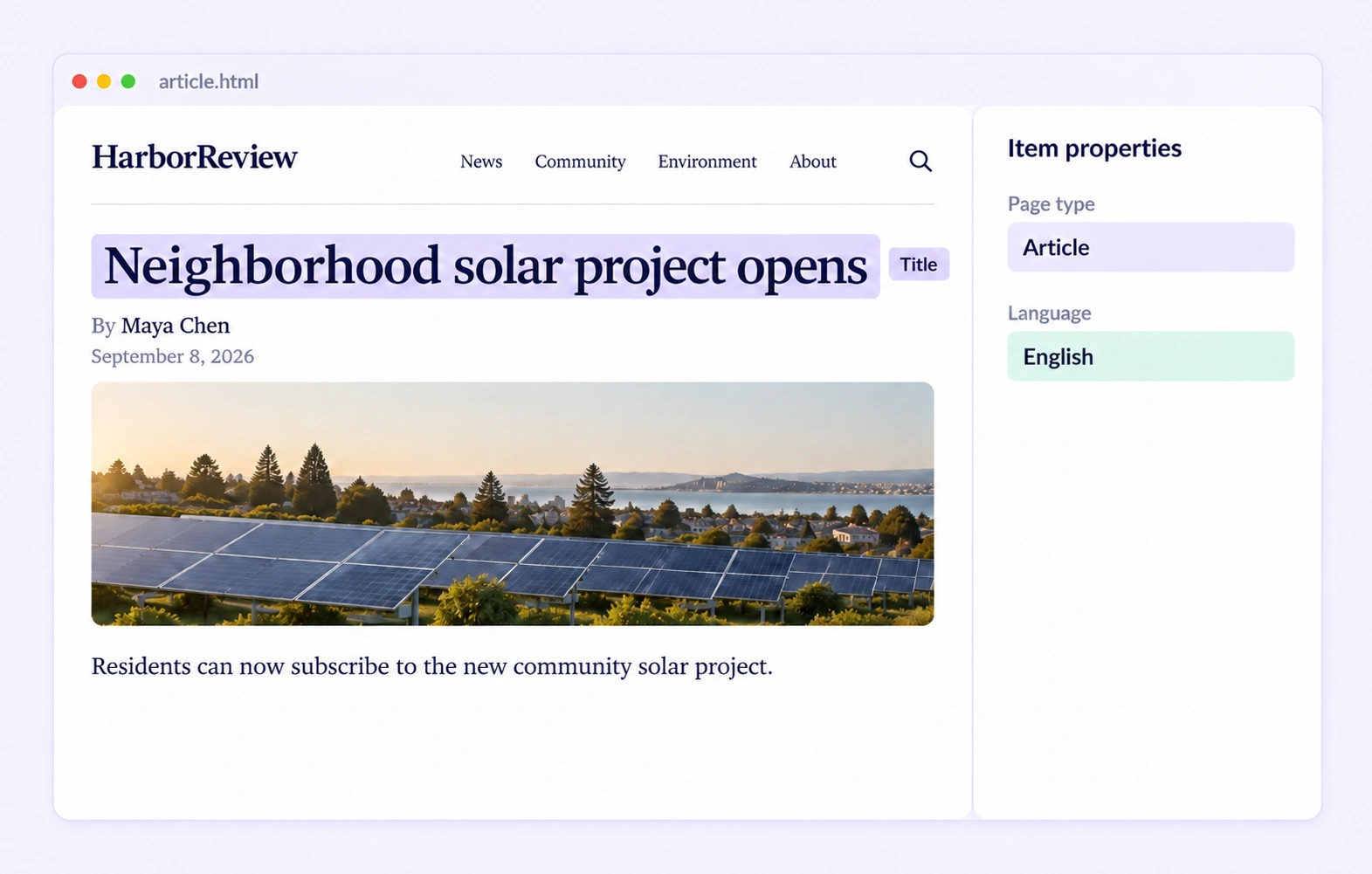
Classify the whole HTML item with properties such as Page type or Language while retaining its internal text annotations. These values describe the saved source page.
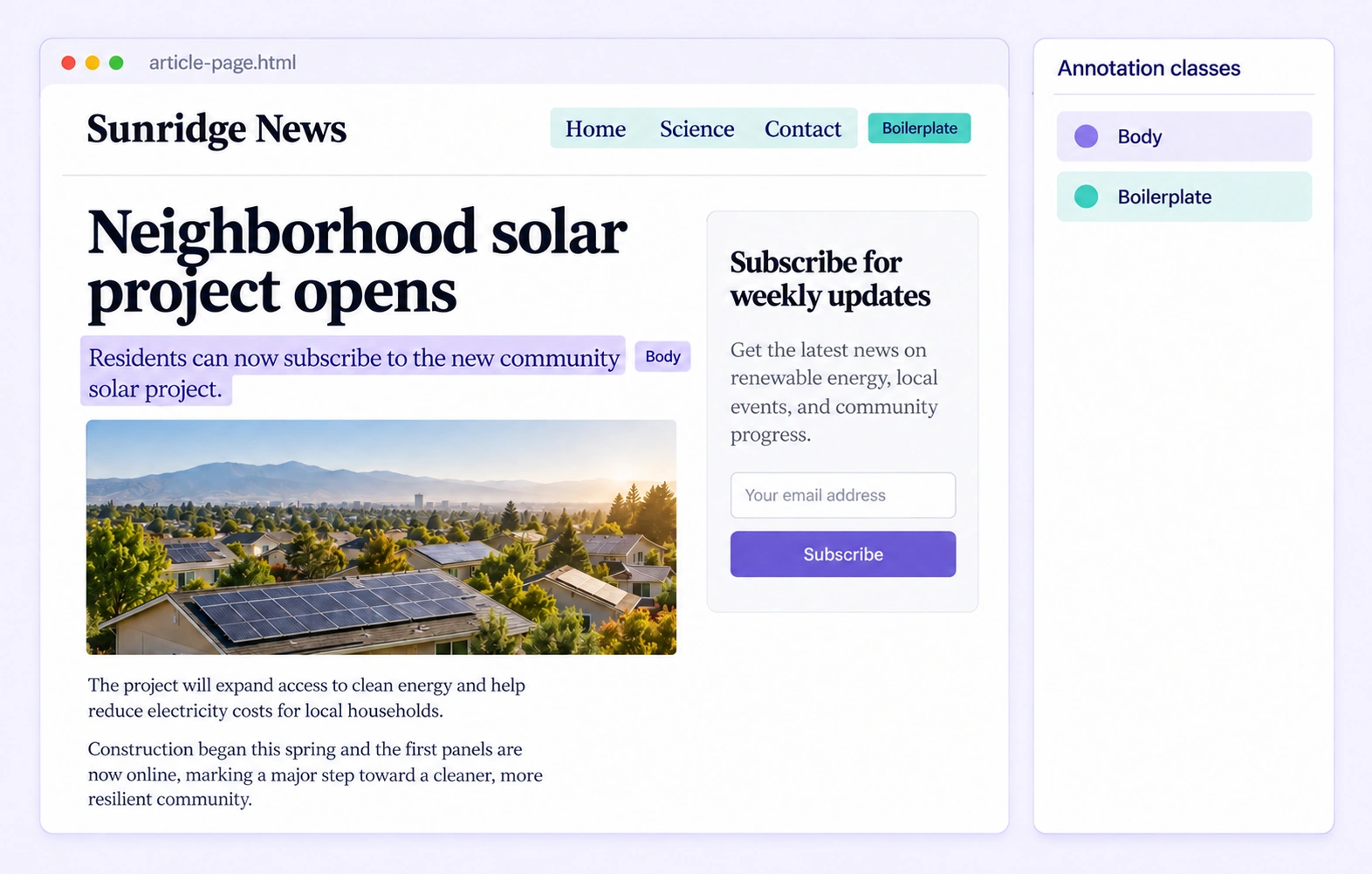
It identifies the page text an extraction system should retain and the surrounding text it should exclude. Reviewed labels for body content, metadata and boilerplate help teams build training and evaluation data for web content extractors.
The rendered snapshot preserves contextual cues such as headings, columns, article sections and nearby recommendations. Annotators still label visible text spans, while the page presentation helps them decide which text belongs to the extraction target.
The project guidelines define the rule for each source type. Article paragraphs usually belong to main content; navigation or subscription prompts often do not. Treat comments, captions and related links explicitly so annotators apply the same policy.
HTML entity ranges are contiguous and non-overlapping. Choose a span scheme that avoids labeling the same characters twice. Use item properties for whole-page classifications while keeping the internal content and metadata spans separate.
Yes. Create distinct entity classes and select the visible source text for each field. Review surrounding context so an author or date from a recommendation is not mistaken for the current article's metadata.
Yes. Configure an item property for Page type or another whole-page category. It describes the complete saved HTML item while entity annotations label individual text ranges inside it.
This solution labels uploaded .html or .htm snapshots. It does not crawl the live web or automatically remove boilerplate. Reviewed annotations provide examples that a downstream extraction or cleaning system can use.
Inspect the selected text in the rendered page, check complete sentences and adjacent sections, and compare ambiguous cases with the instructions. Use contextual comments and review/rework to correct missing content or included boilerplate.
Yes. HTML supports JSONL and Unitlab Unified Export Format with supported source identity, text anchors, entity labels and properties. Adapt the reviewed outputs to the input and evaluation contract of your own content-extraction pipeline.


We use cookies to improve your experience. See our Privacy Policy and Cookie Policy.